
Tom G.
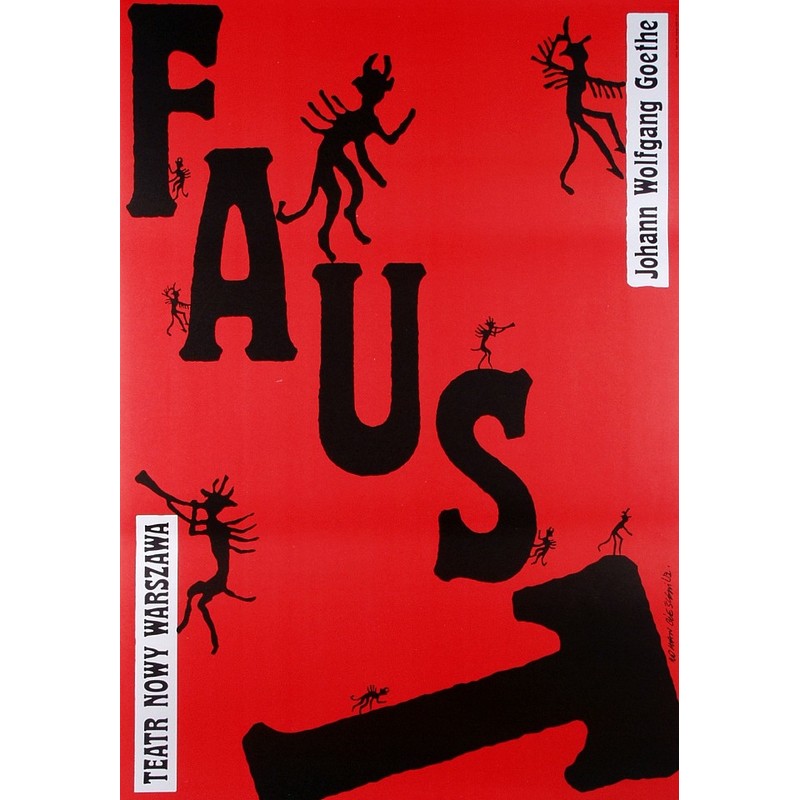
Faust’s transformations rely upon magic. As an artistic contrivance this is quite acceptable, but in the real world, where those lower down the pecking order live, something more is required – and that is an economic development that can transform our material existence and provide a foundation for growth. It is here, still under the assistance of Mephisto, that Goethe gives Faust his most dramatic – and for us – his most significant transformation, that of the developer.
***********
We live in strange times when it comes to the vexed matter of development and the left’s relationship to it. On the one hand personal development is lauded and all manner of pathways and techniques to achieve one’s potential, or to self actualise, as Maslow’s hierarchy of needs puts it, are available to us. And should we encounter problems or obstacles, we have choices to overcome these – a veritable cornucopia of psycho and related therapies for example, to enable us to get back on our potential enhancing track. Whilst acknowledging that these developments have attracted their fair share of the precious and superficial (yes, alright, wankers) the heritage of these developments is humanist. Freudian psychoanalysis and its many derivatives are well known to many, although it is often forgotten that these rest on developments that Nietzsche pithily described as: “The individual has always had to struggle to keep from being overwhelmed by the tribe. If you try it, you will be lonely often, and sometimes frightened. But no price is too high to pay for the privilege of owning yourself.” While not being able to focus on this point here, the implication that Nietschze draws attention to is that if you don’t ‘own’ yourself someone or something else does.
Simultaneously with these developments we have seen in the advanced or developed world an increasing, now predominant, ideological disenchantment with that form of development that has enabled the above to flourish – economic development. In some arenas of public life, particularly those occupied by what is presented as ‘left’ or ‘progressive’ opinion, this disenchantment has moved beyond ambivalence to frank antagonism, with economic development being decried as nothing more than the greed driven activities of the exploiting capitalist class as they wantonly, or indifferently, destroy natural environments and traditional lifestyles, capriciously exploit human labour and wreak general havoc in their pursuit to maximise profits. All this to feather the nests of a small cabal of capital owners and associated flunkies. Growing the pie, as the jargon has it, the production and consumption of more ‘stuff’, the quest to increase human use and control over the natural world and the exploitation of its resources, is now on the nose. And in case one retains some shred of approval for the benefits of economic development we are reminded by the naysayers that growth is simply not ‘sustainable’, that it is leading to the ruination of Mother Nature and ‘the planet’. A piece, COVID inspired, looking at our ’Mother’, can be found here. A swipe at Mother Nature
For someone who was drawn to and embraced revolutionary politics in the early 1970’s the current meanings associated with the ‘progressive’ and ‘left’ zeitgeist has a distinct Humpty Dumpty feel to it. “When I use a word,” Humptey told Alice, in rather a scornful tone, “it means just what I choose it to mean—neither more nor less.”
Topsy turvy? Sure. Plainly reactionary? That’s more like it; the degeneration of the left and its abandonment of revolutionary, or even progressive politics, is a reflection of this. Even the deployment of the adjective pseudo to describe this left seems generous.
So where does Faust, and specifically the spirit of development he symbolises, come into this, particularly my assertion that he is not a yesterday’s man but one who has a role to play in reminding us about what road we should be taking and the manner in which we should be taking it?
In posing this question I wish to express my gratitude to late American writer Marshall Berman whose “All That Is Solid Melts Into Air – The Experience of Modernity” first exposed me to Goethe’s Faust and to a deeper understanding of the swirling currents and riptides of modernity that Marx and Engels had embraced wholeheartedly. I still have clear memories of a close comrade dropping in to see me, circa 1985, urging me to get the book. I’m grateful to him too.
At that time the tide had been running out for many years and what Berman’s contribution helped make clear was that the retreat was not simply from revolutionary politics, but from the challenges of modernity itself. Nietzsche took the view that modernity confronts us with limitless possibilities but limited means of coping with them. For some it is too much, too challenging, and Nietzsche invoked the image of Little Jack Horners finding a solution to the chaos of modern life by opting out. “Become ‘mediocre’ is the only morality that makes sense” to them, he wrote. In our topsy turvy world the fey or pseudo left has become a refuge for Little Jack Horners. Their conceit is not in their mediocrity, but in their presentation of themselves and their politics as progressive, the way forward. Progressive’s etymology, we should remind ourselves, means moving forward, advancing and the last time I looked this did not mean going backwards.
So what is it about Goethe’s Faust, a poem begun over 250 years ago and completed about 200 years ago, particularly the spirit it promotes and the lessons and warnings we draw from it, that remains so relevant? Contextually, Faust was written over a period that covered much of the European Enlightenment and essentially all of the Industrial Revolution. This period saw the Enlightenment’s claims that its universalist humanist values would serve the interests of all – even of the feudal aristocracy once stripped of their privileges – being exposed as fictitious; universalist only if one was bourgeois. The Industrial Revolution, overtly capitalist and exploitative, was much more grounded, existing as it did on the creative capabilities of human labour freed from the constraints of feudal relations and thrown into the welcoming arms of the capitalist class. These events, combined with the struggle of German humanist philosophy to free itself from an intellectual hole it had dug for itself, a space cut off from social reality, were the background and foreground for both Goethe and his version of Faust.
His interpretation reflected these unfolding events and we initially see Faust being transformed from a medieval morality tale, where he was presented as being seduced by self indulgent aspects of material life – medieval versions of sex ‘n drugs ‘n rock and roll – and the damnation this invoked, into a today’s man. That is, a ‘modern’ who reflected both his time and ours. It also provides a very grounded context to Marx’s 11th thesis on Feuerbach – that philosophers had hitherto only interpreted the world when the point was to change it.
But I would encourage readers to look in full at Berman’s fabulous chapter (here) and at Goethe’s 2 volume Faust.
Goethe places Faust traditionally – a middle aged respected intellectual isolated from his broader society, his life empty and meaningless (and if this reminds you of an 18thC equivalent of theologians spending time hypothesising how many angels could fit on the head of a pin, you would be close to the mark). He comes to the realization that he cannot go on as before, a disembodied mind, any more than he could return, living mindlessly in a community dominated by medieval norms. Written in the mid to late 18thC the influence of The Enlightenment is clear as Faust yearns for a self development that is intimately and dynamically connected to the real world, an unfolding synthesis that is simultaneously inwardly and outwardly focussed. And Mephisto, “the spirit that negates all,… part of the power that would/ Do nothing but evil, and yet creates the good”, is the vehicle that enables this to happen. What was it that Marx said? That in spite of the venal motives of the British in India, fundamental good came from the undermining of Indian feudalism and the caste system. These views were echoed by Ambedkar, the writer of the Indian Constitution and himself a Dalit (Untouchable).
Ironically it is Mephisto who has some catching up to do. He begins by offering Faust the usual temptations that had sufficed for earlier iterations, but Faust quickly comes to see these as too shallow. He sets his sights higher:“Do you not hear, I have no thought of joy!…My mind/Shall not be henceforth closed to any pain,/And what is portioned out to all mankind/I shall enjoy deep within myself, contain/within my spirit summit and abyss…”
The transformation that follows, to that of lover, represents his reemergence and readiness for real human connectedness. Here I need to lay some cards on the table. As a family and group therapist (primarily marital and violence related) including a history of working with numerous refugee communities, I found Berman’s analysis astute and very contemporary. Gretchen, the female protagonist, is Faust’s first lay, first love and first casualty. As Berman points out, Faust’s idealisation of Gretchen and the cloistered, quaint medieval little world that contains her, is also a world that constrains and suffocates her, thereby generating her own desire for growth and freedom. Gretchen therefore is an active player (‘modern’ feminists of a Victorian sensibility please take note) but one without Faust’s resources. Lacking an enabling social foundation she is driven into a dependency that overwhelms Faust and he leaves her to the vengeful mercies of her kith and kin. Sadly this remains a pressing and urgent issue for many women struggling to free themselves from pre modern social/familial expectations. The lesson Gretchen leaves us with is to leave and embrace the possibility of growth, or stay and die, be that literally or figuratively.
Several years ago I was privileged to meet a Sudanese woman that a colleague had asked to speak on ‘upside down families’. The woman responded by pointing out that for a woman, a traditional marriage in a traditional setting, was like a prison and that once here “for two years we go mad”. She meant by this that the sudden experience of freedom was overwhelming and disorientating and that it took a good two years to develop an understanding that with freedom comes responsibility. In other words it took her about two years to lay a sufficient enough foundation for her to survive and grow, an experience that Gretchen was denied.
Faust’s transformations rely upon magic. As an artistic contrivance this is quite acceptable, but in the real world, where those lower down the pecking order live, something more is required – and that is an economic development that can transform our material existence and provide a foundation for growth. It is here, still under the assistance of Mephisto, that Goethe gives Faust his most dramatic – and for us – his most significant transformation, that of the developer. This transformation is necessary, for if Faust, as a symbol of humanity grounded in the material world, is to truly break free of the choking constraints of the medieval, economic transformation and development is essential.
This final transformation occurs near the poem’s end and shortly before Goethe’s own death, a time when Goethe was aware of and influenced by St Simonean ideas of economic and social development. St Simon, along with Fourier and Owen promoted forms of Utopian Socialism analysed by Engels in his Socialism: Utopian and Scientific.
The point at which this final transformation occurs is dramatic. After a prolonged and meandering journey through history and mythology (what else does one do with time on one’s hands and the devil as chaperone?) Faust, in observing the power of oceanic movement, is outraged – that with all this power and energy nothing is achieved. Mephisto advises him not to be fussed because the elements have always been this way. In response Faust has a ‘not if I’ve got anything to do with it’ moment:
“isn’t it about time for mankind to assert itself against nature’s tyrannical arrogance, to confront natural forces in the name of “the free spirit that protects all rights”? (10202-05)
And a few lines later:
This drives me near to desperate distress!
Such elemental power unharnessed, purposeless!
There dares my spirit soar past all it knew;
Here I would fight, this I would subdue! [10218-21]
This spirit was music to Marx and Engels’ ears, as it should be to ours. In short, he wants to harness the forces of the natural world for the benefit of humankind. And to this end, with Mephisto’s assistance, he proceeds to transform the land before him and “show what man’s activity can bring about.” It is this gospel of development, as Berman puts it, that is the irresistible pull of modernity and I think Berman is right in seeing this as having a spiritual dimension. This, and its grounding, enabled spiritual growth. Whilst applying to all, this aspect is of particular significance to the less well heeled whose spiritual needs had been defined and imposed by the Catholic Church and the feudal aristocracy, or their equivalents elsewhere. Need we remind ourselves that this imposition, presented as both natural (‘twas ever thus) and divinely ordained, served the interests of the ruling classes or those otherwise well heeled.
This represents the main dividing line between the modernist, progressive spirit and its opposite. I find it difficult to sum up this opposite neatly; it is certainly a wet blanket, a chicken small, one of Nietzche’s Little Jack Horners, reactionary, risk averse and most forms of conservatism. I say ‘most’ because there is a place for caution or elements of conservatism in the modernist spirit where it is used in the service of that spirit (a metal detector is advisable when one is in an unmarked minefield), as opposed to it being an excuse for entropy and reaction. What is also playing on my mind is dialectics – these things interpenetrate each other, modernity does not deny its opposite, it contains and generates it and we must be careful, that in our commitment to upholding the modernist spirit we don’t become one sided and effectively throw out the baby with the bath water.
Within the Marxist, pro revolutionary heritage the one I am more familiar with was articulated by the Hungarian George Lukas who dismissed Faust – and by implication the Faustian spirit – as an archetypal capitalist. In doing this he failed to draw a clear distinction between a dynamic modernist spirit, the midwife of which was certainly capitalism and how capitalism distorts and constrains that spirit.
In other words we need to distinguish the modernist spirit, the spirit that gives birth to a dynamic and revolutionary system that can transcend capitalism. This is what Marx and Engels did in the Manifesto, effectively saying that we have outgrown capitalism, but not modernity, that revolutionary socialism, and communism beyond that, can do development better, be that economic, social or individual. And by better I mean where the intention of development is for the betterment and general enrichment of humankind rather than these being the incidental side effects (the evil that does good) of capital and wealth accumulation that prioritises the interests of the capital owning class and the social strata that serve them.
At the time of writing this last part of Faust Goethe was aware of this danger as evidenced by the fate of Philemon and Baucis, a harmless old couple who refused to move out of Faust’s way and, to Faust’s mind, had to go. This task, quite impersonal and distant from Faust’s point of view, was delegated to Mephisto, symbolically wiping out the last vestiges of traditional communal feudal life.
This is an interesting point. What Goethe was alluding to was that not all features of the old society, here mediaeval communalism, are bad. Mao, amongst others, made the same point in advocating that we take what is positive from the old, indeed liberate these features or qualities from their traditional constraints, and jettison what is not.
Goethe did not seek to romanticise the creative, liberating role of modernity. He knew then that in order to create modernity must also destroy. It is impossible to accept the “all that is solid melts into air” aspect that Marx and Engels embraced without acknowledging and anticipating this. A key component of this acceptance is the accepting of responsibility for both aspects of the development ‘package’ – obviously the positive (what’s not to like?) but also, and especially, the negative. It is only by anticipating and accepting responsibility for actual or potential negative/destructive consequences that such consequences can be mitigated.
From the point of view of capitalism as a system, this acceptance of responsibility for anything other than the bottom line is counter intuitive – antithetical to the ‘job description’. This is one of the reasons capitalist development generates opposition. People affected – be they in existing communities about to be uprooted, extant workforces about to be thrown onto the proverbial scrap heap etc, do not need to have heard of Philemon and Baucus to know which way the wind is blowing and whether or not said wind will give a damn about them as it passes through.
It is this aspect of the Faust tale and what it symbolises, that enables critics to point the finger at Faust and label him as representing the development of the archetypal capitalist. The difficulty I have with this is not the identification of Faust’s and Mephisto’s way of dealing with ‘obstacles’ like Philemon and Baucus as typically and essentially capitalist – capitalism was well enough developed by the early 19thC for Goethe’s depiction to be reality based. My objection is with its one-sidedness, for how this spirit of development gets damned as well, effectively gifting it to capitalism and its ideologues/supporters. And a vast array of bourgeois ideologues – the Hayeks and Friedmans of this world, for example – are in vigorous agreement, seeing modernity’s spirit of development as being inseparably connected to capitalism.
This gifting is not a minor gripe. How the left, historically and contemporaneously, promotes or colludes with this view undermines its claim to be progressive (let alone revolutionary). If this is the best it can do it is not only giving capitalism a free kick, it is giving it the game.
 C21st Left