
Reconstituting the United Nations for Collective Security – we need a popular campaign!

I became interested in this question a couple of years ago and subsequently had two letters on the subject published in the mainstream press. It struck me then – and still does – as an urgently needed reform, namely: limitation or abolition of the veto power of the ‘Permanent Five’ on the UN Security Council (China, France, Russia, the United Kingdom, and the United States). The veto power should, at minimum, be deprived of its capacity to defeat collective security.

While researching the topic, I was surprised to discover the extent of opposition among UN member states to the veto power enjoyed by the P5 on the Security Council.

This article is intended to stimulate discussion. I would welcome feedback that might help me strengthen it before submitting it to mainstream newspapers as a feature article.

Is the proposal realistic? One of my favourite slogans from the Paris uprising of 1968 was: ‘Be realistic – demand the impossible!’ Yet I do not believe it is impossible to create a United Nations genuinely founded on collective security, one possessing its own international armed force capable of rapid deployment. If it is impossible, then human rights’ lawyer Geoffrey Robertson’s call for a ‘union of democratic states’ might be a practicable alternative.

The principal obstacles are the permanent members that benefit most from the present arrangements – particularly Russia, China and the United States – together with the governments and political forces that defend or excuse their use of the veto.

I remember when protests against the US war in Vietnam consisted of small rallies. They eventually grew into enormous marches involving tens of thousands of people in Australia’s capital cities. Every broad movement begins by raising an issue that has previously been regarded as unrealistic or impossible.

A starting point today would be to build a broad-based campaign demanding reforms to the UN Charter. These should call for a prohibition on the use of the veto in cases involving genocide, mass atrocities or clear acts of aggression; prevention of a party to a conflict from voting on enforcement measures concerning its own conduct; and provision for a two-thirds majority of the General Assembly to override a Security Council veto.

********

The United Nations arose from the failure of the League of Nations, the first great experiment in collective security. The League’s principle was bold – aggression against one member concerned them all – but its machinery was weak. The United States never joined; colonial rule excluded much of humanity; major decisions generally required unanimity; and sanctions or military action depended on governments choosing to act. When they did not, the League could neither stop aggression nor prevent another world war.

The UN’s founders sought broader membership, binding decisions and enforceable peace, but learned the lesson only halfway. Five permanent members received the veto, while the military agreements envisaged by the Charter were never concluded. East Timor shows what decisive UN-authorised action can achieve; Palestine, Sudan, Rwanda, Srebrenica and Syria show the cost of paralysis. The remedy is veto reform and an accountable international force able to act promptly against aggression and mass atrocities.

East Timor and the power to act

East Timor shows what the United Nations can achieve. After a 78.5 per cent vote for independence in the UN-supervised ballot of 30 August 1999, pro-integration militias, backed by elements of Indonesian security forces, unleashed killing, forced displacement and destruction. On 15 September, the Security Council unanimously adopted Resolution 1264 under Chapter VII. It authorised the International Force for East Timor, INTERFET, to use all necessary measures to restore peace and security, protect the UN mission and facilitate humanitarian assistance. An Australian-led force began deploying five days later. Violence subsided, displaced people began returning, and INTERFET handed responsibility to the United Nations Transitional Administration in East Timor, established by Resolution 1272. Timor-Leste became independent in May 2002.

East Timor was a rare success for collective security. It combined lawful authority, regional leadership, international troops, a clear mandate and a political end point. Yet it also exposed the weakness of the system. INTERFET was not a standing UN force and did not deploy automatically. Action depended on unanimous agreement among the permanent members, Indonesian consent, Australian leadership and national contingents assembled after the crisis had already caused enormous suffering. East Timor therefore offers both proof and warning. International force can halt organised violence and protect self-determination, but the present UN can act decisively only when powerful states permit it and a capable government volunteers to carry the burden, as the Australian government did under Prime Minister John Howard. (Australia contributed 5,500 troops – almost half of the total INTERFET). A reformed United Nations should make such capacity permanent, impartial and promptly available.

The need for fundamental reform

The United Nations remains important, but it cannot reliably fulfil its central purpose of maintaining international peace through collective action. The Charter prohibits aggressive war, authorises binding Security Council decisions and envisages economic and military enforcement.[1] Yet the system was never completed. The veto allows any one of five permanent members to prevent action, including when that state or a close ally is involved. The military agreements anticipated by Article 43 were never concluded. The UN consequently possesses extensive legal authority without dependable means of enforcement. Real collective security requires equal rules, representative decisions that no single power can obstruct, and a permanent international capacity able to respond promptly to aggression and mass atrocities. If such changes prove impossible within the present Charter, the longer term aim should be a reconstituted United Nations or a broadly supported successor organisation that preserves the UN’s valuable agencies and accumulated law while correcting its constitutional defects.

The unfinished system of 1945

Under Chapter VII, the Security Council can identify threats to peace, impose sanctions and authorise military action. Articles 43 to 47 envisaged forces designated in advance, immediately available air contingents, agreed command arrangements and a Military Staff Committee.[2] Cold War disagreements between the United States and Soviet Union over force size, contributions, bases, access and command prevented the required agreements. The UN instead became dependent on peacekeeping and temporary coalitions. Peacekeeping can monitor ceasefires and support political settlements with the parties’ consent, but it differs from collective enforcement against an aggressor determined to continue fighting. Coalitions authorised to use force remain controlled by participating governments, producing selective intervention, double standards and suspicion that international law serves powerful states.

When United Nations failure costs lives

The consequences of these weaknesses are measured in human lives. Armed actors, not the United Nations, commit atrocities, so not every death can be attributed to institutional failure. Yet inaction can leave perpetrators free. Three failures recur: vetoes prevent decisions; peacekeepers receive weak mandates and resources; and troops arrive only after governments negotiate contributions while civilians are killed. Rwanda, Srebrenica, Syria and Sudan illustrate failures.

Sudan is the contemporary example. War between the Sudanese Armed Forces and the Rapid Support Forces began in April 2023 and produced mass killing, violence, displacement and hunger. In June 2024, Security Council resolution 2736 demanded that the Rapid Support Forces halt its siege of El Fasher and called for humanitarian access. The demand was not enforced. In November 2024, Russia vetoed a draft calling for a nationwide ceasefire and unhindered aid, although every other Council member supported it.

By 2026, the World Food Programme reported that nine million people had been forced from their homes, nearly 19.5 million faced acute hunger and 825,000 children under five were expected to suffer severe acute malnutrition. The UN remained essential for relief and diplomacy but lacked an independent force able to secure humanitarian corridors, protect threatened communities or compel compliance. Sudan exposes the gap between recognising catastrophe and possessing the means to stop it.

Rwanda demonstrated the cost of retreat in the face of mass murder. During the 1994 genocide, approximately 800,000 people were killed in one hundred days. The UN Assistance Mission for Rwanda had a limited mandate and strength. After ten Belgian peacekeepers were murdered, most of the mission was withdrawn when reinforcement was required. A standing force could not have guaranteed prevention, but units authorised to protect civilians, secure refuge sites and confront organised killing would have offered possibilities that delayed national contributions could not.

Srebrenica revealed the danger of promising protection without the power to deliver it. The Security Council declared the Bosnian enclave a safe area, but the UN force lacked troops, deterrent capacity and support. Bosnian Serb forces overran the enclave in July 1995 and murdered more than 8,000 Bosniak men and boys. The UN should never offer civilians a guarantee that its authorities have not equipped personnel to uphold. A credible mandate requires forces, reinforcement and willingness to act when a protected area is attacked. This means superior military enforcement.

Syria illustrates paralysis through great power conflict. Security Council divisions and vetoes prevented a collective response as the war expanded and atrocities multiplied. The UN Human Rights Office estimated that 306,887 civilians were killed through direct conflict related causes between March 2011 and March 2021 alone. Similar weaknesses have appeared in Myanmar, Yemen, Ethiopia and the Democratic Republic of the Congo: warnings, investigations and humanitarian assistance document suffering, but the international community cannot compel armed actors to stop. These cases do not prove that military intervention is always wise. They prove that an organisation claiming responsibility for international peace requires options between verbal condemnation and improvised war by individual states.

The veto and constitutional change

Russia can obstruct action concerning Ukraine, while the United States can block measures opposed by Israel concerning Palestine. General Assembly procedures such as Uniting for Peace and the automatic debate following a veto increase political accountability, but the Assembly recommends rather than compels.

  1. Complete veto abolition is the clearest democratic solution.
  2. If immediate abolition is unattainable, binding restrictions should prohibit vetoes in cases of genocide, mass atrocities and clear aggression; prevent parties to a conflict from voting on enforcement concerning themselves; and permit a General Assembly majority of two-thirds to override it.

Under Article 108, however, Charter amendments require ratification by every permanent member. Reformers must therefore pursue achievable interim changes while building support for reconstitution.

A permanent force capable of rapid deployment

A reformed organisation needs a standing armed force, not promises of troops that governments may withhold when a crisis occurs. It should combine a permanent international headquarters, logistics system and directly recruited core with larger national units committed under binding readiness agreements. It should possess strategic transport, field hospitals, secure communications and prepositioned supplies. An advance formation should deploy within days, with heavier reinforcements arriving within thirty to sixty days. Personnel should swear loyalty to the Charter while serving, train together and operate through an integrated command. Geographically balanced recruitment, instruction in humanitarian law, and strict protection against sexual exploitation and other abuse would be essential. An independent inspector general, prosecutor and claims mechanism must ensure that immunity never becomes impunity.

Palestine and the Gaza force

Security Council resolution 2803 of November 2025 authorised an International Stabilization Force for Gaza within a United States backed plan involving a transitional Board of Peace. https://digitallibrary.un.org/record/4090881 The ISF is intended to support security, Palestinian policing, humanitarian work, reconstruction, demilitarisation and Israeli withdrawal. It is temporary, confined to Gaza, assembled from national contributions and dependent on political negotiations among participating governments and the parties. A genuine UN force would be directly commanded by the international organisation and, once lawfully deployed with meaningful Palestinian consent, would not be controlled by Israel, Hamas or an outside patron. It would enforce reciprocal obligations: preventing attacks and hostage taking by Palestinian armed organisations, protecting Israeli civilians, stopping unlawful attacks on Palestinians and armed settler violence, supervising Israeli withdrawal and acting against every party attempting to destroy the settlement.

A political settlement for Palestine

Gaza cannot be separated permanently from the West Bank, East Jerusalem, settlements, refugees, borders, resources and Palestinian self determination. An international force must support Palestinian sovereignty and Israel’s security within a comprehensive political settlement. Otherwise it could become Gaza’s jailer, disarming and containing Palestinians while leaving occupation and dispossession unresolved. A standing UN force would also deploy more quickly than the ISF because its command, transport, equipment and trained personnel would already exist. It would protect civilians, prevent armed parties from overturning an agreed settlement and create space in which legitimate institutions and a just peace could survive.

Some voices in the right direction

Finland’s President Alexander Stubb has proposed a Council with broader permanent representation and no power for any single state to veto a decision; he would also suspend the voting rights of a Council member that violates the Charter. Ukraine’s President Volodymyr Zelenskyy, confronting a war in which the aggressor is itself a permanent member, has argued that the General Assembly should be empowered to override a veto. Turkey’s President Recep Tayyip Erdoğan has for years expressed the wider democratic objection in the phrase ‘the world is bigger than five’. These proposals differ, but all reject the proposition that the interests of one great power should automatically outweigh the judgement of the rest of the international community.

Other governments have concentrated on restraints that do not require immediate Charter amendment. France and Mexico have promoted a political declaration under which the permanent members would voluntarily refrain from using the veto when genocide, crimes against humanity or large-scale war crimes are occurring. By July 2022 it had been endorsed by 104 states and two UN observers. The Accountability, Coherence and Transparency group has similarly sponsored a code of conduct asking every Council member, permanent or elected, not to vote against credible action intended to prevent or halt mass atrocities. These initiatives cannot legally compel a permanent member, but they establish a clear standard against which every veto can be judged.

The African Union’s position exposes the central question of equality. Its members hold that the veto should ultimately disappear; yet, for as long as it exists, Africa demands two permanent seats carrying the same rights and privileges as the present five. In 2026 the Chairperson of the African Union Commission, Mahmoud Ali Youssouf, reaffirmed that demand as the correction of a historical injustice. The claim is compelling, because Africa cannot remain excluded from permanent representation. But equality should be achieved by democratising authority, not by multiplying national vetoes and creating new sources of paralysis.

These campaigns nevertheless reveal the scale of the obstacle. None of the five permanent members has accepted the legal abolition of its veto. The legitimacy of collective security cannot depend indefinitely upon the consent of those benefiting from its failure.

The UN has advanced international law, decolonisation, human rights, humanitarian relief and peacekeeping. These achievements justify preservation, but not acceptance of paralysis.

No state should be judge in its own cause or possess authority to prevent the world from responding to aggression or atrocity.

The veto should be abolished or deprived of its capacity to defeat collective security. Representation must broaden without multiplying privilege. Law must be matched by an accountable, permanently prepared, rapid deployment, armed force.

Reconstitution must begin now.

Peace must become a practical guarantee, not a promise that disappears whenever a powerful state objects.
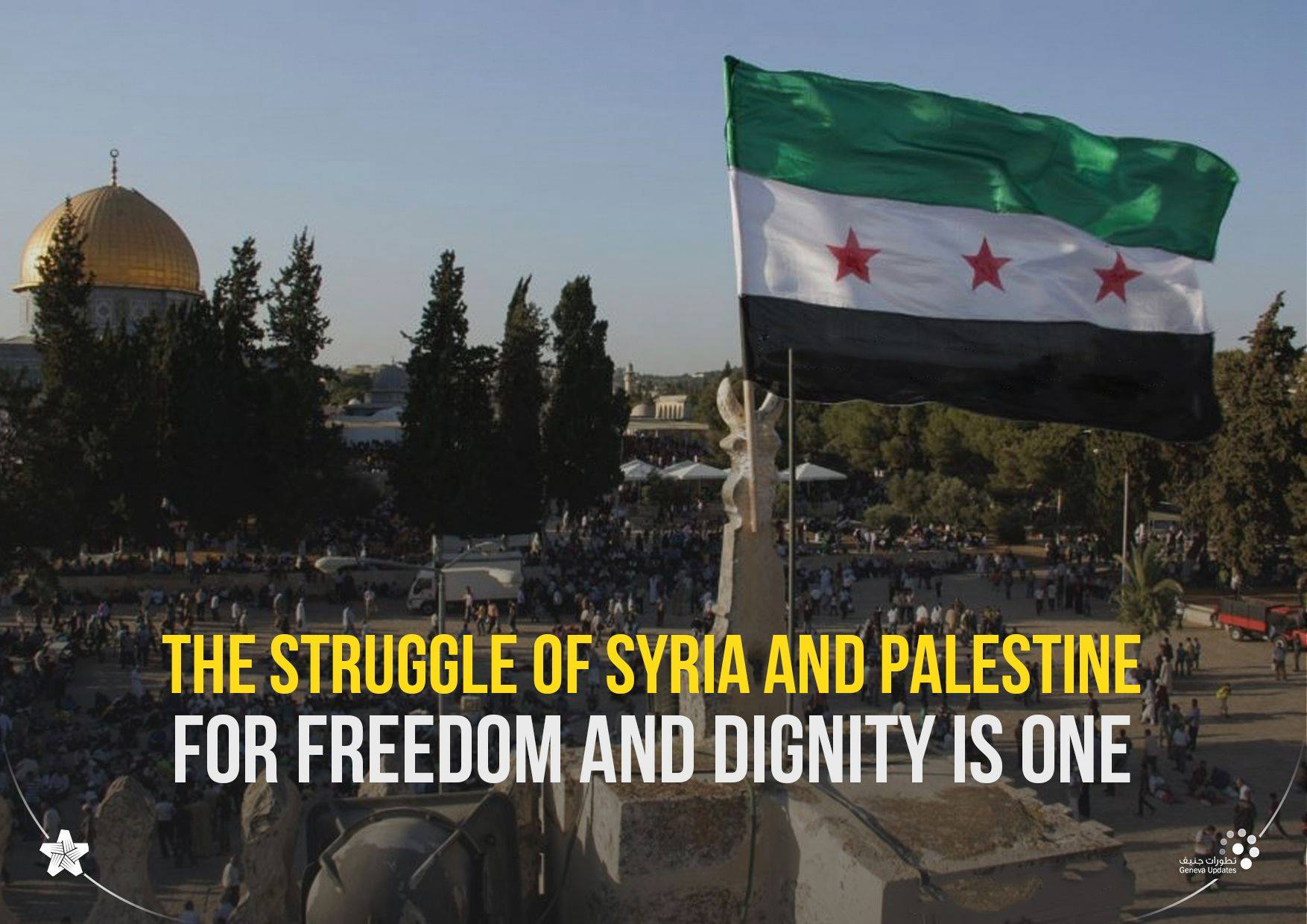
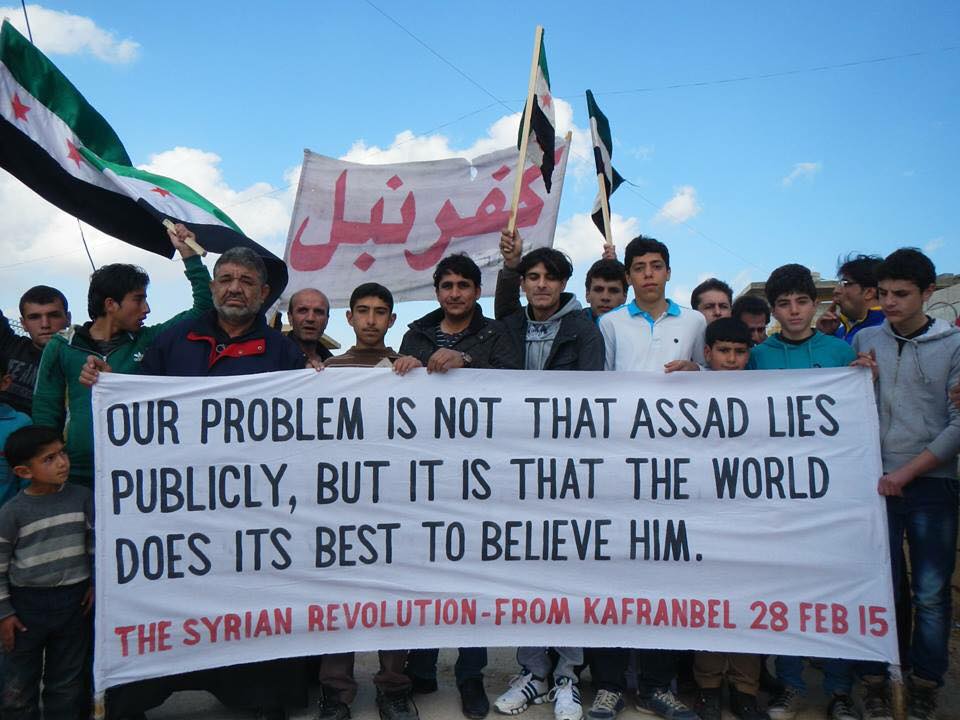


Syrian Coalition Condemns Israeli Occupation Massacre against Palestinians & Transfer of US Embassy to Jerusalem

32703914_1706692566083188_1725815183491727360_o
https://buff.ly/2rSD7Tl

The Syrian Coalition condemns the horrific massacre that was committed by the Israeli occupation against Palestinian demonstrators demanding their rights on Monday. The massacre claimed the lives of dozens of demonstrators and left hundreds more injured, including women and children.

The Coalition also reiterates its categorical rejection of the US president’s decision to recognize occupied Jerusalem as the capital of Israel and to transfer the US embassy to the city. The move violated international resolutions, most notably UN Security Council resolution 478 (1980) which condemned any attempt by Israel to annex Jerusalem.

The Coalition also denounces the continuing violations being committed by the government of the Israeli occupation against the Islamic and Christian holy sites. It stresses that nothing can justify violence, repression and crimes or grant legitimacy to occupation and mass forced displacement.

The Syrian people will always support the legitimate rights of the Palestinian people to their land and to build their independent state with Jerusalem as its capital, which will remain a Palestinian Arab land. No other party has the right to claim sovereignty over the city. It will not be long before the Palestinian people regain all their rights and achieve a just, comprehensive solution that ends violence and restores stability to the region.

The struggle of the Syrian and Palestinian peoples for freedom and dignity is one. The resistance and resilience that the Palestinian people have shown over the past decades will always remain an example for steadfastness and patience.


* * * *

How the Syrian revolution has transformed me (Budour Hassan)

The following is reprinted from Budour Hassan’s blog Random Shelling.

Comments welcome.

* * * *


The world revolves around Palestine, or so I thought until 2011.

The Palestinian cause, I argued, was the litmus test for anyone’s commitment to freedom and justice. Palestine was the one and only compass that must guide any Arab revolution. Whether a regime is good or bad should be judged, first and foremost, based on its stance from the Palestinian cause. Every event should somehow be viewed through a Palestinian lens. The Arab people have failed us, and we inspired the entire world with our resistance.


Yes, I called myself internationalist. I claimed to stand for universal and humanist ideals. I blathered on and on about breaking borders and waging a socialist revolution.

But then came Syria, and my hypocrisy and the fragility of those ideals became exposed.


When I first heard the Syrian people in Daraa demand a regime reform on 18 March 2011, all I could think about, subconsciously, was: “If the Egyptian scenario happens in Syria, it would be a disaster for Palestine.”

I did not think about those who were killed by the regime on that day. I did not think of those arrested or tortured.

I did not think about the inevitable crackdown by the regime.

I did not greet the incredibly courageous protests in Daraa with the same elation and zeal I felt during the Tunisian, Egyptian, Bahraini, Yemeni, and Libyan uprisings.

All I could muster was a sigh of suspicion and fear.

“Assad is a tyrant and his regime is rotten,” I thought to myself, “but the subsequent results of its fall might be catastrophic for Palestine and the resistance.” That sacred axis of resistance meant to me back then much more than the Syrian lives being cut short by its defenders.

I was one of those whose hearts would pound when Hassan Nasrallah appeared on TV. I bookmarked loads of YouTube videos of his speeches and teared up while listening to songs glorifying the resistance and its victories.

And while I supported the demands of the Syrian protesters in principle, I did so with reluctance and it was a conditional support. It was not even solidarity because it was so selfish and always centered around Palestine.

I retweeted a blog post by an Egyptian activist calling on Syrians to carry Palestinian flags, in order to “debunk” regime propaganda. The Syrian people took to the streets defending the same universal ideals that I claimed to stand for, yet I was incapable of viewing their struggle outside my narrow Palestinian prism. I claimed to be internationalist while prioritizing Palestinian concerns over Syrian victims. I shamelessly took part in the Suffering Olympics and was annoyed that Syrian pain occupied more newspaper pages than Palestinian pain. I was too gullible to notice that the ordeals of both Syrians and Palestinians are just footnotes and that the breaking news would become too routine, too dull and unworthy of consumption in the space of few months.

I claimed to reject all forms of oppression while simultaneously waiting for the head of a sectarian militia to say something about Syria and to talk passionately about Palestine.


The Syrian revolution put me on trial for betraying my principles. But instead of condemning me, it taught me the lesson of my life: it was a lesson given with grace and dignity.

It was delivered with love, by the women and men dancing and singing in the streets, challenging the iron fist with creativity, refusing to give up while being chased by security forces, turning funeral processions into exuberant marches for freedom, rethinking ways to subvert regime censorship; introducing mass politics amidst unspeakable terror; and chanting for unity despite sectarian incitement; and chanting the name of Palestine in numerous protests and carrying the Palestinian flag without needing a superstar Egyptian blogger to ask them to do so.

It was a gradual learning process in which I had to grapple with my own prejudices of how a revolution should “look like,” and how we should react to a movement against a purportedly pro-Palestinian regime. I desperately tried to overlook the ugly face beneath the mask of resistance worn by Hezbollah, but the revolution tore that mask apart. And that was not the only mask torn apart, many more followed. And now the real faces of self-styled freedom fighters and salon leftists were exposed; the long-crushed Syrian voices emerged.

How can one not be inspired by a people rediscovering their voices, transforming folk songs and football chants into revolutionary chants? How can one not be taken aback by protests choreographed in front of tanks?


The Syrian geography was much more diverse and rich than that promoted by the regime and the official narrative collapsed as Syrians from the margins reconstructed their own narratives. The Syrian rainbow had many more colors than those permitted by the regime. And Syrians could raise their voices in places other than football stadiums, using their famous victory chant in public squares and streets to curse Hafez al-Assad, the “eternal leader.”


If Hafez al-Assad’s name could only be whispered with trembles before 2011, people at last could vociferously curse him and his son, shaking both the physical as well as the symbolic hegemony of this dynasty to its foundations.


I could not remain neutral as Syrians redefined the feasible and stretched the boundaries of people power, albeit briefly, during those early months of fatal hope.

Wouldn’t remaining impartial have been an act of treason to anything I claimed to stand for? How could I possibly read out Howard Zinn’s quote “You cannot be neutral on a moving train” to those sitting on the fence on Palestine, while I was doing the same on Syria? The Syrian revolution crumbled the fence from under me. I rediscovered my voice thanks to the mass mobilization I witnessed in Syria. I would listen to clips from Syrian protests, memorize their chants, and repeat them in Palestinian protests. Thinking of the fearlessness of Syrians would immediately make my voice louder and help make me overcome any slight semblance of fear.


You do not choose the nationality into which you were born but you don’t have to be bound by its shackles.

My Syrian identity, my sense of belonging to the Syrian revolution, was not forced onto me. I chose to adopt it. I never stepped foot in Syria. It was not until 2013 that I first met a Syrian not from the Occupied Golan Heights in the flesh, face to face. My main way of connecting with Syrians was and remains through social media and Skype. Yet, I couldn’t help but feel Syrian and completely identify with the struggle.

Until 2011, my talk about breaking borders and internationalist solidarity was but a soundbite, mere rhetorics. Thanks to the Syrian uprising, I finally understood what solidarity is really about.


I always expected people to support the Palestinian cause without imposing conditions, without preaching or lecturing, without dictating. When the Syrian uprising erupted, I acted exactly like those armchair preaches demanding a jasmine revolution from Palestinians, constantly asking us about the New Gandhi and MLK. But as the revolution went on, I could finally comprehend the true meaning of solidarity from below, a solidarity that is unconditional yet also critical. I saw how people like martyr Omar Aziz applied horizontal self-governance in some of the more conservative and traditional neighborhoods, and I learned from his model.

I learned the meaning of communal solidarity and Palestinian-Syrian togetherness from the Palestinian residents of Daraa refugee camp: they risked their lives to smuggle bread and medicine and break the siege on the rising city of Daraa. It was not just a humanitarian act; it was a political statement and the beginning of the formation of an identity, that of the Palestinian-Syrian revolutionary.


Khaled Bakrawi, a Palestinian refugee from Yarmouk, and Zaradasht Wanly, a Syrian youngster from Damascus, were both injured by Israeli occupation forces during “return marches” to the Golan Heights in 2011. Both Khaled and Zaradasht were murdered by the Syrian regime: the former was killed under torture, the latter was shot dead during a peaceful protest.


Syrians marched in solidarity with Gaza amid the rubble of their houses destroyed by Syrian regime air strikes. The Syrian Revolutionary Youth put out posters against the ethnic cleansing of Palestinians in the Naqab when most of the group’s members were in hiding, jails, exile, or graves.

Such is the solidarity of the oppressed which Syrians turned from rhetorics to practice. How can one not admire it?


If the Second Intifada in October 2000 shaped the political consciousness and national identity of an 11-year-old girl who had just left her tiny village to move to the city; the first wave of the Syrian revolution in March 2011 rebirthed a woman making her more confident steps in Jerusalem. Jerusalem, my city, the one I chose to call home, could not by any means be liberated by the oppressors of my people, of Syrians. Jerusalem’s spirit cannot be hijacked by those bombing a hospital carrying its name.

Far from struggling to reconcile my Palestinian and Syrian identity layers, The Syrian uprising made me even more committed to the struggle for Palestinian liberation: the liberation of the land from the occupier and the liberation of the cause from dictators and bandwagoners.


And while I parted company with people I once regarded comrades because of their support for the Syrian regime, I also gained new, lifelong friendships that have imbued my world with warmth and strength.


I owe so much to the Syrian revolution, which re-created me. I have no status or self-importance or willingness to speak on behalf of anyone, let alone on behalf of the Palestinian people, but I personally owe an apology to the Syrian people. I should have never hesitated in supporting their just cause. I should have never privileged geopolitical concerns over Syrian lives; and I should have never been so naively deceived by the propaganda of the resistance axis.

I owe an apology to a people who, for decades, were trodden upon, silenced, and humiliated in the name of my own cause; to a people whose only encounter with “Palestine” was in a prison dungeon carrying this name; the people who were blamed and mocked for being so docile yet when they did rise up, they were abandoned.

I owe an apology to a people who are blamed for a carnage committed against them, just as we have been, and who have been betrayed by an opposition pretending to represent them, just as we have been, too. I owe an apology to a people cynically called upon to bring an alternative to the Assad regime and Islamists while bombs and missiles fall on their heads. Those same people asking “Where is the alternative?” ignore that Syrians who were ready to offer a progressive vision have either been jailed, killed or displaced by the regime.

One would think that Palestinians know the cynicism behind the question of alternatives that they wouldn’t pose it to another oppressed people fighting to build everything from scratch.


Yet despite contradictions, Palestinians and Syrians do share the same yearning for freedom, the same burning desire to live in dignity and the dream to walk in the streets of the Old City of Damascus and the Old City of Jerusalem.

The road we shall cross to get there, though, is not the one that the regime and Hezbollah saturated with Syrian corpses, but one paved with the hands of Palestinian and Syrian freedom fighters: by people who know that their freedom is always incomplete without the freedom of their sisters and brothers.


Are you progressive except for Syria? (republished with active links)

I recently republished this with permission of the author but without the active links. The links reveal the depth and breadth of research by the author and include valuable sources of information worth pursuing. So, here is the article with the links active.

* * * *

WRITTEN BY Mary Rizzo.
We have all already heard of the phenomenon of PEP (Progressive Except on Palestine), in which those who consider themselves progressives (liberals in the USA) or leftists are pretty liberal on every single issue except the Israeli-Palestinian conflict. But, their syndrome has been pointed out and diagnosed fully. A lot of them justify this position by saying that supporting the government of Israel is a liberal position. Their problems are not our problem… they need help that we surely can’t provide.

However, there is another phenomenon far more worrisome because it involves those who are Progressive ALSO for Palestine, and that is the case of PES (Progressive Except on Syria). Those who are afflicted by this malady feel safety in numbers, because they are in fact the majority of non-Palestinian supporters of Palestine. They will actually USE the argument of Palestine as justification of their support of Assad, even though his regime has a terrible record regarding Palestinians, (as did that of his father).  They will argue that support of Assad is a progressive (liberal) leftist value. Whether it’s called “selective humanitarianism” “double standards” or “hypocrisy”, it is a dangerous and insidious disease and should be cured. Here is a little test to discover if perhaps YOU are afflicted with this mental illness.
Do you perhaps suffer from PES without being aware of it? Fear no more! We’re happy to provide you a self-diagnosis test with simple YES / NO replies so that you can discover your own hypocritical stance, and hopefully, be on the path to the cure.

  1. Did you protest or complain about the unfairness of the USAelections for any reason but believe that Assad won a landslide victory in free and fair elections?
  2. Do you think that Assad is fighting terrorism?
  3. Do you think that the Palestinian cause is being defended by Assad?
  4. Do you believe that the war in Syria is all about foreign aggression “due to their national and pan-Arab stances” and is not a people’s uprising? In fact, you think the whole Arab Spring has got to be “exposed” as an imperialist, western plot.
  5. Do you think that the Intifada in Palestine is legitimate and that the uprising in Syria is manufactured (while of course saying so having been paid guest to Assad’s presidential palace)?
  6. Do you think that the Palestinian cause is being defended by Hezbollah even when they target and kill Palestinian refugees and ignore the growing tensions between Palestinian refugees in Lebanon and Hezbollah?
  7. Do you condemn religiously-inspired militias such as ISIS and Al Nusra when they commit murder and use violence against civilians but have not condemned Hezbollah when it commits murder and uses violence against civilians?
  8. Do you think that it was a good idea for the Popular Front for the Liberation of Palestine – General Command (PFLP-GC) to shoot on the Palestinians who mourned those killed on Naksa Day 2011?
  9. Have you called Gaza “the world’s largest open-air prison” but don’t agree with the UNHCR claim that Syria’s war “is more brutal and destructive than the wars in Afghanistan and Iraq, and has turned into the worst humanitarian disaster since the end of the cold war.”?
  10. Have you endorsed or thought a No Fly Zone was a good idea for Gaza but reject it as Imperialist meddling or abid to save Al Qaeda if it’s done in Syria?
  11. Do you condemn the Palestinians tortured to death in Israeli prisons (since 1967, a total of 72 Palestinianshave been tortured to death) but have not condemned the 200 Palestinians tortured to death in Syrian prisons since 2011? You naturally probably don’t know about the at least 11.000 Syrians who were tortured to deathinside these prisons.
  12. Do the at least 10,000 bodies of prisoners in Syrian regime prisons that were ordered to be catalogued by the regime mean nothing to you since you don’t have details on what the reasons for their deaths could be?
  13. Do you call for release of political prisoners from Israeli jails but do not call for the release of the tens of thousands of political prisoners in Syrian jails?
  14. Have you actually asked for money to bring Gazan children to make a protest for the NFZ but think that asking for a NFZ in Syria is a bid to help Al Qaeda?
  15. Do you think Al Qaeda and ISIS are Mossad / CIA inventions?
  16. Do you protest against the death penalty in the USA: Executions in 2014, 35, but don’t do the same for Iran: executions in 2014, Between 721 and 801 at least.
  17. Do you think it is wrong for the US to provide Israel with armaments because it engages in war crimes but at the same time, think it is justified for Russia to provide the Syrian regime with armaments and military expertsbecause “it’s war against NATO”?
  18. Do you condemn Israel’s “extra judicial killing” but claim that Assad must do everything he needs to maintain power because blocking his actions in any way, even by condemning them “… could end up ousting Assad. It would mean replacing him with pro-Western stooge governance. It would eliminate another Israeli rival. It would isolate Iran. It would be disastrous for ordinary Syrians.”
  19. Have you ever praised Assad’s government because it is secular, or “fighting the enemy of the West”: because after all, you only see the alternatives being Assad or the “Islamic Fundamentalists”?
  20. Did you support Haniyeh and Meshaal until they started waving the Syrian revolution flag?
  21. Do you erroneously refer to the Syrian revolution flag as the “French Mandate Flag” ignoring that even the Assad regime celebrated it as the Independence flag each “Evacuation (Independence) Day on 17 April to celebrate the resistance against the French colonialists?
  22. Do you know the names of at least one Palestinian dissident/political writer but don’t know any Syrian ones?
  23. Do you call the opposition to Assad “Western-backed rebels” either from a Pro-Israel or Pro-Iran standpoint?
  24. Did you protest for Palestinian detainees and even know their names but not do the same for Palestinian detainees in Syrian’s prisons?
  25. Do you know the name of at least one minor arrested or killed by Israel but don’t know the name of at least one minor arrested or killed by the Assad regime?
  26. You have protested against the racist and discriminatory Apartheid Wall and checkpoints in Israel/Palestine but you have nothing much to say about Syrian military checkpoints and sniper-lined checkpoints?
  27. Did you get angry when a US newspaper used a photo of Iraqi deaths, claiming they were Syrian, but when Palestinian supporters use Syrian ones, it’s “illustrating the suffering in Gaza”?
  28. You have protested against Israeli use of phosphorus bombs but you have nothing much to say about the unconventional weapons use by Assad against both opposition fighters and civilians such as barrel bombs andchemical weapons?
  29. Are you critical of the US for intervening in affairs of other countries but think it’s normal for Iran and Russia to be sending troops into Syria to help the regime?
  30. You would never consider Palestine compromising with Israel but you believe that the opposition must compromise with the regime in Syria.
  31. Do you condemn the Saudi monarchy and refer to them as Wahhabis, Salafis, etc., but refuse to recognise that Iran is a theocracy?
  32. Do you think that Assad is simply doing everything he can to protect the minorities in his country?
  33. Do you call the Israeli occupation of Palestine ethnic cleansing but do not speak out against the regime-driven massacres in Syria that are ethnically based?
  34. Do you refer to the Assad regime, Hezbollah and Iran as the “Axis of Resistance” even when they don’t react to Israeli attacks on them?
  35. Do you think the following two statements are both true?
    a. Dissent in the United States is patriotic.
    b. Protesting in Syria is an assault on the State and needs to be quelled.
  36. Do you think the following two statements are true?
    a. Pepper spraying protesters in the USA is a violation of human rights.
    b. The Syrian regime has to use whatever force it deems necessary against protesters, because they protesters have violent intentions.
  37. Do you think that Israel must be brought to the ICC for crimes against humanity but think that the Syrian regime should not?
  38. Do you condemn the USA vetoes on the UN Security Council in favour of Israel but praise the Russian and Chinese ones in favour of Assad both to stop sanctions and to prohibit ICC investigation including three Chinese vetoes on Syria alone out of eight total vetoes in their history?
  39. Do you think the following statements are both true?
    a.Calling a U.S. citizen anti-American or un-American for being critical of the US government is ridiculous, knee-jerk, unintelligent and actually incorrect.
    b.People who are critical of Assad are closet or overt imperialists and want US control over the region.
  40. You do not believe that Russia is an imperialist state while you are certain that Syria is an anti-imperialist state defending itself against imperialist onslaught.
  41. Do you think that Erdogan is seeking to dominate politics in the region in an attempt to restore what was once the Ottoman Empire or even think the US is trying to establish an Islamic State but support Iranian domination and the Shi’a Crescent?
  42. Have you signed petitions against companies such as Soda Stream and Coca-cola but not against weapons provider, the Russian monopoly Rosoboronexport or even the western companies providing the Syrian and Iranian regimes with surveillance equipment that they use against dissidents and opposition?
  43. Do you call innocent victims killed by American drones or victims of war crimes but consider the Syrians and Palestinians killed by Syrian bombs and chemical weapons collateral damage?
  44. Do you reject the USA/UK “War on Terror” but believe that Assad has a right to use whatever means possible tokill whoever he considers as a terrorist in Syria and that Syria is a sovereign nation fighting Al Qaeda?
  45. Have you mentioned the Blockade on Gaza in conversations and know it is illegal and a crime against humanity but don’t feel the same about the Blockade on Yarmouk?
  46. Do you respond to criticism of Assad by pointing out USA human rights violations?
  47. You know the name of USA civilians killed by cops or vigilantes, but you don’t know the name of a single Syrian victim of torture in the Assad prisons.
  48. You have protested for the closure of Gitmo, but you don’t raise your voice or even one eyebrow over theSyrian Torture Archipelago in which “The systematic patterns of ill-treatment and torture [in the 27 detention facilities run by Syrian Intelligence] that Human Rights Watch documented clearly point to a state policy of torture and ill-treatment and therefore constitute a crime against humanity.” Moreover, you don’t want to notice that Syria’s government has been cooperating with the CIA extensively in renditions and the torture programme.
  49. You think that Israel should not have nuclear capacity but that Iran should have nuclear capacity. Extra pointsif you support Non-Proliferation. Super extra points if you participated in any No Nukes events in the West or signed any such petitions, super extra and mega extra points if you are against nuclear power.
  50. You believe that the Palestinian struggle is about human rights but the Syrian protests were sectarian and religious-oriented, driven by people who wanted to overthrow and overtake power illegitimately if not in factmanufactured by the West?
  51. Do you believe it’s normal for the Syrian constitution to be amended every time that it serves the Assad familybut the US Constitution is sacred and especially no amendments should be made to limit gun possessionwhether you detest the US government or think it should basically call all the shots around the world?
  52. Do you think that Jews protesting the Israel government are noble people who are fighting for human rights and justice while any Syrian protesting the Assad regime are in cahoots with the Israeli government.
  53. Do you believe that, “We must not in any way call for the removal of President Assad unless he commits acts of terror against us. Assad’s government has committed no such act, thus rendering it criminal for foreign governments to undermine the Syrian regime. You either stand for national sovereignty, or against it. The choice is yours.” While at the same time have supported efforts from the liberals or conservatives to have Obama impeached?
  54. Do you believe that foreign countries helping the Palestinians militarily to win against Israel is legitimate but helping Syrians win against Assad is meddling and think that “any further intervention in Syria would be for U.S. interests, like weakening an ally of Iran, and would encourage Assad’s allies to step up their armament shipments. The carnage would continue, and perhaps increase.”?
  55. Do you reject claims that the involvement of Iran and Russia in favour of Assad is meddling?
  56. Do you think that the entire Syrian war is for the purpose of the US weakening Syria so that it can pursue its own interests in the region but ignore the fact that Russia has enormous interests in Syria that are far more evident?
  57. Have you ever found yourself denying Assad had chemical weapons but also applauding the Syrian regime’s decision to hand them over to Russia as a strong gesture towards peace?

How many questions did you answer YES to?

Between 1 and 5? You are headed towards selective humanitarianism, or even are afflicted with Western Privilege Syndrome!

Between 6 and 10? You are dangerously using double standards and believe that human rights aren’t something universal, but allow your ideological or dogmatic prejudices to influence your ethical judgement!

Over 10? You are a dyed in the wool Hypocrite! Maybe you should avoid “current events” altogether, you have no understanding of what human rights and justice mean, you should wash your mouth out before you ever speak about human rights for Palestinians or anyone.

Are you Progressive Except for Syria? Take the handy test here!

Are you Progressive Except for Syria? Take the handy test here! Reprinted with permission of Wewritewhatwelike Written by Mary Rizzo.


11026000_779426898808194_4074548925708639184_n


* * * *

We have all already heard of the phenomenon of PEP (Progressive Except on Palestine), in which those who consider themselves progressives (liberals in the USA) or leftists are pretty liberal on every single issue except the Israeli-Palestinian conflict. But, their syndrome has been pointed out and diagnosed fully. A lot of them justify this position by saying that supporting the government of Israel is a liberal position. Their problems are not our problem… they need help that we surely can’t provide.

However, there is another phenomenon far more worrisome because it involves those who are Progressive ALSO for Palestine, and that is the case of PES (Progressive Except on Syria). Those who are afflicted by this malady feel safety in numbers, because they are in fact the majority of non-Palestinian supporters of Palestine. They will actually USE the argument of Palestine as justification of their support of Assad, even though his regime has a terrible record regarding Palestinians, (as did that of his father). They will argue that support of Assad is a progressive (liberal) leftist value. Whether it’s called “selective humanitarianism” “double standards” or “hypocrisy”, it is a dangerous and insidious disease and should be cured. Here is a little test to discover if perhaps YOU are afflicted with this mental illness.

Do you perhaps suffer from PES without being aware of it? Fear no more! We’re happy to provide you a self-diagnosis test with simple YES / NO replies so that you can discover your own hypocritical stance, and hopefully, be on the path to the cure.

Did you protest or complain about the unfairness of the USA elections for any reason but believe that Assad won a landslide victory in free and fair elections?

Do you think that Assad is fighting terrorism?

Do you think that the Palestinian cause is being defended by Assad?

Do you believe that the war in Syria is all about foreign aggression “due to their national and pan-Arab stances” and is not a people’s uprising? In fact, you think the whole Arab Spring has got to be “exposed” as an imperialist, western plot.

Do you think that the Intifada in Palestine is legitimate and that the uprising in Syria is manufactured (while of course saying so having been paid guest to Assad’s presidential palace)?

Do you think that the Palestinian cause is being defended by Hezbollah even when they target and kill Palestinian refugees and ignore the growing tensions between Palestinian refugees in Lebanon and Hezbollah?

Do you condemn religiously-inspired militias such as ISIS and Al Nusra when they commit murder and use violence against civilians but have not condemned Hezbollah when it commits murder and uses violence against civilians?

Do you think that it was a good idea for the Popular Front for the Liberation of Palestine – General Command (PFLP-GC) to shoot on the Palestinians who mourned those killed on Naksa Day 2011?

Have you called Gaza “the world’s largest open-air prison” but don’t agree with the UNHCR claim that Syria’s war “is more brutal and destructive than the wars in Afghanistan and Iraq, and has turned into the worst humanitarian disaster since the end of the cold war.”?

Have you endorsed or thought a No Fly Zone was a good idea for Gaza but reject it as Imperialist meddling or a bid to save Al Qaeda if it’s done in Syria?

Do you condemn the Palestinians tortured to death in Israeli prisons (since 1967, a total of 72 Palestinians have been tortured to death) but have not condemned the 200 Palestinians tortured to death in Syrian prisons since 2011? You naturally probably don’t know about the at least 2100 Syrians who were tortured to death inside these prisons.

Do the at least 10,000 bodies of prisoners in Syrian regime prisons that were ordered to be catalogued by the regime mean nothing to you since you don’t have details on what the reasons for their deaths could be?

Do you call for release of political prisoners from Israeli jails but do not call for the release of the tens of thousands of political prisoners in Syrian jails?

Have you actually asked for money to bring Gazan children to make a protest for the NFZ but think that asking for a NFZ in Syria is a bid to help Al Qaeda?

Do you think Al Qaeda and ISIS are Mossad / CIA inventions?

Do you protest against the death penalty in the USA: Executions in 2014, 35, but don’t do the same for Iran: executions in 2014, Between 721 and 801 at least.

Do you think it is wrong for the US to provide Israel with armaments because it engages in war crimes but at the same time, think it is justified for Russia to provide the Syrian regime with armaments and military experts because “it’s war against NATO”?

Do you condemn Israel’s “extra judicial killing” but claim that Assad must do everything he needs to maintain power because blocking his actions in any way, even by condemning them “… could end up ousting Assad. It would mean replacing him with pro-Western stooge governance. It would eliminate another Israeli rival. It would isolate Iran. It would be disastrous for ordinary Syrians.”

Have you ever praised Assad’s government because it is secular, or “fighting the enemy of the West”: because after all, you only see the alternatives being Assad or the “Islamic Fundamentalists”?

Did you support Haniyeh and Meshaal until they started waving the Syrian revolution flag?

Do you erroneously refer to the Syrian revolution flag as the “French Mandate Flag” ignoring that even the Assad regime celebrated it as the Independence flag each “Evacuation (Independence) Day on 17 April to celebrate the resistance against the French colonialists?

Do you know the names of at least one Palestinian dissident/political writer but don’t know any Syrian ones?

Do you call the opposition to Assad “Western-backed rebels” either from a Pro-Israel or Pro-Iran standpoint?

Did you protest for Palestinian detainees and even know their names but not do the same for Palestinian detainees in Syrian’s prisons?

Do you know the name of at least one minor arrested or killed by Israel but don’t know the name of at least one minor arrested or killed by the Assad regime?

You have protested against the racist and discriminatory Apartheid Wall and checkpoints in Israel/Palestine but you have nothing much to say about Syrian military checkpoints and sniper-lined checkpoints?

Did you get angry when a US newspaper used a photo of Iraqi deaths, claiming they were Syrian, but when Palestinian supporters use Syrian ones, it’s “illustrating the suffering in Gaza”?

You have protested against Israeli use of phosphorus bombs but you have nothing much to say about the unconventional weapons use by Assad against both opposition fighters and civilians such as barrel bombs and chemical weapons?

Are you critical of the US for intervening in affairs of other countries but think it’s normal for Iran and Russia to be sending troops into Syria to help the regime?

You would never consider Palestine compromising with Israel but you believe that the opposition must compromise with the regime in Syria.

Do you condemn the Saudi monarchy and refer to them as Wahhabis, Salafis, etc., but refuse to recognise that Iran is a theocracy?

Do you think that Assad is simply doing everything he can to protect the minorities in his country?

Do you call the Israeli occupation of Palestine ethnic cleansing but do not speak out against the regime-driven massacres in Syria that are ethnically based?

Do you refer to the Assad regime, Hezbollah and Iran as the “Axis of Resistance” even when they don’t react to Israeli attacks on them?

Do you think the following two statements are both true?

a. Dissent in the United States is patriotic.
b. Protesting in Syria is an assault on the State and needs to be quelled.

Do you think the following two statements are true?
a. Pepper spraying protesters in the USA is a violation of human rights.
b. The Syrian regime has to use whatever force it deems necessary against protesters, because they protesters have violent intentions.

Do you think that Israel must be brought to the ICC for crimes against humanity but think that the Syrian regime should not?

Do you condemn the USA vetoes on the UN Security Council in favour of Israel but praise the Russian and Chinese ones in favour of Assad both to stop sanctions and to prohibit ICC investigation including three Chinese vetoes on Syria alone out of eight total vetoes in their history?

Do you think the following statements are both true?
a.Calling a U.S. citizen anti-American or un-American for being critical of the US government is ridiculous, knee-jerk, unintelligent and actually incorrect.
b.People who are critical of Assad are closet or overt imperialists and want US control over the region.

You do not believe that Russia is an imperialist state while you are certain that Syria is an anti-imperialist state defending itself against imperialist onslaught.

Do you think that Erdogan is seeking to dominate politics in the region in an attempt to restore what was once the Ottoman Empire or even think the US is trying to establish an Islamic State but support Iranian domination and the Shi’a Crescent?

Have you signed petitions against companies such as Soda Stream and Coca-cola but not against weapons provider, the Russian monopoly Rosoboronexport or even the western companies providing the Syrian and Iranian regimes with surveillance equipment that they use against dissidents and opposition?

Do you call innocent victims killed by American drones or victims of war crimes but consider the Syrians and Palestinians killed by Syrian bombs and chemical weapons collateral damage?

Do you reject the USA/UK “War on Terror” but believe that Assad has a right to use whatever means possible to kill whoever he considers as a terrorist in Syria and that Syria is a sovereign nation fighting Al Qaeda?

Have you mentioned the Blockade on Gaza in conversations and know it is illegal and a crime against humanity but don’t feel the same about the Blockade on Yarmouk?

Do you respond to criticism of Assad by pointing out USA human rights violations?

You know the name of USA civilians killed by cops or vigilantes, but you don’t know the name of a single Syrian victim of torture in the Assad prisons.

You have protested for the closure of Gitmo, but you don’t raise your voice or even one eyebrow over the Syrian Torture Archipelago in which “The systematic patterns of ill-treatment and torture [in the 27 detention facilities run by Syrian Intelligence] that Human Rights Watch documented clearly point to a state policy of torture and ill-treatment and therefore constitute a crime against humanity.” Moreover, you don’t want to notice that Syria’s government has been cooperating with the CIA extensively in renditions and the torture programme.

You think that Israel should not have nuclear capacity but that Iran should have nuclear capacity. Extra points if you support Non-Proliferation. Super extra points if you participated in any No Nukes events in the West or signed any such petitions, super extra and mega extra points if you are against nuclear power.

You believe that the Palestinian struggle is about human rights but the Syrian protests were sectarian and religious-oriented, driven by people who wanted to overthrow and overtake power illegitimately if not in fact manufactured by the West?

Do you believe it’s normal for the Syrian constitution to be amended every time that it serves the Assad family but the US Constitution is sacred and especially no amendments should be made to limit gun possession whether you detest the US government or think it should basically call all the shots around the world?

Do you think that Jews protesting the Israel government are noble people who are fighting for human rights and justice while any Syrian protesting the Assad regime are in cahoots with the Israeli government.

Do you believe that, “We must not in any way call for the removal of President Assad unless he commits acts of terror against us. Assad’s government has committed no such act, thus rendering it criminal for foreign governments to undermine the Syrian regime. You either stand for national sovereignty, or against it. The choice is yours.” While at the same time have supported efforts from the liberals or conservatives to have Obama impeached?

Do you believe that foreign countries helping the Palestinians militarily to win against Israel is legitimate but helping Syrians win against Assad is meddling and think that “any further intervention in Syria would be for U.S. interests, like weakening an ally of Iran, and would encourage Assad’s allies to step up their armament shipments. The carnage would continue, and perhaps increase.”?

Do you reject claims that the involvement of Iran and Russia in favour of Assad is meddling?

Do you think that the entire Syrian war is for the purpose of the US weakening Syria so that it can pursue its own interests in the region but ignore the fact that Russia has enormous interests in Syria that are far more evident?

Have you ever found yourself denying Assad had chemical weapons but also applauding the Syrian regime’s decision to hand them over to Russia as a strong gesture towards peace?

How many questions did you answer YES to?

Between 1 and 5? You are headed towards selective humanitarianism, or even are afflicted with Western Privilege Syndrome!

Between 6 and 10? You are dangerously using double standards and believe that human rights aren’t something universal, but allow your ideological or dogmatic prejudices to influence your ethical judgement!

Over 10? You are a dyed in the wool Hypocrite! Maybe you should avoid “current events” altogether, you have no understanding of what human rights and justice mean, you should wash your mouth out before you ever speak about human rights for Palestinians or anyone.