
Let them in!

“What we have here is not a serious debate about border controls or free movement, but rather a clash between those who want to demonise migrants and those who want to infantilise them”. (Reprinted with permission from Spiked )
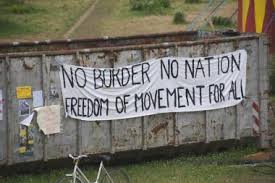
 

images ob


Following a week in which an eye-watering 1,000 migrants are thought to have perished in the Mediterranean, European officials and observers are frantically asking ‘What can be done?’, as if it’s a difficult question. But it isn’t. If you want to stop these terrible deaths at sea, there’s a simple solution: liberalise Europe’s approach to immigration; be as open as possible to the arrival of these budding workers and aspiring citizens from Africa and the Middle East. That is what can be done, and must be done.

Following the drowning of 400 migrants last week after their boat from Libya capsized, and the deaths of 700 more at the weekend, even politicians and commentators who normally turn a blind eye to this mayhem in the Mediterranean have had to address it. But their explanations for the drownings, and their solutions for preventing future deaths, leave much to be desired. Some pin the blame on what British PM David Cameron called the ‘appalling human traffickers’, those chancers who charge migrants a fortune for the trek and boat-trip to Europe. More liberal-leaning observers claim it was Europe’s cutting-back on rescue missions in the Med which contributed to the recent heightened death toll. ‘Stop the traffickers!’, says Cameron; ‘Restart the rescue!’, say people who are critical of Cameron. Both ignore the underlying problem, the thing that empowers the traffickers in the first place and which makes rescue missions necessary: Europe’s erection of a foreigner-deflecting forcefield around its shores. Unable, or unwilling, to criticise Fortress Europe, the political class instead obsesses over its symptoms.

Over the past two decades, thousands of non-European migrants have died as a consequence of Fortress Europe, of the EU’s seafaring policing of all immigration from Africa and Asia. Between 1993 and the end of 2012, there were 17,306 deaths of non-European migrants either during their journey to Europe or while in jail after they arrived. Some froze to death while stowed away in planes; others fell from the bottom of high-speed trains they were clinging to; many drowned off the coast of Italy. This grim death toll has risen enormously since 2012: hundreds more have drowned, most notably on boats from Libya, that place Cameron and Co said they had liberated and prevented from becoming a ‘failed pariah state festering on Europe’s southern border’. In truth, Cameron’s war turned Libya into a deeply divided post-state, in which an incredible third of the population have fled, mainly to Tunisia. Those who try to flee to Europe — into the arms of their supposed liberators — risk death or arrest.

This week, European officials will meet to discuss the migrant crisis, and, if Cameron’s comments are anything to go by, their focus will be on increasing rescue missions while clamping down on ‘the terrible people-traffickers’ who are apparently ‘at the heart of this problem’. This is perverse. The traffickers who, for a hefty price, give migrants a risky passage to Europe are only parasitical on the true heart of the problem, which is the closure of Europe to most non-European migrants. As an Italian commentator said following the deaths of more than 200 people off the coast of Italy in October 2013: ‘What brings thousands of people to trust criminals, pay them 10 times more than they would pay for a comfortable seat on a ferry or airplane, and risk their lives? The overarching answer, in its brutal obviousness, is that they may not legally get on those planes and ferries.’

On the other side of the political spectrum, among left-leaning observers and NGOs like Save the Children, it’s argued that it was the winding-down of sea-rescue missions that made the Mediterranean so dangerous. At the end of last year, the EU-backed, Italian-run rescue mission known as Mare Nostrum was scaled back and replaced by Triton, a smaller border patrol directly overseen by the EU, and apparently this is the problem: #RestartTheRescue goes the hashtag.

But this also makes no sense. Hundreds were drowning in the Med even when these so-called rescue missions were up and running. ‘So called’ because in fact many of the rescue missions now so nostalgically recalled by liberal observers were in fact border-policing operations. Alongside Italian navy forces, Frontex, the vast organisation that oversees EU member states’ collective efforts to police Europe’s external borders, carried out ‘rescue missions’ that were in fact policing in disguise, designed to be a deterrent to those aspiring to come to Europe. As a collection ofpro-immigration NGOs complained in 2008, ‘much of the rescue work by Frontex is in fact incidental to [its] deterrence campaign’, a deterrence campaign that was ‘so broad [and] so undiscriminating’ that often Frontex simply forced migrant boats back to their country of departure. These rescue missions were less about saving migrants than they were about saving Europe from migrants. Many boats got into trouble precisely while trying to avoid these ‘rescues’.

Yet now, liberal observers say #RestartTheRescues, or #DontLetThemDrown. That’s it? Don’t let them drown? Just as Cameron’s focus on wicked people-smugglers detracts attention from why migrants have to be smuggled — because they’re not allowed to enter Europe legally — so the other side’s call for better rescue services overlooks the bigger issue of why so many hundreds of people cram themselves on to unsafe boats to cross the Med. Both sides merely troubleshoot the consequences of a massive political problem they seem incapable of addressing: the existence of Fortress Europe.

What we have here is not a serious debate about border controls or free movement, but rather a clash between those who want to demonise migrants and those who want to infantilise them. On one side, right-leaning politicians, and a certain inflammatory newspaper columnist, depict either migrants or their facilitators as evil people. On the other side, NGOs and broadsheet observers treat them as victims, in need of rescue and some TLC from caring campaigners. Witness Save the Children’s obsessive focus on the children on these boats and the ‘emotional damage’ they may have suffered. This focus on the dependants gives the distinct impression that the migrants in general are a non-autonomous, helpless blob, and it allows Western liberals to imagine themselves in the role of saviour, rescuer of weak black people. As the photography expert Patricia Holland once said of the tendency of reporters in disaster zones to focus on children: ‘As the children in the image reveal their vulnerability, we long to protect them and provide for their needs.’ So it is in the discussion of the migrant crisis. If anything, liberals’ infantilisation of the migrants is worse than certain politicians’ demonisation of them, since the latter at least recognises that the migrants and their facilitators have some autonomy.

We shouldn’t demonise or infantilise these migrants. We should celebrate them for exercising their autonomy in very difficult circumstances and making a conscious decision to take a very risky journey to Europe. They want to come to this continent so badly that they’re willing to trek across deserts and sail across vast seas, and how do we repay their burning aspiration to join us? By criminalising them or patronising them, negating their desire for citizenship in a new world by treating them either as demons or infants, in need of punishment or parenting. That’s enough. We shouldn’t pity these migrants; we should admire them, for using guile, gumption and perseverance to come here. They’re precisely the kind of people sluggish Europe needs more of, an antidote to our students who can’t even clap without having a mental breakdown and our new generation who think that being told to ‘get on your bike’ to look for a job is tantamount to abuse. Let’s relax the borders and let them in to try their luck in our countries and see how they fare. If we do that, we’ll put the traffickers out of business, end the deaths in the Mediterranean, and, more importantly, do our part to enable the aspirations of human beings who have committed no crime other than wanting to realise their potential in our towns, our cities, alongside us.

Brendan O’Neill is the editor of spiked.

Open Borders Manifesto

I have added my name to this Manifesto for Open Borders because in principle I believe in freedom of movement and that the workers of the world have no country. Also, I think the various groups in Australia who oppose the policies of the Labor and Coalition parties need to think beyond the paradigm that divides people into genuine and non-genuine, and political and economic, asylum seekers. It doesn’t matter. Just let them in and share the chaos. It’s time for ‘open borders’ to be part of the public discussion and debate on immigration.

****

On Open Borders Day 2015, the 16th day of March, we marked the third anniversary of Open Borders: The Case. We also published the Open Borders Manifesto, a brief document summarising the objectives of the open borders movement.

The list of signatories is in alphabetical order, based on surname, and is current as of March 16, 2015. If you would like to add yourself to the signatory list, please contact us (preferably via email: openborders@googlegroups.com) and provide your name, with professional or academic affiliations if applicable.

Open Borders Manifesto

Freedom of movement is a basic liberty that governments should respect and protect unless justified by extenuating circumstances. This extends to movement across international boundaries.
International law and many domestic laws already recognise the right of any individual to leave his or her country. This right may only be circumscribed in extreme circumstances, where threats to public safety or order are imminent.

We believe international and domestic law should similarly extend such protections to individuals seeking to enter another country. Although there may be times when governments should treat foreign nationals differently from domestic citizens, freedom of movement and residence are fundamental rights that should only be circumscribed when the situation absolutely warrants.

The border enforcement status quo is both morally unconscionable and economically destructive. Border controls predominantly restrict the movement of people who bear no ill intentions. Most of the people legally barred from moving across international borders today are fleeing persecution or poverty, desire a better job or home, or simply want to see the city lights.

The border status quo bars ordinary people from pursuing the life and opportunity they desire, not because they lack merit or because they pose a danger to others. Billions of people are legally barred from realising their full potential and ambitions purely on the basis of an accident of birth: where they were born. This is both a drain on the economic and innovative potential of human societies across the world, and indefensible in any order that recognises the moral worth and dignity of every human being.

We seek legal and policy reforms that will reduce and eventually remove these bars to movement for billions of ordinary people around the world. The economic toll of the modern restrictive border regime is vast, the human toll incalculable. To end this, we do not need a philosopher’s utopia or a world government. As citizens and human beings, we only demand accountability from our own governments for the senseless immigration laws that they enact in our name. Border controls should be minimised to only the extent required to protect public health and security. International borders should be open for all to cross, in both directions.

Signatories, listed in alphabetical order by surname:

Thorvald Aagaard, Associate Professor, Director of Theater, Pacific Union College
Brian C. Albrecht, PhD candidate, Economics, University of Minnesota
Pedro H. Albuquerque, Associate Professor, KEDGE Business School
Jesús Alfaro, Professor of Law, Universidad Autónoma de Madrid
Shanu Athiparambath
Ben Bachrach
Dave Barnes
Simon Bedford
David Bennion, Attorney
Daniel Bier
Niklas Blanchard, PhD candidate, Human Capital Management, Bellevue University
Luke Blanshard
Joseph Bonneau, Postdoctoral Research Fellow, Computer Science, Stanford University
Donald J. Boudreaux, Professor of Economics, George Mason University
Sam Bowman, Deputy Director, Adam Smith Institute
Geoffrey Brand
Jason Brennan, Assistant Professor, Philosophy, Georgetown University
Beno Brito, Projects Director, Instituto Liberal do Centro-Oeste
Steve Buller
Jason Lee Byas, Fellow, Center for a Stateless Society
Bryan Caplan, Professor of Economics, George Mason University
Leonel Caraciki
Ryan Carey
Simon Cartledge
Richard Yetter Chappell, Lecturer in Philosophy, University of York
Grieve Chelwa, PhD candidate, Economics, University of Cape Town
Lars Christensen
Andrew Jason Cohen, Associate Professor, Philosophy, Georgia State University
Phillip Cole, Senior Lecturer in Politics and International Relations at the University of West of England
Paul Crider
Christopher Dobrogosz
Bryan Joseph Dodson
Eli Dourado
Charles DuHadway
Robert Eckerson, Attorney
Margaret A. Elberson
Ross B. Emmett, Professor of Political Economy and Political Theory & Constitutional Democracy, James Madison College, Michigan State University
Mustafa Erdogan, Professor of Political and Constitutional Theory, Istanbul Commerce University
Daniel Fernández Méndez, Professor, Economics, Universidad Francisco Marroquín
Luis Figueroa, Professor of Ethics of Freedom, Universidad Francisco Marroquín
Bryan T. Fine
Nicholas Fletcher
Scott Freeman
Joshua Gans, Jeffrey S. Skoll Chair of Technical Innovation and Entrepreneurship, University of Toronto
Paul Geddes, Economics Instructor, Columbia College
Jacob Aaron Geller
Giuseppe Germinario
Casey C. Glick, Graduate Researcher in Physics, UC Berkeley
Zachary Gochenour, Visiting Assistant Professor of Economics, Western Carolina University
Nathan Goodman, Lysander Spooner Research Scholar in Abolitionist Studies at the Center for a Stateless Society
Maithreyi Gopalan, Ph.D. candidate, School of Public and Environmental Affairs, Indiana University
Manick Govinda, Visiting Artists Co-ordinator, Manifesto Club
Jameson Graber
Joe Green, Associate Professor of Political Science, Dixie State University
Priscila Guinovart
Jeff Hallman
John Halstead, PhD candidate, Political Philosophy, St Anne’s College, Oxford University
Robin Hanson, Associate Professor of Economics, George Mason University
Mikael Hellstrom, Instructor, Political Science, University of Alberta
Christopher Hendrix
Javier S. Hidalgo, Assistant Professor, Jepson School of Leadership Studies, University of Richmond
Fergus Hodgson, Editor-in-Chief, PanAm Post
Jeffrey Horn
Steven Horwitz, Charles A. Dana Professor and Chair, Department of Economics, St. Lawrence University
Michael Huemer, Professor, Department of Philosophy, University of Colorado
Giancarlo Ibarguen, Former President, Universidad Francisco Marroquín
Tom Jackson
Peter Martin Jaworski, Assistant Teaching Professor, McDonough School of Business, Georgetown University
Scott A. Jenks, Instructor, Department of Medicine, Emory University
Nathan Jones
Emmanuelle Baya Julien
Valdenor M. Brito Júnior, Attorney
Angela Keaton
Rick Kelo
William Kiely
Milo King
Gavin A. Kitchens
Thomas L. Knapp, Director, William Lloyd Garrison Center
Anna Krupitsky
Chandran Kukathas, Chair of Political Theory, Department of Government, London School of Economics
Michelangelo Geovanny Landgrave Lara
Daniele Latella
Mark LeBar
John Lee
Daniel Lin, Professorial Lecturer, American University
Anthony Ling, Editor-in-Chief, Caos Planejado
Raffaele Lo Moro
Ryan P. Long
Roderick T. Long, Professor of Philosophy, Auburn University and President, Molinari Institute
Ray Lopez
Trent MacDonald, PhD candidate, School of Economics, Finance and Marketing, RMIT University
Pedro Magalhães, Attorney and PhD candidate, Law and Economics, Johann Wolfgang Goethe-Universität Frankfurt
Akiva Malamet
Rafael Bortoluzzi Massaiol
Kevin McGartland
Jeremy McLellan
Justin Merrill
Jared Meyer, Fellow, Manhattan Institute for Policy Research
Gary Miguel
Walter Morris, Director, Acton School of Ballet
Joe Munson
Darren Nah, PhD candidate, Politics, Yale University
Vipul Naik
Janet Neilson, Program Developer, Institute for Liberal Studies
Chad Nelson, Attorney and Fellow at the Center for a Stateless Society
Russell Nelson
Jeremy L. Neufeld
Joel Newman
Sebastian Nickel
Eric Nielsen
Federico Oliveri, Research Fellow, Sciences for Peace Interdisciplinary Centre, University of Pisa
Yaël Ossowski, Programs Director, European Students for Liberty
George Pareja
Andrew Pearson
Ryan Pelkey
Luis Pellicano
Alicia Perez
Graham Peterson, PhD candidate, Sociology, University of Chicago
Kaveh Pourvand, PhD candidate, Political Theory, London School of Economics
Lukas Puettmann, PhD candidate, Economics, University of Bonn
Shaun Raviv
Jose L. Ricon
Dylan Risenhoover
Fabio Rojas, Associate Professor, Department of Sociology, Indiana University
John Roccia
Trish Ruebottom, Assistant Professor, Goodman School of Business, Brock University
Antonio Saravia, Assistant Professor of Economics and Director, BB&T Center for Undergraduate Research in Public Policy and Capitalism, Mercer University
Paul Sas
Philip Saunders
Yaakov Schatz
Eric Schmidt
James Schumacher
Andrew Scobie
Hafiz Noor Shams, Founding Associate, Institute for Democracy and Economic Affairs
Jay Shooster
Joshua Shurley, PhD candidate, Politics, University of Manchester
Sarah Skwire, Fellow, Liberty Fund, Inc.
Ben Smith
Evelyn Smith
Nathan Smith, Assistant Professor of Economics and Finance at Fresno Pacific University
Ilya Somin, Professor of Law at the George Mason University School of Law
Piero Stanig, Assistant Professor of Political Science, Università Bocconi
Marilyn Steffen
Wouter Stekelenburg
Barry Stocker, Assistant Professor in Philosophy, Istanbul Technical University
Drew Stonebraker
Scott Sumner, Professor, Economics, Bentley University
Kyle Swan, Assistant Professor of Philosophy, California State University Sacramento
Alex Tabarrok, Bartley J. Madden Chair in Economics at the Mercatus Center at George Mason University
Batur Talu
Laron Tamaye
Fernando R. Tesón, Tobias Simon Eminent Scholar, Florida State University
Pedro Trujillo Alvarez, Director, Department of Political Science, Universidad Francisco Marroquín
Bas Van der Vossen, Assistant Professor, Department of Philosopy, UNC Greensboro
Brian Wagers
Tyler Walker
Hansjörg Walther
Ladan Weheliye
Nicholas Weininger
Christoph Widenhorn
Michael Wiebe, PhD candidate, Economics, University of British Columbia
Samuel Wilson
Stephen Winkler
Barrett Young
Barry York OAM, Historian
Zachary Yost
David Zetland, Assistant Professor of Economics, Leiden University College
Matt Zwolinski, Associate Professor, Philosophy, University of San Diego
Reminder: If you are interested in attaching your name to this declaration, please contact us (preferably via email: openborders@googlegroups.com) and provide your name, with professional or academic affiliations if applicable.

Mr Obama: Tear down that wall! (Open the borders and share the chaos)

The elephant-in-the-room in all current discussions of immigration is the question of ‘open borders’.

President Obama’s speech announcing executive action to grant temporary relief from deportation to about half of the 11 million undocumented immigrants in the USA contained some moving and highly accurate words. Much of what he said applies to Australia too. After all, there is a sense in which we are “a nation of immigrants” and “We were strangers once, too”.

The notion that we were all strangers once suggests its opposite – our common humanity. ‘They’ are ‘us’. ‘We’ are ‘they’.

Obama gave examples of heartbreak and anxiety experienced by decent hardworking parents who faced deportation and separation from their US-born children simply because “they didn’t have the right papers”. He suggested it was unfair (my word) when “circumstances of birth” determined who could and couldn’t be an American. These ‘illegals’ are here, working in menial jobs and paying their way through university, and he wants them given a legal status through a system of registration with the government and payment of a $500 fee, which will protect them from deportation for up to three years, as well as grant them work permits.

There are precedents for such protection under Reagan and Bush. It’s better than the status quo. Were I one of the 4.9 million ‘illegals’ eligible for the protection, then I would breathe a sigh of relief in the here and now.

But, there’s also something inconsistent in Obama’s position when he stresses that the temporary legal status he is offering does not “create a path” to citizenship or permanent residence or access to federal health care. Why not? – given that we are all strangers sharing a common humanity and that “these people” helped create America and keep America going.

And why the temporary nature of the protection from deportation? Why the prospect of renewing the “anxiety and heartbreak” in a few years time?

And why – if we were all strangers once – does the decree only apply to about 5 million of America’s 11 million undocumented immigrants? Why should it matter whether they have been ‘illegal’ for more or less than five years?

A practicable policy, based on the principles argued by Obama, would open the way for citizenship for all 11 million of the undocumented immigrants. And it would be an executive order, which is binding, not an executive action, which isn’t.

To make the fine words and sentiments even shallower, Obama stressed that he wants more resources allocated for border control to stop illegals coming into the US and he wants to “speed the return of those who do cross over”. Why do this if you believe such people help build America and that “Scripture tells us, we shall not oppress a stranger, for we know the heart of a stranger”?

Open the borders – share the chaos!

The elephant-in-the-room in all current discussions of immigration is the question of ‘open borders’. The undoubted benefits of globalisation are often lauded when it comes to trade, communications, cultural exchange and advances in air travel, yet many governments are imposing greater restrictions on who may gain permanent admission into their country.

On the other hand, in our lifetime, many borders have come down. The Berlin Wall is an example that tends to be taken for granted. Chaos ensued, with scores of thousands of east Germans flooding into west Germany. But the chaos was there anyway, and was now simply being shared in the interests of all.

The European Union nations have shared open borders for about 20 years – that’s 26 countries and 500 million people representing about 25% of global GDP. More recently, the Union of South American Nations representing 12 South American countries, have opened their borders to free movement of citizens of their member states. The United Kingdom and Ireland have allowed their citizens unrestricted movement between their countries for a long time, as do India and Nepal.

In 1973, Australia opened its border for the first time since federation in an agreement with New Zealand, the Trans-Tasman Arrangement.

The free movement of people becomes an issue as countries integrate their economies regionally and globally. ‘Free trade’ agreements could – and should – but don’t – provide a framework for the gradual development of open borders and the rights of workers to move as freely as capital, goods and services. The North American Free Trade Agreement between Canada, USA and Mexico imposes restrictions on the right of workers to move freely between the member states. You’d think the trade unions would be protesting about this but they tend to be led by people who do not believe in Marx’s great slogan ‘The workers have no country’ and who instead actually believe there is such a thing as a ‘foreign worker’.

Marx nailed the way things were developing in The Communist Manifesto, in 1848:

“The need of a constantly expanding market for its products chases the bourgeoisie over the entire surface of the globe. It must nestle everywhere, settle everywhere, establish connexions everywhere. The bourgeoisie has through its exploitation of the world market given a cosmopolitan character to production and consumption in every country. To the great chagrin of Reactionists, it has drawn from under the feet of industry the national ground on which it stood… In place of the old local and national seclusion and self-sufficiency, we have intercourse in every direction, universal inter-dependence of nations. And as in material, so also in intellectual production… National one-sidedness and narrow-mindedness become more and more impossible… The bourgeoisie, by the rapid improvement of all instruments of production, by the immensely facilitated means of communication, draws all, even the most barbarian, nations into civilisation. The cheap prices of commodities are the heavy artillery with which it batters down all Chinese walls, with which it forces the barbarians’ intensely obstinate hatred of foreigners to capitulate”.

Nationalism and xenophobia are the main factors working against proper consideration of ‘open borders’ and recognition and acceptance of us all as having once been ‘strangers’. The countervailing forces include classical liberals, such as those at the excellent Open Borders: The Case site, and internationalist leftists (of the kind who prefer ‘red’ to ‘green’ and are welcome at my blog, C21st Left).

Obama made the point in his speech that “mass deportations” are not “realistic” (or desirable). The reality is that immigration restriction itself is no longer realistic and becomes less realistic the more what’s left of the world’s national economies integrate into a global economy with advanced means of communications and travel.

Mr Obama: Bring down that wall!