
A poem written by Tom Griffiths, read by me, with music by my late, much lamented musician friend Peter Gelling (1960-2108), using some material from his archive.
Continue readingTag Archives: Tom Griffiths
Goethe’s Faust: a talisman for our time
Tom G.
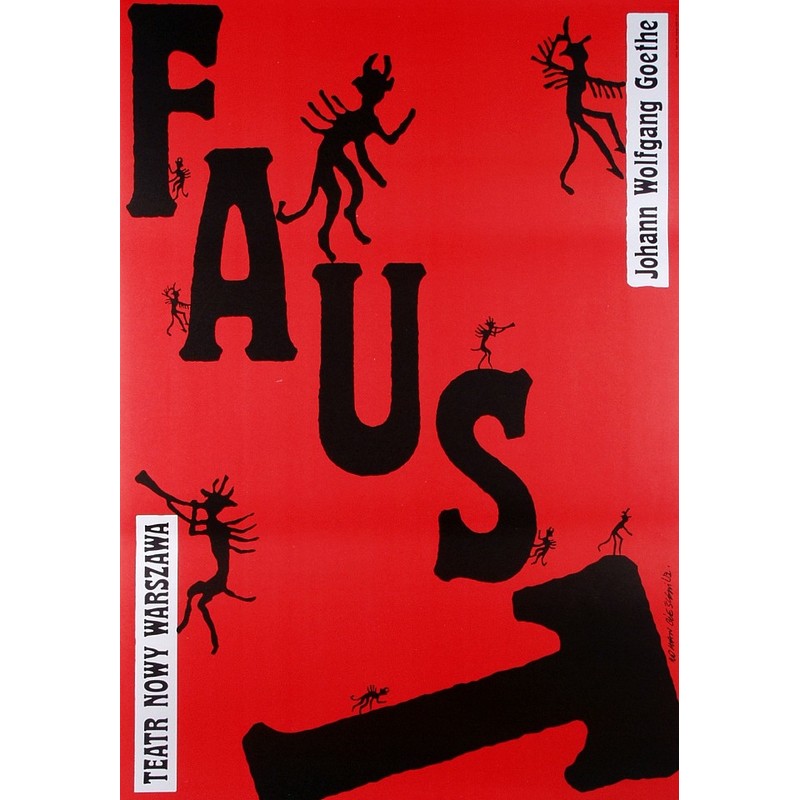
Faust’s transformations rely upon magic. As an artistic contrivance this is quite acceptable, but in the real world, where those lower down the pecking order live, something more is required – and that is an economic development that can transform our material existence and provide a foundation for growth. It is here, still under the assistance of Mephisto, that Goethe gives Faust his most dramatic – and for us – his most significant transformation, that of the developer.
Continue reading‘Mother’ Nature is punishing us with Covid? Call Child Protection!
Tom Griffiths
******
“In a tribal society in which ‘everyone knows’ that you need to sacrifice a goat to have a healthy baby, you make sure you sacrifice a goat. Better safe than sorry.” – Daniel Dennett (Breaking the spell: religion as a natural phenomenon, 2006)
******
The world is now well into the third year of Covid and how we have dealt with it is a mixed bag. Scientifically we have ticked quite a few boxes with research and treatment responses being rapid, ongoing and impressive. The political and policy responses, nationally and internationally, are less impressive due to varied approaches, all ostensibly following the same scientific advice. Regardless of this, governments have taken the pandemic and its impacts – health, social and economic – seriously and negatively.
Continue readingAfghanistan, the Taliban and women/girls – and a poem
(contribution by Tom Griffiths)

With the Afghan government’s ignominious defeat on the tail of the US government’s humiliating withdrawal, a lot – and I mean a lot – of gloating has been in evidence on Farcebook by ostensible leftists, some of whom are former comrades, celebrating another defeat for good ole US imperialism.
Pointing out the defeat and the role of the US in effectively setting up this situation is not the problem. What the problem is is the total (this might be an exaggeration, but not by much) silence on the fate of the Afghan people, in particular Afghan women.
Nowhere amongst my former comrades do I see an ‘ok, now the Yanks and their lackeys have gone the main enemy of the people is the Taliban and the most likely means of defeating them will be through armed struggle.’ Instead, there is silence. If this continues for more than a nanosecond this silence transforms into collusion. Left in form, right in essence we could call it.
A year or so ago I wrote a poem celebrating the bravery and example of a 15 year old girl in regional Afghanistan who, in response to her parents being gunned down before her sought out her father’s machine gun and killed the murderers, at least one of whom was Taliban. I reprint it below:
Qamar Gul and a father’s teaching
As others forgot to question
And rushed to defend the
Old verities and
Inherited wisdom.
As others remained fast
Confusing darkness for light
The old spell began to break
And its truths began to decay
As others panicked
Shielding themselves
From the revealing light
Confusion spread and freedom beckoned.
From the depths ghouls and false healers emerged
Screaming and cajoling
Harnessing death and instilling fear
Settling old scores and new alike.
Such times are indeed dangerous.
How was this man to protect his family?
What if he should fall?
Can friend still be seen from foe?
What if he should fall?
Tradition dictates his daughter’s marriage
The past may still protect…
But what if these ways are not enough?
What if they should fail?
He placed his gun into her hands
He’ll teach her what to do
If fall he should and well he may
Let new ways show the way.
When death came bursting through the door
Stealing her parents from her
This father’s girl knew what to do
And didn’t fail to do it.
Conquering fear
Harnessing anger
She honored her father’s teachings
And moved into the light.
Postscript:
I wrote this poem a year ago when news of Qamar Gul’s actions made international news. I was very impressed by her bravery and the example she was setting – and worry about her safety now given that the Taliban are back in control. When I completed the poem I sent it to a young Afghani colleague and asked her to check the accuracy of its ‘line’ and suggest corrections if necessary. She gave it the thumbs up.
“Follow me and you need never think again”: Richard Wright, Liu Shao-Chi, Julius Fucik, the CPA(ML)… and the fire we need…
The following article is by Tom Griffiths…
“Follow me and you need never think again.”
This was the pithy saying uttered by an old comrade to describe secular religious thinking, or blind faith, in adhering to the Party line, no matter what the line was or how it was arrived at. It need not be confined to, or even predominantly associated with, Communist Party politics of course with yes sir, no sir, three bags full sir, the Daleks “I obey” and other variants all treding the same path. Follow me … arose in the aftermath of the CPA M-L kindly informing a number of us that we had “expelled” ourselves and the sense we then made of how a reputedly revolutionary organization, prompted by the arrest of the Gang of Four, could perform a 180 degree pivot overnight without discussion and still keep a straight face. I need hardly add that we did not keep a straight face but saw this as a joke – and not one on us.
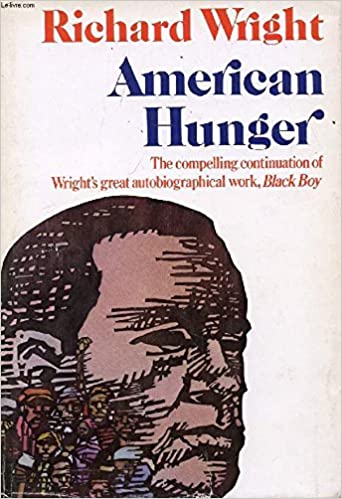
I don’t know about others, but there are some sayings I hear that are gold and are instantly hard wired. “Follow me …” was one of them. It spoke to me then, and has done so since, most recently after reading Richard Wright’s American Hunger, the second part of his autobiography Black Boy that deals, in large part, with his experiences in the CPUSA in the 1930’s. I will come back to this, for while this post is not about Wright per se, his experiences have certainly prompted it. Not for the first occasion it brought into sharp relief the contradiction between communist aspirations (what we believe in, this is what we are fighting/struggling for), and the more disturbing, at times reactionary, internal and personal processes involved with what the ‘correct line’ is, how it is arrived at and ‘followed’. Walking the walk, as well as talking the talk, in other words; how what we do, and how we do it, as a reflection of our revolutionary (transformative or synthesizing) aspirations and practice.
So let me come back to Richard Wright and American Hunger. Wright (1908-1960) was a black American writer of great talent and vision who effectively fled the Jim Crow south when 19. Like so many of his black contemporaries he headed to Chicago. “The environment the South creates is too small to nourish human beings, especially Negro human beings.” he said later in a radio interview. He brought with him an intense curiosity, a hunger, a desire to grow. It was this that enabled him to observe in himself and others who had fled the south, loneliness and confusion. “Wherever my eyes turned they saw stricken, black faces trying vainly to cope with a civilization that they did not understand. I felt lonely. I had fled one insecurity and embraced another.”
By his mid twenties his hunger and curiosity, containing as they did a worldly, universalizing vision, had led him to the CPUSA. “Of all the developments in the Soviet Union the method by which scores of backward peoples had been led to unity on a national scale was what had enthralled me. I had read with awe how the Communists had sent phonetic experts into the vast regions of Russia to listen to the stammering dialects of peoples oppressed for centuries by the czars. I had made the first total emotional commitment of my life when I read how the phonetic experts had given these tongueless people a language, newspapers, institutions. I had read how these forgotten folk had been encouraged to keep their old cultures, to see in their ancient customs meanings and satisfactions as deep as those contained in supposedly superior ways of living. And I had exclaimed to myself how different this was from the way in which Negroes were sneered at in America.”
He wanted to use his ability and drive, with the organizational and political support of the CPUSA, to give the ignored and sneered at a place and a voice on the political stage. This was not simply a political quest, but also one that unavoidably required acculturation. In the same decade Mao was developing the mass line in China, while in still unoccupied Europe Bertolt Brecht was writing The Life of Galileo, the sixth scene of which begins with this couplet: ‘Things indeed take a wondrous turn/When learned men do stoop to learn’. In effect Wright advocated the adoption of a stooping stance and he began a process of taking oral histories from men, like himself, who had migrated north, effectively changing planets in the process. The one we hear about in American Hunger is Ross, a fellow Party member. But rather than applauding and supporting his initiative, what in Maoist language would be termed ‘learning from the masses’, the CPUSA viewed his project with suspicion. Paranoid thinking, in partnership with anxiety, is probably more accurate.
Outside of Ross, who was initially cooperative, this suspicion came from both black and white members. I think I get the nervousness of his black comrades. The confusion and insecurity Wright refers to above sounds very familiar to utterances I have heard from refugees. One, a young Hazara man from Afghanistan, said to a colleague some eight years ago, that what he really needed to know was “where do I fit in?” Coming from a society still dominated by strictly hierarchical and tribal norms this is a question he would never have had to seriously consider before he changed planets. Another, from a Sierra Leonean colleague, put the anxiety and confusion this way: “We have come from hell to find heaven. And it is heaven, if you change overnight.” Wright’s black comrades were still finding their feet, not yet standing on culturally solid ground and needed the support and approval of their white comrades.
Empathic understanding (an interest in, and understanding of, the hurdles they faced) appeared not to be present or offered, a situation Wright found baffling. Offering feelings of acceptance and purpose, probably patronizing, where the rules pertaining to these are too heavily sourced from above, was not good enough. Fascist organizations, and there were a few around at the time, provided this too. Indeed they were arguably better at it as they had no desire at all to see their membership grow intellectually or emotionally. Unthinking loyalty was what was demanded to both the organization and its ideological script.
Under a veil of suspicion Wright was repeatedly questioned about his motives and actions. His explanations fell on deaf ears and he was, again repeatedly, told by members higher up the food chain that he did “not understand”. Projection is an interesting psychological defence mechanism. It is a pity that those not listening to Wright were ignorant of their use of it. More disturbing, however, was the parallel process being reproduced in the party. Being a ‘good communist’ – being seen (needing to be seen) and understood as being compliant, obedient, well behaved and toeing the party line, qualities valorized by Lui Shao-Ch’i (see Quotations of Liu Shao-Ch’i, Paul Flesch and Co.1968, a ‘Little Yellow Book’ worth getting hold of), is not the same as being a good communist. The latter has the capacity, in reality develops the capacity, to swim against the tide, be that tide external or internal and to accept the associated risks. The party line down south was the Jim Crow line where the consequences for not being seen to be ‘good’ and obedient to Jim Crow cultural norms could, and often were, fatal. What Wright and so many others from down south were doing in heading north, was learning how to swim against the tide.
There is a difference between toeing the line (being obedient) and agreeing that a given line or position will be supported and acted upon, and that the processes by which it has been arrived at are democratic and not autocratic. Wright’s experience speaks of the latter and it was something, on a lesser scale, that I recognized at the time I and others ‘expelled ourselves’.
Walking hand in hand with this, and generally justifying it, was the question of organizational security. Wright mentions that, to his understanding, security was reckoned using the conditions under Czarist oppression as a measuring stick. The darkening clouds beginning to engulf Europe will have done nothing to abate this. But the USA was not a fascist state – unless you happened to be black living under the heel of Jim Crow. That this was not sufficiently grasped, underscores the importance of what Wright was trying to do and the failure of the CPUSA in supporting him in doing it. It also indicates that any purportedly revolutionary organization that is too reliant or wedded to top down decision making and the concomitant creation of a culture of membership obedience or compliance is likely to miss what’s under its nose.
None of this is meant to downplay the significance or need of security or measures to maintain a Party’s viability and effectiveness, considerations that become pressing the more oppressive and reactionary the prevailing context. The activities of the Czar’s secret police, the Okhrana, gave the Social Democrats, Bolsheviks, Mensheviks et al good reason to take those activities seriously. So too the activities of the Italian fascist secret police OVRA, the organization upon which the Nazi Gestapo was modelled, not to forget the Gestapo itself. But none of this could justify closing the minds of party members. Caution, in the face of external danger is not the same, and should not be confused with, closed or narrow mindedness in the face of such danger. Paranoid mindsets can be cultivated.
The most influential, and moving, account from a communist who kept the distinction between external danger and internal openness as distinct as circumstances would allow comes from Julius Fucik and his Report From the Gallows. Fucik, a central committee member of the Czech Party, was arrested and gaoled in 1942 and executed the following year. With the assistance of two patriotic cum anti fascist prison warders he was able to write and smuggle out notes of his experiences and thoughts, his report from the gallows. I came across Fucik’s work in the mid to late 1970’s and, given recent events, I found it refreshing, insightful and invigorating. Here was a man experiencing the harshest of treatments, knowing that death was near, yet still embracing life rather than merely clinging to it. What I found particularly impressive was his ability to listen, to want to understand what made his jailers and wardens, most of whom came from working class stock, tick. Much of the book is devoted to what are dubbed in my edition “Figures and Little Figures”, nuanced reflections on comrades (Figures) and those in a more mixed bag, such as the prison superintendent who were certainly enemies and others among the wardens who deserved a deeper level of understanding (Little Figures), His ability to reflect upon and engage with both/all sides of contradictions was an ability, it would seem, that was absent, or certainly wanting in the CPUSA and the CPA M-L
One of the things Fucik’s book did for me was to reinforce or make less abstract the absurdity of the CPA M-L adopting the same organizational structure as that used by the Czech and, I presume, other communist parties in occupied Europe (three member cell structures with one reporting higher up the chain, secrecy over membership etc). In occupied Europe this made a lot of sense – it was about survival. But not in the Australia we lived in. And in attempting to explain the rationale for its being, without getting sidetracked in theoretical bushland, the temptation to reach for the Diagnostic and Statistical Manual of Mental Disorders (American Psychiatric Association) to determine the clinical criteria is difficult to resist. ‘Fucked’ seems an appropriate term to use that bridges the theoretical/clinical divide.
It is tempting to see my use of the concept ‘fuckedness’ as somewhat flippant. And to a degree it is because the ‘clinical’ component can seem like a cheap shot. But there is also a serious side to this that goes well beyond the drab manifestations I and others saw in the CPA-ML or the more disturbing, but not yet out of control manifestations that Wright witnessed and was subjected to. The example I wish to point to is the fate that befell the El Salvadoran revolutionary poet Roque Dalton who was murdered by elements in his own party with whom he was in disagreement over the importance of the party developing a mass base if it were to have any chance of overthrowing the regime. Unsurprisingly perhaps, given his murder, Dalton was argueing the importance of developing a mass base.
Dalton’s poetry is worth chasing up and to give a flavour of it – and of its relevance to this post – the following is the first stanza of his Dialectic of Genesis, Crisis and Rebirth:
‘For you we will not put the Party on an altar/Because you taught us that the Party/is an organism which lives in the real world/and it’s sickness is the same as bankruptcy/Because of you we know, Lenin/That the best crib for the Party/Is fire’
A bitter irony exposed in these lines is that Dalton’s murderers, and those who sanctioned it, were trying to put out the fire.
The fire that Dalton was speaking of, was not simply, or even primarily, that of the class enemy, whose fire belongs in the blindingly obvious department, but, as with Mao’s view of swimming against the tide being a revolutionary principle, refers to internal fire. Using gentler language, but making the same point, Wright referred to this as a “nurturing environment”. To see the meaning of this sentiment as being only directed against the tide generated by one’s political foes misses the point.
The proposition, be that stated openly or assumed, that the party line is, by definition correct, is a reflection of one sided, non dialectical thinking, the heritage of which comes more from medieval or pre medieval mind sets than modernist ones. If ever history were able to assume a sentient human form its reaction to the idea that leadership, be that in revolutionary organizations or not, automatically confers correctness and is thus deserving of deference, would be hysterical rolfing.
Our experience in the CPA M-L exposed political fuckedness, an organizational suspicion cum aversion to internal democratic processes, and a gift for paranoid thinking. This also seems to be the case in Wright’s experience of the CPUSA. The same cannot be said for Dalton’s. Politically fucked, certainly. But his murder exposed something pathalogical that was not only not organizationally contained, but was organizationally facilitated.
Revolutionary movements and parties in the developed world have disintegrated leaving in their wake a smug capitalist class and an opportunist and reactionary ‘left’ cum pseudo left drawn to every form of oppression other than that of class. It is ironic and certainly telling that we now live in an age where the capitalist class is quite happy to bend to and accommodate ‘woke’ agendas. And why not? The property question, the goal of expropriating the expropriators, has been successfully swept under the carpet. No prizes for guessing who/what has been doing most of the sweeping.
One of the tasks of a reemergent and genuine revolutionary left, will be to clean up its act regarding democratic processes; or to borrow from Dalton, to actually understand that the best crib or nurturing environment for its existence and growth is ‘fire’. It is not enough that a leadership pays lip service to the idea, as opposed to the practice of criticism and self criticism, reducing it to an auto de fe in the process. It must be open and be seen as being open, to itself being a target of fire.
One of the things communist parties, in whatever form their new iterations take, will need to do is to ensure that, to paraphrase and tweak Wright, the environment it creates is large enough to nourish the development and growth of rebellious and critical spirits, spirits who can not only keep an active eye and involvement on fire that is externally targeted and generated, but internally generated and directed.
Who do you ‘sock’? From Alice Springs to the ‘Foolish Old Man who moved the Mountains’ – and back
Tom Griffiths
This post is about two seemingly unrelated situations separated by both time and distance. The first situation is local, Alice Springs to be specific, and emerges from a men’s family violence program I helped establish in Alice Springs some five years ago and some of the things I have learned over this time. The other concerns an American steel worker called Mike who was interviewed in one of Studs Terkel’s oral histories, “Working…” published in 1974. Originally reviewed by Marshall Berman in the same year, I first came across it in Berman’s Adventures in Marxism that came out in 1999. For reasons best known to the book gods I reread Berman’s book earlier this year and the connection between Mike and Alice jumped out at me. I will pick this up below but first let me introduce Mike the steel worker.
“Here is “Mike Lefevre” … a 37 year old steelworker. First he abuses intellectuals, complains that they denigrate workers. A moment later, however, he stereotypically denigrates himself: “A mule, an old mule, that’s the way I feel.” He is hurt and angry that his teenage son “lacks respect.” And yet “I want my kid to be an effete snob. …I want him to tell me that he’s not gonna be like me.” He talks about the anger and violence inside him: he goes to a bar, insults someone randomly, starts a brawl. “He’s punching me and I’m punching him, because we really both want to punch somebody else.” But who? Forty years ago in Clifford Odets’ play Waiting for Lefty, a worker punched out his boss, and the audience stood up and cheered. But Terkel’s worker has the brains to see how things have changed: the structure of work is far more abstract and depersonalised today, and cathartic moments don’t come easy. “Who you gonna sock? [asks Mike] You can’t sock General Motors, you can’t sock anyone in Washington. You can’t sock a system.””
What sets Mike apart from many is that he knows, as he’s punching somebody out, that he really wants to direct his fire elsewhere, but feels trapped. He has a sense of what the target might be, but as a solo steelworker, can’t fix the target in his sights, can’t get close enough to ‘sock it’. He has insight, but is hamstrung by despair and self loathing, compounded, it would seem, by isolation. Hope is there too – he reads, looking for answers and direction, but so far these have eluded him.
We don’t know what happened to Mike, whether he was able to shake off his despair and self hatred, find kindred spirits and together work out ways of socking systems rather than each other, but Mike, and so many like him, has soul mates in places like Alice and across the Top End.
Up here where hopelessness, self loathing and despair could be stamped on nearly everyone’s birth certificate, people quickly come to ‘get’, on some instinctive level at least, that you can’t ‘sock the system’, be that the white fella system or the broken aspects of the traditional tribal system, where humbugging, jealousing and payback are spinning out of control, but where you can sure as hell sock one another. And they do, especially the men who target women, usually their wives partners or girlfriends, as well as one another. And when that doesn’t solve anything they take it out on themselves. The family violence rate, often alcohol fueled, the jail numbers, the hospital admissions associated with violent assault and self harm, the suicide rate and the churning out of corrugated road kids who so quickly grow into corrugated road adults … all this and more screams of the pain and rage that springs from despair, the self loathing that often accompanies this and of feeling trapped. Just like Mike.
“Two way learning”
This phrase was used by a close colleague and camp resident whose activism was involved in two of the examples I give below. It describes a means of broadening one’s scope in seeking solutions, of learning from and supporting one another and is in direct contrast to the narrowing and, dare I say it, ‘exclusivizing’ pull of identity politics.
So what do we learn from Mike and how can this learning be used to help people stop abusing one another, especially their family members, and instead to find targets, political, institutional or community ones that are, or have become, part of the problem and not part of the solution? The first thing is to acknowledge that there are sufficient parallels that exist between Mike, his equivalents elsewhere in the world and indigenous populations in Alice and up the top end for similarities to be sought and lessons to be drawn, be these lessons positive ones or negative ones. Without this we turn our backs on one another or look upon one another as curiosities. And Mike gives us both positive and negative. He knows himself that he is hitting the wrong target and hates himself for doing it, for repeatedly getting sucked in. That’s why he drinks himself to sleep, to escape.
Knowing this however, knowing you’re hitting the wrong target, is not a bad place to start. But as Mike would be the first to admit, it’s also not a good place to stay. So how do people get unstuck and find a way forward? They can take another lesson from Mike, a positive one, and look for solutions. Mike’s not just unhappy with himself, he’s unhappy with the situation; it’s why he wants his son to be better than him and good on him for that; it’s why he reads, it’s why he wants to connect somehow with the outside world and to look for ways that will help him find some direction and purpose, to get out from under.
What Mike had not yet learnt (and I hope that he ended up learning this) is that you can, in fact, take on a system but you can’t do it on your own. You need to find friends, people in similar situations who are also pissed off and frustrated, and you need to take this to a higher level (to synthesize it) and figure out which targets are real, accessible and ‘sockable’. This doesn’t happen by magic and it doesn’t come from a bottle; it needs determination, organisation, mutual support and a willingness to learn from one’s mistakes. And if you need to stick your hand up, looking for that support, you do that too.
Invariably this process starts small. Remember the song “From little things big things grow”? It’s telling us something important. Remember Mike’s frustration “you can’t sock Washington”? Wherever Mike was in the States he was nowhere near Washington, nowhere near the government or the bureaucrats he felt screwed by and he was flying solo. Starting too big can be overwhelming and self defeating. More than enough to hate yourself and seek escape in grog.
So what does starting small mean? Let me place this within an Territorian context and give some examples. The first is well known – the struggle for land rights at Wave Hill – the other two, like so many significant struggles engaged in by those who are notionally powerless, virtually unknown and flying under the radar.
The well known.
Vincent Lingiari, land rights and Lord Vestey
This is a very well known story and one that won’t be forgotten. Washington may have been a long way off from Mike, but nowhere near as far as Britain, where Lord Vestey was, or Canberra where the politicians and bureaucrats were and where there was no understanding or support for land rights. As we know, Lingiari and those with him at Wave Hill weren’t budging for anyone and over several years gained widespread support across the nation. Be the politicians sympathetic or be they dragging their heels, they were forced to listen and to give ground, forcing open a door that enabled new struggles and new targets to be identified and targeted.
The less well known
- Grog, humbugging and mayhem at a town camp.
Most readers will have no difficulty understanding the connection between lots of grog and the potential for mayhem. Humbugging may need explaining. As used up north humbugging describes a perversion of the traditional system of mutual obligation where individuals connected by ties of kin are obliged to assist one another in times of need. Ayaan Hirsi Ali and Jared Diamond have written of similar systems in Somalia (Infidel) and New Guinea (The World Until Yesterday) respectively. When the natural world held the whip hand mutual obligation within family or clan systems was essential to survival. While any system is capable of being abused the fine line that existed between survival and disaster acted as a powerful constraint and the system worked, performing its function as intended. Modernity, in whatever form it has taken, has loosened the grip of the natural world significantly and the constraint it exercised no longer applies. The effect of this development has been to undermine the place of mutual obligation and allow its perversion, often distorting it beyond recognition. Under these circumstances it has become parasitic and exploitative rather than supportive. A parody of family humbugging was made in this skit from the ABC’s Black Comedy team. It is one of the funniest and most astute pieces of comedy I have seen in a long time.
With this in mind let me get back to the grog, humbugging and mayhem with a story told to me by one of its principal architects and actors.
Following yet another grog fuelled and mayhem inducing ‘visit’ by some out of town family tearaways to a family in one of Alice’s town camps another of the families decided that enough was enough and began to look for allies and solutions. Consultations with others indicated that they were not alone, everyone knowing the pattern of behaviour and its impacts – humbugging the family to get lots of grog, wild partying, no respect for others, alcohol fuelled violence and a lousy, often dangerous time for others. This pattern had become not only familiar and predictable, but disturbingly so.
With sufficient support garnered within the camp, support was sought externally. This brought on board the Night Patrol, auspiced by Tangentyere Council, the indigenous organization responsible for most of the town camps and the police. Relations between the indigenous population and the police has a very mixed history, but unity here was essential for a viable plan of action to be formulated and enacted. This enabled the identification of two interrelated targets – the visiting tearaways and the distorted obligation system they were riding on, a system that had been turned into its opposite. The plan formulated was simple but required commitment, cooperation and organization. Its success rested upon it being driven from the bottom up. When the tearaways turned up and humbugged the locals to get the grog the police would be informed, would turn up and the grog would end up down the sink. This didn’t need to happen too often before the pennies dropped and the wayward behaviour was curtailed. Mike was shown to be wrong here. You can sock a system, but it needs to be within reach and something that others can agree on.
- The Women’s Safety Committee and the Men’s Safety Committee
When Tangentyere Council began to provide men’s family violence groups in 2014 a few eyebrows in the camps were raised followed by a ‘let’s wait and see how fair dinkum this is’ kind of attitude. Five years down the track the program has shown itself to be fair dinkum, that it understood that you can’t respect people without listening to them and that change that didn’t put most of its energy in a bottom up approach was patronizing and a waste of time. People took notice. Firstly a number of women camp leaders, followed later by male camp leaders, let it be known that they were very unhappy about the violence, often grog fuelled, that was tearing families and communities apart. They requested training and support. Over several months in 2015 the women, who has initiated the contact and the request and then the men, along with the workers from the program that provided the training, learnt a lot from one another. Posters opposing male violence in particular started to appear in the camps, negotiations with various authorities aimed at making the camps safer, word being spread encouraging people to speak out and no longer accept violence, these and more all bear witness to identifying clear targets and working to ensure that blows are aimed at these targets rather than at one another. They also bear witness to the wisdom contained in a traditional Chinese folk tale, The Foolish Old Man Who Removed The Mountains, promoted anew last century in a speech given in 1945 by Mao Zedong, telling of a man who ignored community derision and literally chipped away at his task until God (the people in Mao’s telling), impressed by his determination granted him success. And for those unfamiliar it did involve moving mountains. In Alice we can call this The Foolish Old Women Who Are Moving Mountains. And moving it they are, uniting with others in the process. They will eventually succeed, and while derisive comments can still be heard from naysayers, be they whitefella or blackfella, these are now mutterings, uttered more under the breathe than in the open. A tide has turned. It has a way to come in but its direction and growing momentum is unambiguous.
I think if Mike and the various Mike’s around the world knew about all this he and they would get a real lift, there would be, as my camp colleague put it, “two way learning” and the growth of solidarity on that basis. That’s the good thing about seeking connection with people all over, be they locals or from far away; we get to learn from one another and support one another, we get to identify the right targets and to work out strategies to take them on, we get to sock systems.
* * * *
The dialectical relationship between ‘I’ and ‘We’ – critical response to Michael D. Yates’ ‘Can the working class change the world?’
In the real world we live in – and never more so than in the modern era – it is not the “I” and the “We” but the I/We balance and how this has changed with economic and social development across the span of history.
Thanks to Tom Griffiths for the following article.
* * * *
Last year Michael D. Yates, the Editorial Director of Monthly Review Press had his new book ‘Can the working Class Change the World?’ published. It was received, in leftist circles at least, to popular acclaim.
I came upon the book by accident as I was looking for something to give my son. Given my concerns about the relationship between the revolutionary left and the individual I consulted the Index and sure enough, an entry “individualism, under capitalism” directed me to pp 140-41. As it turned out the preceding three pages pp 137-39 were relevant contextually to what Yates concluded as the necessity of the working class waging “its own war against the I and for the We.”
The ambiguity contained in this conclusion and the manner in which the preceding pages framed it is highly problematic, exposing as it does a pseudo Marxist and ahistorical understanding of the I/We balance and a frankly reactionary position of what this balance should look like if the working classes were in the driver’s seat. Beneath this ambiguity is an ambivalence about individuality per se that borders on hostility. Lukes’ ‘Individualism’ (1973) has done us a favor here as has MacPherson’s ‘The Political Theory of Possessive Individualism’ (1962). The latter details the development, based on need, of theories of the individual that justified the development and ascendance of capitalist property relations in the struggle to break free from feudal constraints. The former, riding on the back of modernity’s achievements, illustrated that individuality and individualism comes in a variety of shapes and sizes (well it/they would, wouldn’t they) some consistent with capitalist property relations and others not consistent. It takes a very selective reading of Marx to not get this. My thoughts on this form the substance of this piece and I should thank Yates for motivating me to post them.
But I would like to firstly clarify what are we talking about when we speak of the I/We balance. The contradiction between the “I” and the “We” – the individual and the family group/community/society, is transhistorical, predating the development of classes and going back to the dawn of human existence. Engels had this to say: “Impressive as the people of this epoch may appear to us, they differ in no way from one another, they are still bound, as Marx says, to the umbilical cord of the primordial community.”
What Engels and Marx were drawing attention to was the binding, caused not by choice, but by the harshness of circumstance, circumstance that did not allow the development of difference. This describes a frozen antithesis, any movement in the contradiction being glacial and occuring over centuries or millenia rather than decades. It has only been in the modern era that this frozen dialectic has melted and the relationship between the “I” and the “we” has not only become dynamic, but has been seen to become so.
* * * *
So let me look at the context and justification Yates provides for us, a context that I can most generously describe as a ‘softening up’ process and less generously as manipulative. He begins under a chapter sub heading, “The “I” and the “We”, and takes us on a folksy recount of a holiday spent with his wife at Point Reyes National Seashore in California. En route they passed through an agricultural area where “we choked on the pesticides … the air was so fouled we couldn’t see the mountains not far to the east.” This may be accurate enough of course but we are being led along a path where the destination is ….well, let’s read on. After references to Tom Joad and Francis Drake (he landed at Point Reyes in 1579 for ship repairs) he introduces us to the native population, the Miwok, the descendents of whom still inhabit the area. The Miwok “were gatherers and hunters, living peacefully in a land of great abundance.” James and Graziani’s California Indian Warfare paint a more nuanced picture pointing out, and providing evidence, that the word “peaceful” is an ambiguous term. Yes, the Miwok were generally a peaceful people but inter and intra tribal conflict were, shall we say, not unknown as was the stealing and raping of women. Indeed a rare surviving record of a war song eulogises this feature: “Leaders, let us go out to war! Let us go and capture a pretty girl.” Cherry picking, we need remind ourselves, is not an activity confined to orchardists.
“Once the Europeans came…” the balance was destroyed. “Disease and extreme culture shock killed most of them” while our lust for land and gold took most of the rest. As he points out “The Miwoks’ “we” was no match for the white man’s “I”. One sidedness in any field of human endeavour always distorts and I make no claim of immunity, but Yates’ agenda blindsides him as he embraces (and promotes) a romanticised account of tribal and pre-modern life. Approvingly, he quotes the view of a contemporary Miwok, Kathleen Smith, who holds that her people have lived in “physical and spiritual balance” without feeling the need to go somewhere else for 8,000 years. This “requires restraint, respect, knowledge and assurance of one’s place in the world.” Not to mention a practical inability, borne of the historical constraints they lived under, to be aware, let alone assured, of any alternative.
* * * *
Idealising the past has a long history, of course. We saw it, for example, in the decades preceding the English Revolution and during the revolutionary decades themselves, where it was common for numerous radical voices to look to, and promote, the Arcadian myth of jolly Olde England before the imposition of the Norman Yoke. As we now know they were marching into the future looking backwards, an understandable reaction given that they were at the dawn of the capitalist and modern era, territory that we have become a lot more familiar with. What was baffling novelty then is no longer baffling. So why, I ask rhetorically, does Yates feel the need to promote a Miwok (or native Indian) Arcadian myth while simultaneously presenting himself as a Marxist and historical materialist?
Once booked into the hostel the reader is subjected to more ‘softening up’. He describes a ‘conversation’ with an east coast law student that degenerated into a lecture, by him, about how California was a monument to waste. In response to her puzzlement he turned his fire onto agriculture, a field of production, she believed, California to be a world leader in. This, the student was to discover, was a view, be it true or not, that would have been best kept to herself.
“This set me off on a lecture about dams, stolen water, subsidized land and water, massive use of pesticides, polluted air and water and exploited farm workers. Measured in terms of energy in and energy out, or in terms of the costs imposed on society by California’s “factories in the fields” the state’s agriculture is not as productive as the Miwok’s gathering and hunting”.
Unsurprisingly she retreats into the next room and, somewhat abashed, Yates follows a few minutes later to “make amends for lecturing her”.
In TV game shows this would be a “but wait, there’s more” moment and Yates does not disappoint. On hearing that she is a law student he seizes the opportunity to tell her (note how the only one doing much listening is her) what a Law Professor tells first years: that lawyers had to learn to be vicious by being treated viciously, a process beginning at law school. After a terse response from her to the effect that at least everyone was on the same playing field, “The woman never spoke to me again.” But Yates is not done. Over the period of his stay he observes her behaviour, concluding that she was oblivious to anyone else’s needs and he and his wife “listened, in amazement as she flirted with a German man” and how “she skillfully led the conversation to her desired outcome” an outcome that enabled her to bask in the glory of the medal she had won at the Beijing Olympics. He paints her, in other words, as a narcissist, an example of the “I” the working class needs to wage war against. Indeed he ends this section with a view of her that is as uncharitable as it is undialectical: Her studies will see her “become firmly and permanently frozen in the “I” and cut off forever from the “we””. Leaving to one side for the moment his view that the “I” is a frozen antithesis, whether she is narcissistic or not is difficult to call because of the way Yates inserts himself in the ‘drama’ and how he needs her to be as he depicts her. In the world of psychotherapy there is a term, projective identification, that describes an unconscious phantasy in which aspects of the self are split off from oneself and attributed to another. In plain language, Yates is telling us a lot more about himself than he realises. In my judgement there is at least as much evidence to suggest that Yates is describing as aspect of himself as there is evidence that the student is a narcissist and doomed to be a frozen “I” cut off permanently from the virtuous “we”.
* * * *
Whether Yates’ hypothesis about his Olympian acquaintance (or mine about him so far as that goes) holds water, his folksy tour has brought us to the kernel of his position, contained in the slightly less than two pages the index had drawn me to. “CAPITALISM IS A SYSTEM of stark individualism” (presumably the high case was to ensure we got the point that capitalism is a system). He goes on to say that “the primary institutions of capitalist society work in concert to inculcate the “I” in everyone, with the corollary that the “we” is detrimental to human welfare…For capitalism to end the “I” must be suppressed and the “we” must come to the fore”.
If he means bourgeois individualism, the kind of individualism that rests upon the individual’s right to own capital – and by extension to exploit the labor of others – and the particular distortions of individualism and individuality that come with this, he should say so. But he doesn’t, opting instead for the more ambiguous I/we dichotomy where, from my viewpoint, he persists in digging a hole for himself. Suppressing the “I” and valorising the “we”, he suggests, “would sound strange to gatherers and hunters who inhabited the earth for almost the entirety of human existence. They had no word for “I” and saw no difference between themselves and the natural world around them. Their lives hinged on cooperation and sharing, and their rituals and institutions helped to ensure that these were maintained. For them the earth was the commons, the property of all. They managed their existence in ways harmonious with nature and kept the earth’s metabolism in balance with their own.” Now what was it that Engels was saying?
This is pretty standard Greenie fare with a touch of Gaia thrown in, the “I” disappearing into a romanticised past and embracing an equally romanticised “we”. But to suggest this is revolutionary, a representation of Marxism and a synthesising pathway, is not only nonsense, it is reactionary nonsense, for while he is correct to assert that our clan and tribal forebears had no word for “I” and that their lives hinged on cooperation and sharing, the ‘decisions’ he is implying they made, were in no sense free.
It is all very well for him to have a crack at the legal student, hypothesising that she was entering a frozen “I” zone but what he describes here is an actual frozen antithesis that covered millenia and kept people, the “we’s” and the, at best, nascent “I’s” held fast within rigid and unforgiving constraints. Whether they realised it or not, they were trapped, their relationship with the natural world being precarious at best. What they did realise was that their task was one of survival and that the “we”, the family, clan or tribe, were survival units. As for the individual, the “I”, for millenia the water was simply too close to the gunnels for the individual to emerge, let alone be able to develop, stand up and rock the boat. And we can’t have the boat being rocked by unruly elements now, can we?!
Harmony was imposed by the strictures and violence of Nature, whose ‘metabolism’ by the way, insisted upon obedience. This was backed up by our own use of violence and by the development and ubiquitous use of shame as a social regulator. In this regard Hobbes’ pithy description of the natural state of humankind before the emergence of central governments as ‘solitary, poor, nasty, brutish, and short’.’ was – and remains – much closer to the mark than Yates. It bears repeating that the first struggle for freedom was freedom from danger, the freedom to survive. For the individual this meant complete identity with the social unit. The reason for the strength of this tie was simple – these are the groups from which the individual could expect help and protection when in dire need. The catch was also simple. There was no room to cherry pick the aspects of this system that one likes and discard the rest. There was nowhere else to go. The struggle, then, to wrest ourselves free from nature and to sever the umbilical cord, was contingent upon survival. It was upon this basis that the individual was able to emerge and is still in the process of emerging in the underdeveloped world.
* * * *
The antithesis has taken a long time to melt and we should certainly be grateful to our forebears for figuring out how to survive because our being here depended on it. This, however, is not an argument to go back, to refreeze. If we are to genuinely respect and thank our ancestors for the sacrifices they made – and they were innumerable and big – we need to move on, take the opportunities provided and seek new ones. Anything less would, in my view, be patronising and, frankly, insulting.
The embracing of the idea that traditional groups or societies (the more ‘natural’ or undeveloped the better) lived in a harmonious balance with Nature is our contemporary version of Arcadian myth and its emergence is not simply a sign of ideological crisis, although that is certainly a part of it. Strangely, perhaps, it is also a sign of our success, for at no stage in our history have we been as free from the clutches of the natural world than we are now. We have lifted ourselves above, and hence separated ourselves from, abject dependence to a more robust and, dare I say it, equal relationship. The whip that Nature’s metabolism cracks may well compel harmony but our nature has shown itself to be not so compliant. As Goethe’s Faust put it “Once I stand still I shall be a slave.” and it is not in our nature to be slaves. When Faust was weaving his magic it was a moribund feudalism that was being put to the sword. From at least the 20thC, before this in most of the West, we have had, or should have had, other targets in mind. With this Yates would agree; capitalism has got to go. But if he thinks that this involves getting rid of the “I”, the continued development of the individual, he is dreaming.
As mentioned above Yates called this section “The “I” and the “We”, setting them up in lifeless opposition. Given the pages that followed his title accurately reflected content. In the real world we live in – and never more so than in the modern era – it is not the “I” and the “We” but the I/We balance and how this has changed with economic and social development across the span of history. From a historical materialist point of view this is not only developmental, but an unfolding dialectical process. During the Stone Age, for example, the meaning of ‘we’ was single layered and, as Yates correctly points out, there was no word for “I”, although he lets slide by, or fails to realise, that this was so because there was no ‘room’ or capacity for the “I” to exist. If Yates wishes to promote this, or something like it, as a ‘lifestyle’ to aspire to, he is welcome to it, but he will have Buckley’s chance in convincing the rest of us – the modern “I’s” and the modern “we’s” to tag along, either voluntarily or under coercion.
In modern societies ‘we’ has many layers including, of course, class, as well as many layers within and between classes. This many layered aspect is significant because it is both a reflection of, and in turn an enhancer, of individual expression and development. Our ‘we-ness’ now extends in a multitude of ways formerly unimaginable. Norbert Elias sums up the significance of the options this development opens up in his The Society of Individuals: “From a certain age the individual can usually withdraw from the family [or group] without forfeiting his or her chances of physical or social survival.” In other words, there is somewhere else to go. But more than this – and this is something that Yates seems not to get at all – not only are there loads of somewhere elses to go to, there are loads of someone elses to go to, or find, as well.
Unlike the “frozen I” that Yates imagines (and needs in order to support his anti “I” distortions) the development of the individual in modern societies is necessarily accompanied by the development of society itself, of, compared to any previous social formation, a multiplicity of choices in how we can be ‘we’ as well as ‘I’. ‘We’ relationships are no longer necessarily permanent and inescapable, no longer confined to family or small community and hence no longer an inescapable impediment to the development of who we choose to relate with and how we choose to do it. Elias adds that “…in combination with a reduction in the power differential (not to be confused with equality of power), the greater variability of relationships forces individuals to take a kind of repeated inventory, a test of relations which is at the same time a test of themselves. They have to ask themselves more often: how do we stand in relation to each other? As the forms of relationship across the whole spectrum, including those between men and women and children and parents, are comparatively variable, or at least not inescapable, their exact form is increasingly the responsibility of the individual partners.” Individuals being increasingly responsible for the type and form of their relationships …? Now we can’t have that, can we? Well, not if the “we” is a Yates “we” in any case.
At least on this reading Yates seems unable to understand that as the “we” develops and becomes more complex, so too does the “I”. Each contains the other and it is important that revolutionary movements, if they are to reemerge, understand this and struggle to overcome a longstanding uncertainty cum ambivalence about the place and role of the individual, be that within groups/parties, the working classes broadly or society as a whole. It is not as if Marxism is a stranger to this aspect – I give examples below – although if one were to confine oneself to much of what passes itself off as the real deal, one could be forgiven for missing this.
* * * *
One of China’s Gang of Four, Wang Hung-wen, commented during the 10th Congress of the CPC that “A true communist must act without any selfish considerations and dare to go against the tide, not fearing either removal from his post, expulsion from the party, imprisonment, divorce nor guillotine.” As a young man at the time I was impressed by the comment but it was not until much later that I came to realise how profoundly radical it was and how relevant to the substance of this post. Yes, he was addressing a Congress, a great big political “we” and through media, broad sections of the Chinese population, an even bigger “we”. But within that context he was aiming his comments at the “I”, at the individual communist or communist sympathiser. In my view, it is only possible to swim against the tide, to be able or prepared to do as Wang suggests, if you are an autonomous individual prepared to put the interests of self aside and stand up, alone if necessary, and take come what may. In fancier jargon we can call this, appropriately, taking personal responsibility for one’s actions and the consequences they invite. It should be noted that part of this responsibility lies in seeking unity in organisational form with others, but is not confined solely to it, as Wang was fully aware.
The Turkish poet and communist Nazim Hikmet spent 18 years of his adult life in gaol for his political activities and the last 13 years of his life in exile. Much of his best poetry was written ‘inside’. A few lines from two of these will suffice: From It’s This Way: “It’s this way/being captured is beside the point/ the point is not to surrender.” And from Galloping Full Tilt from Furthest Asia: “To live free and single like a tree/and in fraternity like a forest/this longing is ours.”
The Czech communist Julius Fucik, captured by the Nazis in 1942 and executed in 1943, wrote on single scraps of paper, smuggled out of prison, what was to become Report from the Gallows. George Lukacs remarked that the ‘New Man’ appears most powerfully and richly in it and it is an extraordinary testament and example of what Wang was getting at. It can still be found on internet bookshops and I would advise readers to find it.
And lastly, going back a little further to the English Revolution (no, not the ‘Glorious’ one, but the real one) there is the example of the Digger Gerrard Winstanley, the most radical voice of the time, as well as being about 200 years ahead of it, who said, circa 1650, “Freedom is the man who turns the world upside down, and he therefore maketh many enemies.” He knew what he was talking about.
There will of course be many other examples and I have only cited these because they were (are) all in my head. What unites them all, what has them singing from the same song sheet, is that they demonstrate the dynamic between the “I” and the “we”, that the development of them as exemplary individuals was enhanced by their engagement in and commitment to the cause of revolution, to the “we”. This was not only where they found themselves, it was where they made themselves. In other words we unite or seek unity on the basis of our pre existing – and valued – individuality, not in spite of, or in opposition to it. Unity (or ‘weness’) of this type, is an expression of our individuality. It does not lose itself in the ‘we’ but finds itself at a higher level of expression. It is a synthesising process of development in other words and it is this feature that is absent from Yates’ understanding of both the “I” and the “we”. His is not a model that speaks of the future.
When asked by a journo where the best place to find comedy was, Australian comedian Barry Humphries, better known, perhaps, as Dame Edna Everage, replied “under one’s nose”. It is good advice and has far broader application than just comedy for this too is where to look for the future, or its seeds, and we would do well to take heed. Looking where Yates is looking will get us nowhere.
* * * * *
‘For America to Live, Europe Must Die’ – existential torpor versus modernity’s melting dialectic (a critique of the reactionary outlook of the late North American Indian activist Russell Means)
Russell Means was a prominent and divisive North American Indian activist, artist, writer (ironic given what he has to say about writing below) and actor who died in 2012. He first came to widespread prominence for his role in the Wounded Knee uprising in 1973. The speech below ‘For America to Live, Europe Must Die’ was given in 1980 and is broadly representative of his views. Visit the Wikipedia page here and follow links for more detailed information. The speech, apparently his best known, was given before several thousand people who had assembled from all over the world for the Black Hills International Survival Gathering, in the Black Hills of South Dakota.
It was forwarded to me by Barry asking my opinion of it and my response was immediate. I was working in Alice Springs at the time and in two nights after work I fired back my comments, contained in the text of the speech. This was certainly a more convenient way for me to respond as I was able to use the framework of the speech without having to develop a separate framework that would have been required by an article. But it also kept the response more lively and in direct contact with what Means was saying; more concrete I guess. Means was clearly a very intelligent and passionate activist and my argument with him, if I can put it that way, is over what road to take as we respond to the challenges thrown up by capitalism and modernity’s melting dialectic more generally. His being divisive is not the problem (we could actually do with more). What divisiveness is over is another matter entirely. Nearly forty years down the track the issues raised by him remain current.
* * * *
(Thanks to Tom Griffiths for this article).
* * * *
Russell Means’ article is in plain font. Tom’s responses are in italics.
* * * *
The only possible opening for a statement of this kind is that I detest writing. The process itself epitomizes the European concept of “legitimate” thinking; what is written has an importance that is denied the spoken. My culture, the Lakota culture, has an oral tradition, so I ordinarily reject writing. It is one of the white world’s ways of destroying the cultures of non-European peoples, the imposing of an abstraction over the spoken relationship of a people.
An inauspicious opening salvo that sets the scene pretty nicely for what follows, not least his romanticisation of traditional culture (here tribal) and his confusion about the abstract and the concrete.
So what you read here is not what I’ve written. It’s what I’ve said and someone else has written down. I will allow this because it seems that the only way to communicate with the white world is through the dead, dry leaves of a book. I don’t really care whether my words reach whites or not. They have already demonstrated through their history that they cannot hear, cannot see; they can only read (of course, there are exceptions, but the exceptions only prove the rule). I’m more concerned with American Indian people, students and others, who have begun to be absorbed into the white world through universities and other institutions. But even then it’s a marginal sort of concern. It’s very possible to grow into a red face with a white mind; and if that’s a person’s individual choice, so be it, but I have no use for them. This is part of the process of cultural genocide being waged by Europeans against American Indian peoples’ today. My concern is with those American Indians who choose to resist this genocide, but who may be confused as to how to proceed.
Well, learning how to write and learning how to use writing as a tool/weapon is a good place to start. It’s not the writing; people have been historically keen to learn and ruling classes, until modernity had matured a little, equally keen to deny them that opportunity. Whose side are you on? His reference to cultural genocide is plainly wrong if we understand by culture something that is living and it being a user’s guide to finding one’s way through the maze of social existence. If we see it as something fixed and eternal then his claim has validity, although then the idea of a requiem might be more appropriate. His view differs radically from American Indian voices I became aware of when visiting Toronto recently. In the Toronto Museum was an extraordinary exhibit of three traditional Indian figures, ‘residents’ of the museum for over a century, transformed by the addition of a power drill, a camera tripod and an ipod. Beneath it was this explanation:
‘We do not want to be depicted in the way we were when we were first discovered in our homeland in North America. We do not want museums to continue to present us as something from the past. We believe we are very, very much here now and we are going to be very important in the future’.
(You notice I use the term American Indian rather than Native American or Native indigenous people or Amerindian when referring to my people. There has been some controversy about such terms, and frankly, at this point, I find it absurd. Primarily it seems that American Indian is being rejected as European in origin–which is true. But all the above terms are European in origin; the only non-European way is to speak of Lakota–or, more precisely, of Oglala, Brule, etc.–and of the Dineh, the Miccousukee, and all the rest of the several hundred correct tribal names).
I don’t have a problem with this paragraph. The term he favours – American Indian and the terms he rejects all have the benefit of drawing multiple tribal backgrounds into a unity. In this it is much like nationality. Within this unity however there is difference, or diversity and I don’t have an issue with that being acknowledged.
(There is also some confusion about the word Indian, a mistaken belief that it refers somehow to the country, India. When Columbus washed up on the beach in the Caribbean, he was not looking for a country called India. Europeans were calling that country Hindustan in 1492. Look it up on the old maps. Columbus called the tribal people he met “Indio,” from the Italian in dio, meaning “in God.”)
I know I’m being picky, but he argues against himself here – he, we, know this because we can not only read the maps, but the historical record.
It takes a strong effort on the part of each American Indian not to become Europeanized. The strength for this effort can only come from the traditional ways, the traditional values that our elders retain. It must come from the hoop, the four directions, the relations: it cannot come from the pages of a book or a thousand books. No European can ever teach a Lakota to be Lakota, a Hopi to be Hopi. A master’s degree in “Indian Studies” or in “education” or in anything else cannot make a person into a human being or provide knowledge into traditional ways. It can only make you into a mental European, an outsider.
And what is wrong with an outsider? Tribalism and small community thinking generally do not trust outsiders. Small group paranoia aids survival when our dependence and domination by the external environment prevents or limits our ability to be open and to trust. If you want to live with your head stuck up a dark and malodorous hole…
I should be clear about something here, because there seems to be some confusion about it. When I speak of Europeans or mental Europeans, I’m not allowing for false distinctions. I’m not saying that on the one hand there are the by-products of a few thousand years of genocidal, reactionary, European intellectual development which is bad; and on the other hand there is some new revolutionary intellectual development which is good. I’m referring here to the so-called theories of Marxism and anarchism and “leftism” in general. I don’t believe these theories can be separated from the rest of the of the European intellectual tradition. It’s really just the same old song.
Yes and no. They emerge from the same song sheet but music is then developed and its constraints transcended. He is exposing his non dialectical way of thinking – he doesn’t need the word, although he is clearly familiar with it, he needs the idea of how and why things change internally.
The process began much earlier. Newton, for example, “revolutionized” physics and the so-called natural sciences by reducing the physical universe to a linear mathematical equation. Descartes did the same thing with culture. John Locke did it with politics, and Adam Smith did it with economics. Each one of these “thinkers” took a piece of the spirituality of human existence and converted it into code, an abstraction.
Good grief, as if how he talks about spirituality is not an abstraction! The ‘code’, the abstractions he accuses Descartes et al of making were no match for his whopper, a damn sight more useful and, dare I say it, closer to the concrete.
They picked up where Christianity ended: they “secularized” Christian religion, as the “scholars” like to say–and in doing so they made Europe more able and ready to act as an expansionist culture. Each of these intellectual revolutions served to abstract the European mentality even further, to remove the wonderful complexity and spirituality from the universe and replace it with a logical sequence: one, two, three. Answer!
This is nonsense. He is suggesting, bluntly, that the “wonderful complexity and spirituality from the universe” under medievalism, or the Dark Ages, or under slave owning societies, traditional players all of them according to his criteria (and mine too actually) was better than what we have and can realistically achieve or aspire to today. Reactionary is a polite description, nutty more to the point.
This is what has come to be termed “efficiency” in the European mind. Whatever is mechanical is perfect; whatever seems to work at the moment–that is, proves the mechanical model to be the right one–is considered correct, even when it is clearly untrue. This is why “truth” changes so fast in the European mind; the answers which result from such a process are only stopgaps, only temporary, and must be continuously discarded in favor of new stopgaps which support the mechanical models and keep them (the models) alive.
All that is solid old chap, all that is solid… He craves for the certainty of eternal truths and when we consider this in relation to social relations, including family relations, he is eulogising a trap, especially if you are female.
Hegel and Marx were heirs to the thinking of Newton, Descartes, Locke and Smith. Hegel finished the process of secularizing theology–and that is put in his own terms–he secularized the religious thinking through which Europe understood the universe. Then Marx put Hegel’s philosophy in terms of “materialism,” which is to say that Marx despiritualized Hegel’s work altogether. Again, this is in Marx’ own terms. And this is now seen as the future revolutionary potential of Europe. Europeans may see this as revolutionary, but American Indians see it simply as still more of that same old European conflict between being and gaining. The intellectual roots of a new Marxist form of European imperialism lie in Marx – and his followers’ – links to the tradition of Newton, Hegel and the others.
This “conflict” is a false antithesis. As he uses this purported contradiction “being” is seen as being static, rather than dynamic, a form of existential torpor. And his use of “gaining” is a ruse employed because it can be seen as having negative, materialist connotations. He uses it to dismiss the idea and promise of development – economic, social or personal. Replace “gaining” with “improvement”, also a word denoting growth, reread his ’contradiction’ and note the different vibe given off.
Being is a spiritual proposition. Gaining is a material act. Traditionally, American Indians have always attempted to be the best people they could. Part of that spiritual process was and is to give away wealth, to discard wealth in order not to gain. Material gain is an indicator of false status among traditional people, while it is “proof that the system works” to Europeans. Clearly, there are two completely opposing views at issue here, and Marxism is very far over to the other side from the American Indian view. But let’s look at a major implication of this; it is not merely an intellectual debate.
The European materialist tradition of despiritualizing the universe is very similar to the mental process which goes into dehumanizing another person.
The reality is actually in inverse proportion and the comparison he promotes is fraudulent. He is right of course that the materialist spirit has despiritualized, ie, demystified the universe. It does so by reeling in understanding from its hiding place beyond the clouds, where it was the property of the gods, onto the ground and hence within our grasp. Tribalism certainly encourages the dehumanization of ‘other’. Modernity does not. Since when is understanding the richness and possibilities present in “another person”, indeed, all of us, “dehumanizing”? As Berman observes in his tribute to Times Square the one nice thing about American imperialism is that it embraced everybody. “Despiritualizing the universe”, as he puts it, is making the universe and us in it, explicable. Seeking answers, pushing the limits and transcending, rather than being trapped inside boundaries, makes us active players, not spiritual zombies.
And who seems most expert at dehumanizing other people? And why? Soldiers who have seen a lot of combat learn to do this to the enemy before going back into combat. Murderers do it before going out to commit murder. Nazi SS guards did it to concentration camp inmates. Cops do it. Corporation leaders do it to the workers they send into uranium mines and steel mills. Politicians do it to everyone in sight. And what the process has in common for each group doing the dehumanizing is that it makes it all right to kill and otherwise destroy other people. One of the Christian commandments says, “Thou shalt not kill,” at least not humans, so the trick is to mentally convert the victims into non-humans. Then you can proclaim violation of your own commandment as a virtue.
If there is a trick here he is the one playing it, although I suspect the trick is being played on him too. When the Old Testament God was taking a breather from smoting this tribe and that he issued the Commandments to his select tribe. “Thou shalt not kill” was an instruction to not kill one’s own. As for the others, follow my example… Christianity deserves praise here because it broadened the Old Testament definition of human and tribe to include everyone. Jared Diamond speaks of precisely the same traditional dehumanizing of other tribes in the New Guinea Highlands (The World Until Yesterday)
In terms of the despiritualization of the universe, the mental process works so that it becomes virtuous to destroy the planet. Terms like progress and development are used as cover words here, the way victory and freedom are used to justify butchery in the dehumanization process. For example, a real-estate speculator may refer to “developing” a parcel of ground by opening a gravel quarry; development here means total, permanent destruction, with the earth itself removed.
I’ll let the hyperbole go through to the keeper, but what he is doing is humanizing the planet and dehumanizing us.
But European logic has gained a few tons of gravel with which more land can be “developed” through the construction of road beds. Ultimately, the whole universe is open–in the European view–to this sort of insanity.
Yes, openness is what it’s about. In one sense he is highlighting the contradiction between the politics of the ‘House’ (or tepee in his case) and the politics of the ‘Street’, closed versus open systems of intercourse. The philosophers he holds a grudge against haven’t despiritualized the world, they have demystified it. This is the high end of town version of what general human intercourse does and it enriches us – materially and spiritually, in the process. What’s not to like? And as for his ‘satisfaction’ being only measured ‘in terms of gaining material’ he not only articulates a lot of pre capitalist thinking, but greenie and pseudo thinking. Good grief, could there be a link? He employs a common sleight of hand here by focussing our attention on only the narrowest impacts and drivers behind capitalist accumulation – profit, exploitation and destruction – the former going only to the capitalist, the middle referring to ‘mother’ earth and humanity and the latter also to dear old mum and the human spirit. (He is reducing human spirit to a form of miserablism, no fun at all). Some of this is true – capitalists do exploit nature and human labour – but he dismisses altogether the accrued benefits of this through increased social wealth and the social, cultural and personal development that this enables. By only highlighting the destructive and venal aspects he opens a wide door for the sort of moral posturing that is rife these days among the pseudos and greenies. For him I suspect it is much more than posturing, more a reflection of a genuine existential crisis or funk. Whichever, we cannot excuse his solutions.
One of the problems he has, and it’s a biggie, is his essential inability to shift between what systems jargon calls different level thinking. A sociological or group perspective as opposed to an individual or personal perspective, what we ‘see’ or experience and the conclusions we draw when inhabiting each level is an example we would immediately recognize. Norbert Elias uses the example of the pilot and the swimmer to explain the tension (advantages/disadvantages) between different level thinking. The latter has the advantage of being above, seeing the overall picture, whether the swimmers are heading toward rough water or dangerous currents or not, whether their direction leads to safety or danger. The swimmer cannot see this, but what he/she can see and experience and what the pilot cannot is what is useful/possible in the immediate situation, what the affect of the currents/tidal pull is on a personal or small group level and what can be done about that in the immediate (or here and now). Revolutionaries, especially ones that have fealty to Marxism, need to be able to swim and fly at the same time. Russell was stuck on the ground, gazing skywards and as we now know, thanks to those wretched scientists and philosophers, the light from the sky reflects a distant past; this is why he is able to romanticize it.
Most important here, perhaps, is the fact that Europeans feel no sense of loss in all this. After all, their philosophers have despiritualized reality, so there is no satisfaction (for them) to be gained in simply observing the wonder of a mountain or a lake or a people in being. No, satisfaction is measured in terms of gaining material. So the mountain becomes gravel, and the lake becomes coolant for a factory, and the people are rounded up for processing through the indoctrination mills Europeans like to call schools.
But each new piece of that “progress” ups the ante out in the real world. Take fuel for the industrial machine as an example. Little more than two centuries ago, nearly everyone used wood–a replenishable, natural item–as fuel for the very human needs of cooking and staying warm. Along came the Industrial Revolution and coal became the dominant fuel, as production became the social imperative for Europe. Pollution began to become a problem in the cities, and the earth was ripped open to provide coal whereas wood had always simply been gathered or harvested at no great expense to the environment. Later, oil became the major fuel, as the technology of production was perfected through a series of scientific “revolutions.” Pollution increased dramatically, and nobody yet knows what the environmental costs of pumping all that oil out of the ground will really be in the long run. Now there’s an “energy crisis,” and uranium is becoming the dominant fuel.
While not confined to this paragraph I detect a lot of envy here (envy is a primitive emotion and seeks to destroy what it cannot have). He is in good company of course, it is pretty rampant in pseudo circles. I think it is a displacement of feelings of disappointment and failure many of us have felt but only a few of us have owned and taken responsibility for. I do not mean that we have ‘caused’ the malaise, although we have certainly been part of it. The malaise is ours, that is the left’s, and not the systems (its problems, contradictions remain, requiring a synthesizing resolution). Rather than spitting the dummy and pointing our collective finger only at the perfidious 1% we need to shake off our dependence on those we make theoretical gods (avoiding responsibility) and understand that we have some work to do.
Above I said that envy seeks to destroy what it cannot have. Jealousy at least aspires to possession. Rather than acknowledging his confusion and existential angst he rationalizes it by blaming the system totally and romanticizing the past. It saves him from thinking his predicament through. This is a pity because he was obviously an intelligent man.
Capitalists, at least, can be relied upon to develop uranium as fuel only at the rate which they can show a good profit. That’s their ethic, and maybe they will buy some time. Marxists, on the other hand, can be relied upon to develop uranium fuel as rapidly as possible simply because it’s the most “efficient” production fuel available. That’s their ethic, and I fail to see where it’s preferable. Like I said, Marxism is right smack in the middle of European tradition. It’s the same old song.
Yep, it’s part of the European song sheet, but with an improved score.
There’s a rule of thumb which can be applied here. You cannot judge the real nature of a European revolutionary doctrine on the basis of the changes it proposes to make within the European power structure and society. You can only judge it by the effects it will have on non-European peoples. This is because every revolution in European history has served to reinforce Europe’s tendencies and abilities to export destruction to other peoples, other cultures and the environment itself. I defy anyone to point out an example where this is not true.
Happy to pick up the gauntlet. We defy anyone to venerate the old ways once they become familiar with what traditional life was actually like, still is in some places, for individuals – women particularly – by reading memoirs by people like Ayaan Hirsi Ali, Phoolan Devi among others or anthropological accounts by people like Jared Diamond. What they will see – if they so wish – are accounts by or about people who have emerged from traditional settings or settings in the earlier stages of transition where, so to speak, the plane has barely left the tarmac.
The destruction he cites was real but it was first and foremost ideological, the destruction of those venerable ideas, as Marx put it, that proclaimed and enforced the belief that nothing different was either possible or permissible.
So now we, as American Indian people, are asked to believe that a “new” European revolutionary doctrine such as Marxism will reverse the negative effects of European history on us. European power relations are to be adjusted once again, and that’s supposed to make things better for all of us. But what does this really mean?
Right now, today, we who live on the Pine Ridge Reservation are living in what white society has designated a “National Sacrifice Area.” What this means is that we have a lot of uranium deposits here, and white culture (not us) needs this uranium as energy production material. The cheapest, most efficient way for industry to extract and deal with the processing of this uranium is to dump the waste by-products right here at the digging sites. Right here where we live. This waste is radioactive and will make the entire region uninhabitable forever. This is considered by the industry, and by the white society that created this industry, to be an “acceptable” price to pay for energy resource development.
Note the sleight of hand – not capitalists or their proverbial lackeys, not bourgeois governments, but ALL of us. He turns a good point about dumping into an attack on all people of European background. It’s so slack it doesn’t even qualify as racist (which he was not in any case).
Along the way they also plan to drain the water table under this part of South Dakota as part of the industrial process, so the region becomes doubly uninhabitable. The same sort of thing is happening down in the land of the Navajo and Hopi, up in the land of the Northern Cheyenne and Crow, and elsewhere. Thirty percent of the coal in the West and half of the uranium deposits in the United States have been found to lie under reservation land, so there is no way this can be called a minor issue.
Correct on this one.
We are resisting being turned into a National Sacrifice Area. We are resisting being turned into a national sacrifice people. The costs of this industrial process are not acceptable to us. It is genocide to dig uranium here and drain the water table–no more, no less.
Now let’s suppose that in our resistance to extermination we begin to seek allies (we have). Let’s suppose further that we were to take revolutionary Marxism at its word: that it intends nothing less than the complete overthrow of the European capitalists order which has presented this threat to our very existence. This would seem to be a natural alliance for American Indian people to enter into. After all, as the Marxists say, it is the capitalists who set us up to be a national sacrifice. This is true as far as it goes.
But, as I’ve tried to point out, this “truth” is very deceptive. Revolutionary Marxism is committed to even further perpetuation and perfection of the very industrial process which is destroying us all. It offers only to “redistribute” the results–the money, maybe–of this industrialization to a wider section of the population.
Yes and no. Yes to his first two sentences, no to his third. Marxists do not aim to level downwards, but upwards. We do not take wealth from the capitalists, but their capital. This is then used to create more socially beneficial wealth and the benefits of that are ‘passed around’.
It offers to take wealth from the capitalists and pass it around; but in order to do so, Marxism must maintain the industrial system. Once again, the power relations within European society will have to be altered, but once again the effects upon American Indian peoples here and non-Europeans elsewhere will remain the same. This is much the same as when power was redistributed from the church to private business during the so-called bourgeois revolution. European society changed a bit, at least superficially, but its conduct toward non-Europeans continued as before. You can see what the American Revolution of 1776 did for American Indians. It’s the same old song. song.
Revolutionary Marxism, like industrial society in other forms, seeks to “rationalize” all people in relation to industry–maximum industry, maximum production. It is a doctrine that despises the American Indian spiritual tradition, our cultures, our lifeways.
“Despise’ is too visceral, but I’ll let it pass. Do we ‘despise’ if we see it as a permanent resting place, a veritable burying ground for human aspiration and progress? Certainly. As something that can, like the rest of us, develop quantitatively and qualitatively? Certainly not; we respect the individuals and people too much to sacrifice them on a mythologized and idealized altar.
Marx himself called us “precapitalists” and “primitive.” Precapitalist simply means that, in his view, we would eventually discover capitalism and become capitalists; we have always been economically retarded in Marxist terms. The only manner in which American Indian people could participate in a Marxist revolution would be to join the industrial system, to become factory workers, or “proletarians,” as Marx called them. The man was very clear about the fact that his revolution could only occur through the struggle of the proletariat, that the existence of a massive industrial system is a precondition of a successful Marxist society.
He has this roughly right, but it is his failure to get dialectics, either intellectually or viscerally that sees him fantasize about the either/or – losing one, idealized and good permanent existential state to another bad and demonized existential state.
I think there’s a problem with language here. Christians, capitalists, Marxists. All of them have been revolutionary in their own minds, but none of them really means revolution. What they really mean is continuation. They do what they do in order that European culture can continue to exist and develop according to its needs.
He is onto something here. Much of what calls itself revolutionary – including things we have been involved with, has not really been able (has not desired?) to see past capitalism in either its economic or social relations. In this sense a % of what he is railing against are things we rail against too. And, paying respect to his reference to language, let’s toss in revisionism and mechanical materialism in their numerous manifestations.
So, in order for us to really join forces with Marxism, we American Indians would have to accept the national sacrifice of our homeland; we would have to commit cultural suicide and become industrialized and Europeanized.
Cultural suicide? This needs to be confronted. Cultures – any of them – that do not change to reflect the conditions and challenges of contemporary life – die. Their ‘permanence’ reflects a relationship between humans and their environment that is static, or nearly so. Cultures redeem themselves, if I can put it that way, by being adaptive and with only a little effort they can also maintain links with their past. But in this relationship between the past and the present we serve the present, not the past.
At this point, I’ve got to stop and ask myself whether I’m being too harsh. Marxism has something of a history. Does this history bear out my observations? I look to the process of industrialization in the Soviet Union since 1920 and I see that these Marxists have done what it took the English Industrial Revolution 300 years to do; and the Marxists did it in 60 years. I see that the territory of the USSR used to contain a number of tribal peoples and that they have been crushed to make way for the factories. The Soviets refer to this as “the National Question,” the question of whether the tribal peoples had the right to exist as peoples; and they decided the tribal peoples were an acceptable sacrifice to the industrial needs. I look to China and I see the same thing. I look to Vietnam and I see Marxists imposing an industrial order and rooting out the indigenous tribal mountain people.
As Marxists we can look at this and accept valid criticisms of the ‘how’, but not about the ‘whether’.
I hear the leading Soviet scientist saying that when uranium is exhausted, then alternatives will be found. I see the Vietnamese taking over a nuclear power plant abandoned by the U.S. military. Have they dismantled and destroyed it? No, they are using it. I see China exploding nuclear bombs, developing uranium reactors, and preparing a space program in order to colonize and exploit the planets the same as the Europeans colonized and exploited this hemisphere. It’s the same old song, but maybe with a faster tempo this time.
This is a dummy spit. His placing planets uninhabited by anything, except maybe microbes, on the same level as earth inhabited by real people and a bunch of near and not so near rellies gives the game away. He is lost (willingly it seems) in a fog of idealized abstractions. Has he any idea about the real circumstances and conditions of the peasants et al he so casually dismisses? It is the system – or his view of it – that he focuses on, not actual people.
The statement of the Soviet scientist is very interesting. Does he know what this alternative energy source will be? No, he simply has faith. Science will find a way. I hear revolutionary Marxists saying that the destruction of the environment, pollution, and radiation will all be controlled. And I see them act upon their words. Do they know how these things will be controlled? No, they simply have faith. Science will find a way. Industrialization is fine and necessary. How do they know this? Faith. Science will find a way. Faith of this sort has always been known in Europe as religion. Science has become the new European religion for both capitalists and Marxists; they are truly inseparable; they are part and parcel of the same culture. So, in both theory and practice, Marxism demands that non-European peoples give up their values, their traditions, their cultural existence altogether. We will all be industrialized science addicts in a Marxist society.
Well the track record gives a basis for this faith – a faith based in evidence I hasten to add – and the capitalists have shown a remarkable capacity to get on top of these ever emergent issues.
I do not believe that capitalism itself is really responsible for the situation in which American Indians have been declared a national sacrifice. No, it is the European tradition; European culture itself is responsible. Marxism is just the latest continuation of this tradition, not a solution to it. To ally with Marxism is to ally with the very same forces that declare us an acceptable cost.
This too gives the game away. While Marxism is certainly part of the European tradition his letting capitalism off the hook indicates that he is opposed to development full stop.
There is another way. There is the traditional Lakota way and the ways of the American Indian peoples. It is the way that knows that humans do not have the right to degrade Mother Earth, that there are forces beyond anything the European mind has conceived, that humans must be in harmony with all relations or the relations will eventually eliminate the disharmony. A lopsided emphasis on humans by humans–the Europeans’ arrogance of acting as though they were beyond the nature of all related things–can only result in a total disharmony and a readjustment which cuts arrogant humans down to size, gives them a taste of that reality beyond their grasp or control and restores the harmony. There is no need for a revolutionary theory to bring this about; it’s beyond human control. The nature peoples of this planet know this and so they do not theorize about it. Theory is an abstract; our knowledge is real.
Assert away. The real knowledge he valorizes is real knowledge that fitted and that emerged (was won) from a particular past. He elevates it to an abstraction, an idealized one at that, cut adrift from real, contemporary life.
Distilled to its basic terms, European faith–including the new faith in science–equals a belief that man is God.
Sounds good to me, we made him after all. Making man a god (and knocking down the Gods in the process) is a progressive yearning and achievement. It is an inherent part of overcoming a near complete and passive dependency on nature. Modernity has given us the means to dispose of them and place ourselves centre stage. Along the way there has been pushback, a cultural drag that sees us make ‘gods’ of leaders and ‘makers and shakers’ (he cites some) and we transfer our dependency – or, at least, too much of it – onto them. Phil Court’s pithy description of this, made in the late 70’s – “Follow me and you need never think again” has been etched in my mind ever since.
Europe has always sought a Messiah, whether that be the man Jesus Christ or the man Karl Marx or the man Albert Einstein. American Indians know this to be totally absurd. Humans are the weakest of all creatures, so weak that other creatures are willing to give up their flesh that we may live. Humans are able to survive only through the exercise of rationality since they lack the abilities of other creatures to gain food through the use of fang and claw.
But rationality is a curse since it can cause humans to forget the natural order of things in ways other creatures do not. A wolf never forgets his or her place in the natural order. American Indians can. Europeans almost always do. We pray our thanks to the deer, our relations, for allowing us their flesh to eat; Europeans simply take the flesh for granted and consider the deer inferior.
There is a poetic beauty to this prose and its creative impulse should not be dismissed, but let us not confuse the beauty of words with science which has a beauty and majesty of its own.
After all, Europeans consider themselves godlike in their rationalism and science. God is the Supreme Being; all else must be inferior.
This is childish. Creatures do not willingly give us their flesh, nor do they see us as weak and pity us. The wolf and the deer are not capable of making rational choices. A wolf does not choose to accept the natural order. To do so it would need to, and be capable of, appreciating alternatives. Wile E Coyote our wolf is not. He does not get hold of ACME goodies as he unhatches his diabolical (and tragically flawed) plans to catch the Road Runner. He/she obeys instinct or dies (a fate that may await anyway). Russell is running with an animistic mysticism that belongs to the childhood of our social evolution. Such thinking may have provided succour in our earlier days but time, us with it, has moved on. And need I add that in the process of moving on we have used plenty of fang and claw. The prose he uses reflects an early grappling with trying to make sense of the world and our place in it. It helped with the overriding task of survival. There is no point at all in looking for higher level explanations unless we have the time and opportunity to do so. When we do not, spending time is a waste of time and may undermine our ability to survive.
All European tradition, Marxism included, has conspired to defy the natural order of all things.
Quite so, that’s why we love it. As Gerrard Winstanley, the most radical voice of the English Revolution observed, “Freedom is the man who turns the world upside down, and he therefore maketh many enemies.”
Mother Earth has been abused, the powers have been abused, and this cannot go on forever. No theory can alter that simple fact. Mother Earth will retaliate, the whole environment will retaliate, and the abusers will be eliminated. Things come full circle, back to where they started. That’s revolution. And that’s a prophecy of my people, of the Hopi people and of other correct peoples.
The spirituality so enamoured by him is, compared to the spirituality made possible by modernity, impoverished. It leaves us as dependent children. I much prefer to stand up with and join my fellows.
American Indians have been trying to explain this to Europeans for centuries. But, as I said earlier, Europeans have proven themselves unable to hear.
Oh we’ve heard all right and not just from American Indians. Many such voices were raised during medieval times across Europe resisting change and wanting to keep people ‘spiritually enriched’ and in their place. That’s why we’ve moved on.
The natural order will win out, and the offenders will die out, the way deer die when they offend the harmony by over-populating a given region. It’s only a matter of time until what Europeans call “a major catastrophe of global proportions” will occur. It is the role of American Indian peoples, the role of all natural beings, to survive. A part of our survival is to resist.
He is right here – at least much of the time. Survival is the name of the game and has been since year dot – ask the wolf. But where is abundance, thriving (and I’m thinking more culturally/spiritually than materially although they are connected)? Without these survival is also a trap that holds us tight and it has taken our forebears millennia of struggle, suffering and resilience to break free from its constraints.
We resist not to overthrow a government or to take political power, but because it is natural to resist extermination, to survive. We don’t want power over white institutions; we want white institutions to disappear. That’s revolution.
American Indians are still in touch with these realities–the prophecies, the traditions of our ancestors. We learn from the elders, from nature, from the powers. And when the catastrophe is over, we American Indian peoples will still be here to inhabit the hemisphere. I don’t care if it’s only a handful living high in the Andes. American Indian people will survive; harmony will be re-established. That’s revolution.
No, it’s nihilism.
At this point, perhaps I should be very clear about another matter, one which should already be clear as a result of what I’ve said. But confusion breeds easily these days, so I want to hammer home this point. When I use the term European, I’m not referring to a skin color or a particular genetic structure. What I’m referring to is a mind-set, a worldview that is a product of the development of European culture. People are not genetically encoded to hold this outlook; they are acculturated to hold it. The same is true for American Indians or for the members of any culture.
This is a good point and one our current ‘right on’ identity set could take notice of. Indeed he is miles ahead of them and I have a sneaking feeling he saw them coming.
It is possible for an American Indian to share European values, a European worldview. We have a term for these people; we call them “apples”–red on the outside (genetics) and white on the inside (their values). Other groups have similar terms: Blacks have their “oreos”; Hispanos have “Coconuts” and so on. And, as I said before, there are exceptions to the white norm: people who are white on the outside, but not white inside. I’m not sure what term should be applied to them other than “human beings.”
What I’m putting out here is not a racial proposition but a cultural proposition. Those who ultimately advocate and defend the realities of European culture and its industrialism are my enemies. Those who resist it, who struggle against it, are my allies, the allies of American Indian people. And I don’t give a damn what their skin color happens to be. Caucasian is the white term for the white race: European is an outlook I oppose.
In spite of the generally reactionary nature of the speech his discrimination here is well made.
The Vietnamese Communists are not exactly what you might consider genetic Caucasians, but they are now functioning as mental Europeans. The same holds true for Chinese Communists, for Japanese capitalists or Bantu Catholics or Peter “MacDollar” down at the Navajo Reservation or Dickie Wilson up here at Pine Ridge. There is no racism involved in this, just an acknowledgment of the mind and spirit that make up culture.
In Marxist terms I suppose I’m a “cultural nationalist.” I work first with my people, the traditional Lakota people, because we hold a common worldview and share an immediate struggle. Beyond this, I work with other traditional American Indian peoples, again because of a certain commonality in worldview and form of struggle. Beyond that, I work with anyone who has experienced the colonial oppression of Europe and who resists its cultural and industrial totality. Obviously, this includes genetic Caucasians who struggle to resist the dominant norms of European culture. The Irish and the Basques come immediately to mind, but there are many others.
His working at ground level (or should that be sea level?) is essentially correct. Where do correct ideas come from after all? It is his failure to link this with an abstract that springs from, and in turn speaks to, the present and future that leaves him stranded on the docks after the ship has well and truly sailed.
I work primarily with my own people, with my own community. Other people who hold non-European perspectives should do the same. I believe in the slogan, “Trust your brother’s vision,” although I’d like to add sisters into the bargain. I trust the community and the culturally based vision of all the races that naturally resist industrialization and human extinction. Clearly, individual whites can share in this, given only that they have reached the awareness that continuation of the industrial imperatives of Europe is not a vision, but species suicide. White is one of the sacred colors of the Lakota people–red, yellow, white and black. The four directions. The four seasons. The four periods of life and aging. The four races of humanity. Mix red, yellow, white and black together and you get brown, the color of the fifth race. This is a natural ordering of things. It therefore seems natural to me to work with all races, each with its own special meaning, identity and message.
The ‘natural order of things’ for most of our species time has been clan and tribalism and very ‘in house’. This has engendered separatism, or perhaps more accurately, justified it. Trust and mutual reliance was ‘in house’ and outsiders, the ‘other’, were mistrusted or feared. This is what modernity has helped us overcome. It is ironic and a pity that this progressive aspect he holds is swamped and almost lost in a reactionary covering.
But there is a peculiar behavior among most Caucasians. As soon as I become critical of Europe and its impact on other cultures, they become defensive. They begin to defend themselves. But I’m not attacking them personally; I’m attacking Europe. In personalizing my observations on Europe they are personalizing European culture, identifying themselves with it.
Yes they are – and with good reason because key components of the individualizing synthesis have been hard wired.
By defending themselves in this context, they are ultimately defending the death culture. This is a confusion which must be overcome, and it must be overcome in a hurry. None of us has energy to waste in such false struggles.
Caucasians have a more positive vision to offer humanity than European culture. I believe this. But in order to attain this vision it is necessary for Caucasians to step outside European culture–alongside the rest of humanity–to see Europe for what it is and what it does.
Contradictions are not resolved (synthesised) by stepping outside of them. Or as Blake put it in Heaven and Hell “Without Contraries is no progression”. But the synthesising process here is a subjective one – we have to want to do it rather than having it done for us.
To cling to capitalism and Marxism and all other “isms” is simply to remain within European culture. There is no avoiding this basic fact. As a fact, this constitutes a choice. Understand that the choice is based on culture, not race.
Well, he is making a choice too, but I take his essentially correct point. We are choosing to move forward and just because ‘beyond here there be dragons’ is no reason to go backwards.
Understand that to choose European culture and industrialism is to choose to be my enemy. And understand that the choice is yours, not mine.
This leads me back to address those American Indians who are drifting through the universities, the city slums, and other European institutions. If you are there to resist the oppressor in accordance with your traditional ways, so be it. I don’t know how you manage to combine the two, but perhaps you will succeed. But retain your sense of reality. Beware of coming to believe the white world now offers solutions to the problems it confronts us with. Beware, too, of allowing the words of native people to be twisted to the advantages of our enemies. Europe invented the practice of turning words around on themselves. You need only look to the treaties between American Indian peoples and various European governments to know that this is true. Draw your strength from who you are.
This is a fair enough point and could be taken from any self help manual – which means it is easily transformed into the sententious. The problems presented by the treaties are not merely hedges in their maze, impassable barriers, but present opportunities too, not to be given, but to be fought for. Solutions and progress are to be found, in other words, on the arena. Going off in a high dudgeon is no solution.
A culture which regularly confuses revolt with resistance, has nothing helpful to teach you and nothing to offer you as a way of life. Europeans have long since lost all touch with reality, if ever they were in touch with who you are as American Indians.
This hints to me of a hostility to revolution and here I am meaning social rather than political revolution.
So, I suppose to conclude this, I should state clearly that leading anyone toward Marxism is the last thing on my mind. Marxism is as alien to my culture as capitalism and Christianity are. In fact, I can say I don’t think I’m trying to lead anyone toward anything. To some extent I tried to be a “leader,” in the sense that the white media like to use that term, when the American Indian Movement was a young organization. This was a result of a confusion I no longer have. You cannot be everything to everyone. I do not propose to be used in such a fashion by my enemies. I am not a leader. I am an Oglala Lakota patriot. That is all I want and all I need to be. And I am very comfortable with who I am.
I am not so sure that he was comfortable with who he was – or perhaps became. By all means dismiss Marxism; a lot of crap has been associated with it and he may well have been disillusioned with the crap as we are too. But the tone of his speech speaks of defeat, disillusion, even despair, leading to withdrawal and a full scale retreat. Whatever we may think of this, it is not where the future lies. For this we should direct our sights to the statement provided by those North American Indians behind the Ontario Museum exhibit.
The politics of the House and of the City… New York, New York, So Good They Named it Twice…
‘… an ongoing commitment to revolutionary politics have pulled me up and enabled me to appreciate that 280 odd years ago Montesquieu identified what was vital and, in terms of social relations, revolutionary about the city. His heroes, were a couple of expat Sultans (what else), caught up in the thrall of the street where everybody is unveiled. “Here everything speaks out; everything can be seen; everything can be heard; the heart is as open as the face”. And it wasn’t long before the fact that “everything can be seen” exposed the Bourbons and the aristocracy in general as emperors with no clothes’.
Thanks to Tom Griffiths for this contribution.
* * * *
New York, New York, So Good They Named it Twice…
And the rest goes…
New York, New York, all the scandal and the vice …
I love it.
New York New York, now isn’t it a pity
What they say about New York City?
I loved this song when it came out, its cheek, irreverence and capacity to laugh at itself. And I couldn’t help being reminded of it as I was reading the late Marshall Berman’s On The Town, One Hundred Years of Spectacle in Times Square. Both seemed to be singing from the same song sheet.
While this post has been prompted by my reading of Berman’s final book my point in doing so springs from my view of how important the city – urban life and experience – is in human development and how ‘missing the boat’ much of the left has been in accepting both the opportunities and challenges this development has thrown up. The politics I will be drawing attention to (and where the left is, or should be in relation to it) can be summarised in the distinction to be made between the politics of the House and the politics of the Street. And let me be clear, I’m for the politics of the Street. I will give some space to the House further down, but first lets go for a walk because the modern city creates an essential link in providing individuals, in particular working class individuals, with opportunities for personal development and growth (they are individuals as well as members of a class, remember) opportunities for them to break free of the constraints imposed by the House.
What impressed me about Berman’s book – the spin Berman puts on the maelstrom that is the modern world generally and of which Times Square is a highly concentrated symbol – is its vitality and its liberating aspect. And in saying this I in no way wish to downplay or ignore the challenges that have accompanied this. Berman makes no claim to being the first to highlight this and makes reference to two French writers of past centuries to point out that the link between modernity and the Street, while an essential feature of modernity, is not new. A key Enlightenment figure, Montesquieu wrote of it in his Persian Letters (1721), and over a century later the poet Baudelaire identified the modern urban centre as a space where old (pre modern) boundaries were broken down and new possibilities opened up, coining the term “the heroism of modern life’ in the process. Times Square, the flawed hero of Berman’s book has lived, or should I say enabled, Baudelaire’s heroism in concentrated form since the 1890’s.
Berman gets down to business straight away describing the modern city as a place that enables an individual to be both oneself and someone else. Being social animals we carry the seeds of curiosity, a desire for growth and an empathic sensibility within us and the possibilities described by Berman enables their germination and growth. What is made possible here is to expand beyond oneself, beyond formerly socially or family imposed boundaries and constraints, to be able to transcend these limits and grow.
In the early 21stC the Islamic fascists are acutely aware of and threatened by this possibility and this helps explain their violent hatred of modernizing influences that disrupt and transform social and family relations. Please note that social and family relations are not being spoken of here as abstract relations, but as relations that still have pre modern or medieval hooks embedded in the flesh of the men, women and children who are the real life players in those relations. Those who identify with the left should not be too smug about this because although what now passes for the left have never approached the loony killjoy levels of the Islamic fascists or Islamic fundamentalists generally, it has historically contained a strong current of killjoyism of which the odd parallel can be drawn – that being the antipathy and mistrust felt about the unconstrained individual, let loose from the ‘safe’ bonds of the House where, historically, the teaching and maintenance of family and social hierarchy were enacted.
“One of the primary human rights is the right to the city” argues Berman, the right to a space and an opportunity for individual and social transformation. But how does the city enable this, what makes it happen? And, in any case, anticipating mutterings coming from the background, aren’t there casualties, I mean cities are hardly beds of thornless roses and many with progressive pretensions think thorns is about all they have or have come to have.
Enter Times square, what it represents and opens up.
Times Square as we know it – an entertainment and commercial centre – came into its own with electrification and by the 1890’s had already developed a ‘reputation’ that scandalized the morally precious of the day by giving them innumerable reasons to hyperventilate and complain about falling moral standards. It takes little imagination to write their script – the denunciation of public spaces like bars, theatres, dance halls, cafes and the like as “brothels” or to understand it as a voice belonging to the House.
Initially this group had, to rope in modern terminology, some diversity, being a collection of traditional moralists, including secular moralists and evangelicals. Low hanging fruit one might think. But by the early 20thC their number came to include secular intellectuals with left politics “who wanted the masses to be radical and militant and to struggle for their rights…” [just so long as these rights didn’t extend to expressions of individual and sexual freedom] “…who believed that commercial mass culture was corrupting their minds”. In spite of the cultural shift in social attitudes to sexual mores this whinge remains a very contemporary trope. And it wasn’t just (or even, if we are to be honest) commercial mass culture that was the main corrupting element, it was sex. No surprises here of course.
Both men and women had good reason to be drawn to the Square’s promise, to be able to break free of the rigid stereotypes and expectations of the House, stereotypes and expectations that had been particularly constraining on women. A good way of looking at the complaints of the moralists (of whatever hue) – the Mary Whitehouse set and the Iranian and Saudi moral police being more contemporary equivalents – was that they were complaining about the breakdown between the rigid separation of the House and Street and the power relations between the sexes that were reflected in this. This distinction rang bells for me in two ways. Most importantly (and most recently) it summed up a lot of what I have seen in the work I have been doing in the family violence arena and the refugee/new settlers arena where individuals and families have come from regions where the transition from the traditional to the modern is unfinished business. Here women are supposed to belong in the House; it is not only their domain, it is where they belong and where they have been kept.
In western societies women have been on the Street and fighting for their right to be there for a considerable period as the examples of Montesquieu, Baudelaire, Jacques Brel (see below), amongst others and Times Square indicate, but for many coming from backward or relatively undeveloped regions this fight is in its early stages. By way of example a former colleague had recorded a series of interviews with three former refugees from Africa dealing with family based violence and “upside down families”. The female interviewee, entering middle age and with dependent children, had likened traditional marriage in Africa to “a prison” where she was obliged to obey her mother in law and submit to the overall authority of the men of her husband’s family. She initially found the situation in Australia so different and confusing that, she explained, “for two years we go mad”. She meant by this that the breakdown of the rigid and hierarchical boundaries between the House and the Street was so exhilarating and discombobulating that it took, in her experience, two years for the penny to drop that with this new freedom came the opportunity for personal growth and, contained in this package, personal responsibility. That being said, she was under no illusions that upside down was the right way up.
Baudelaire’s ‘heroism of the street’ spoke of this development in the mid 19th century, but over a century earlier Montesquieu had noticed that the cat was already coming out of the bag in his Persian Letters. Montesquieu and I go back a long way, to my first year at university and we parted company soon after (read almost immediately) and too soon for me to really get was he was on about when it came to urban life and modernity. Time, Berman and an ongoing commitment to revolutionary politics have pulled me up and enabled me to appreciate that 280 odd years ago Montesquieu identified what was vital and, in terms of social relations, revolutionary about the city. His heroes, were a couple of expat Sultans (what else), caught up in the thrall of the street where everybody is unveiled. “Here everything speaks out; everything can be seen; everything can be heard; the heart is as open as the face,”” And it wasn’t long before the fact that “everything can be seen” exposed the Bourbons and the aristocracy in general as emperors with no clothes.
And this brings me to the second bell ringing aspect of the distinction between the House and the Street and that is the overtly political aspect, that which should be the bread and butter of those holding revolutionary or radical pretensions. Here I found Berman’s take on Times Square (and by implication its equivalents elsewhere) refreshing, thought provoking and speaking directly to the synthesising sensibility that sits at the analytic heart of Marxism – or, rather, should sit at its heart. Above I had touched upon the modern cities transformative qualities, qualities that enable growth and that throw up new challenges. Berman describes Broadway street culture as being created by the sons of migrants, especially from the more backward areas of Europe, who had come to America seeking a better life. With them they not only brought aspirations that challenged the old ways, but constraints that contained them, a cultural drag from the old times, representing the mores of the traditional House. One of the aspirations of the sons was for this street culture to include women. Women also wanted that space and stepped in, although not yet as equals. It was a task of the daughters (and granddaughters …) to begin to renegotiate the rules of the dance.
But from the word go the daughters were part of the action and as early as 1892, a mere eight years before the formation of the International Ladies’ Garment Union in New York, a writer wrote of working class women, lonely after a working day venturing out of their hall bedroom, cold and lonely ”to lose herself in the unending procession on Broadway.” Berman points out that “there may never have been such a vast variety of women thrown together in any one place before.”
The square emerged as a place where men, women, kids from all over the world dreamed of ‘making spectacles of themselves’, of being unveiled. Picking up the same theme late Belgian singer/songwriter, Jacques Brel, in his song Timid Frieda picked up in the mid 20thC where Montesquieu and Baudelaire had left off in the preceding two. And in doing so he was able to highlight the tensions and challenges of the politics of the Street that had now fully matured. Timid Frieda:
Will they greet her
On the street where
Young strangers travel
On magic carpets
Floating lightly
In beaded caravans
Who can know if
They will free her
On the street where
She comes to join them
There she goes
With her valises
Held so tightly in her hands
Timid Frieda
Will life seize her
On the street where
The new dreams gather
Like fearless robins
Joined together
In high-flying bands
She feels taller
Troubles smaller
On the street where
She’s lost in wonder
There she goes
With her valises
Held so tightly in her hands
Timid Frieda
Won’t return now
To the home where
They do not need her
But always feed her
Little lessons
And platitudes from cans
She is free now
She will be now
On the street where
The beat’s electric
There she goes
With her valises
Held so tightly in her hands
Timid Frieda
Who will lead her
On the street where
The cops all perish
For they can’t break her
And she can take her
Brave new fuck you stand
Yet she’s frightened
Her senses heightened
On the street where
The darkness brightens
There she goes
With her valises
Held so tightly in her hands
Timid Frieda
If you see her
On the street where
The future gathers
Just let her be her
Let her play in
The broken times of sand
There she goes now
Down the sidewalk
On the street where
The world is bursting
There she goes
With her valises
Held so tightly in her hands.
It is a fabulous song. As one would anticipate after 200 plus years Brel’s lyrics picks up Montesquieu’s identification of early promise and Baudelaire’s more developed 19thC depiction and exposes a fully developed dialectic. The left I identify with walk with Timid Frieda offering encouragement if asked for – although she seems to be doing pretty well under her own steam. The square, the Street simultaneously liberated women and presented them (and the guys) with new challenges. But there was no turning back. If the rules of the dance were to be renegotiated you needed to be on the dance floor.
As touched upon above revolutionary parties or organisations (or those with pretensions), have a pretty chequered history when it comes to jumping onto the dance floor, letting their hair down and encouraging others to join in. And when it comes to understanding the transformative possibilities inherent in this they didn’t even make it onto the dance floor. The irony here is that the proverbial masses – and most were working class remember – were showing us the way and embracing “the street where the future gathers.” In doing so they ignored the cautionary, if not disapproving tones coming from comrade central about bourgeois frivolity and self indulgence undermining class solidarity and commitment to ‘the struggle’.
Breaking out and having fun, especially where sex is stirring the pot, has been more House than Street with communist parties and organisations stepping around the issue rather than embracing it. Class struggle and revolutionary politics were serious business (this aspect is true) and demanded a commitment that found the ‘letting one’s hair down’ side of things diversionary (read, with Russian Accent) petty bourgeois individualism. This aspect is not true and is a false antithesis; it is a voice coming from the House.
This is not to suggest that the tension between the serious aspect and being “on the street where the beats electric” is ever in abstract balance. Letting one’s hair down for those revolutionaries in occupied Europe during WW2 was not an option and needed to be put on ice while confusing right wing bourgeois democrats as ‘fascists’ and drawing parallels with Nazism is simply nutty and a sign of isolation. Please pass the bucket of cold water.
What the politics of the Street does, in effect, is ‘invite’ us to look forward, to grapple seriously with the contradictions inherent in its development, those affecting personal development, our place in the dance, in particular and to try and identify the synthesising processes that take us forward, that open up new possibilities and new challenges. But this remains an invitation; free will, choice and responsibility cannot be avoided whether we accept the invitation or not. While it would be drawing a long bow to say that the left’s collapse has been due to its inability to transcend the politics of the House and embrace that of the Street – its failure to get on top of economic challenges and present credible revolutionary alternatives having a bit to say about this collapse too – the left’s conflation of the development of individuality with bourgeois individualism has seen it trailing rather than leading.
This aspect has been a primary interest of mine since my work as a relational and group therapist has forced me to confront the place of choice and personal responsibility within the context of group and family dynamics and by implication social dynamics. This has taken a sharper form with the work I have done over the past 10-15 years with individuals and groups from within what is called new and emerging communities – primarily refugee communities – where the politics of the House, the traditional understandings or role and place, have been predominant. The link between this and the transformative possibilities of the Street became impossible to ignore. Nor was the link to the left’s ambivalence and its failure to confront and transcend its own assumptions regarding individual growth and development, especially as this related to the place of women. We need to get back onto the dance floor and formulate a few moves of our own.
* * * *
If Bertolt Brecht were in Alice (Springs)…

Many thanks to Tom Griffiths for this excellent poem.
For overseas’ readers, Alice Springs is a town in central Australia. The population is about 24,000, of which 18% is Indigenous. The town has very serious crime problems and is the ‘murder capital of Australia’. Domestic violence is especially bad.
The level of domestic violence in Aboriginal communities has been described as “out of control” by the Northern Territory Coroner. Women are taking the lead in calling for an end to violence.
Tom has been working in Alice with a family violence program run out of Tangentyere Council. The group program is for anyone but is overwhelmingly attended by men from the town camps or public housing. It addresses men and women of all ages who want to draw a line in the sand. The need on the ground and the adaptation of the original reminds us that art (of whatever form) must strive to do more than reflect reality, but must strive to change it.
Praise of Learning
Learn the simplest things. For you
Whose time has already come
It is never too late.
Learn your ABC’s, it is not enough,
But learn them! Do not let it discourage you,
Begin! You must know everything!
You must take over the leadership.
Learn man in gaol
Learn woman in the camps
Learn child roaming the streets
Seek out the school, you who are homeless!
Sharpen your wits, you who shiver!
Hungry man, hungry woman, reach for the book: it is a weapon.
You must take over the leadership.
Don’t be pushed around sister
Don’t be humbugged brother
Stand by your children parents
Stand up for yourself
And for others
You must take over the leadership.
Don’t be afraid to ask brother!
Don’t be won over sister,
See for yourself!
What you don’t know yourself,
You don’t know.
Add up the reckoning.
It is you who must pay it.
Put your finger on each item,
Ask: how did this get here?
You must take over the leadership.
* * * * * *
 C21st Left