
Reconstituting the United Nations for Collective Security – we need a popular campaign!

I became interested in this question a couple of years ago and subsequently had two letters on the subject published in the mainstream press. It struck me then – and still does – as an urgently needed reform, namely: limitation or abolition of the veto power of the ‘Permanent Five’ on the UN Security Council (China, France, Russia, the United Kingdom, and the United States). The veto power should, at minimum, be deprived of its capacity to defeat collective security.

While researching the topic, I was surprised to discover the extent of opposition among UN member states to the veto power enjoyed by the P5 on the Security Council.

This article is intended to stimulate discussion. I would welcome feedback that might help me strengthen it before submitting it to mainstream newspapers as a feature article.

Is the proposal realistic? One of my favourite slogans from the Paris uprising of 1968 was: ‘Be realistic – demand the impossible!’ Yet I do not believe it is impossible to create a United Nations genuinely founded on collective security, one possessing its own international armed force capable of rapid deployment. If it is impossible, then human rights’ lawyer Geoffrey Robertson’s call for a ‘union of democratic states’ might be a practicable alternative.

The principal obstacles are the permanent members that benefit most from the present arrangements – particularly Russia, China and the United States – together with the governments and political forces that defend or excuse their use of the veto.

I remember when protests against the US war in Vietnam consisted of small rallies. They eventually grew into enormous marches involving tens of thousands of people in Australia’s capital cities. Every broad movement begins by raising an issue that has previously been regarded as unrealistic or impossible.

A starting point today would be to build a broad-based campaign demanding reforms to the UN Charter. These should call for a prohibition on the use of the veto in cases involving genocide, mass atrocities or clear acts of aggression; prevention of a party to a conflict from voting on enforcement measures concerning its own conduct; and provision for a two-thirds majority of the General Assembly to override a Security Council veto.

********

The United Nations arose from the failure of the League of Nations, the first great experiment in collective security. The League’s principle was bold – aggression against one member concerned them all – but its machinery was weak. The United States never joined; colonial rule excluded much of humanity; major decisions generally required unanimity; and sanctions or military action depended on governments choosing to act. When they did not, the League could neither stop aggression nor prevent another world war.

The UN’s founders sought broader membership, binding decisions and enforceable peace, but learned the lesson only halfway. Five permanent members received the veto, while the military agreements envisaged by the Charter were never concluded. East Timor shows what decisive UN-authorised action can achieve; Palestine, Sudan, Rwanda, Srebrenica and Syria show the cost of paralysis. The remedy is veto reform and an accountable international force able to act promptly against aggression and mass atrocities.

East Timor and the power to act

East Timor shows what the United Nations can achieve. After a 78.5 per cent vote for independence in the UN-supervised ballot of 30 August 1999, pro-integration militias, backed by elements of Indonesian security forces, unleashed killing, forced displacement and destruction. On 15 September, the Security Council unanimously adopted Resolution 1264 under Chapter VII. It authorised the International Force for East Timor, INTERFET, to use all necessary measures to restore peace and security, protect the UN mission and facilitate humanitarian assistance. An Australian-led force began deploying five days later. Violence subsided, displaced people began returning, and INTERFET handed responsibility to the United Nations Transitional Administration in East Timor, established by Resolution 1272. Timor-Leste became independent in May 2002.

East Timor was a rare success for collective security. It combined lawful authority, regional leadership, international troops, a clear mandate and a political end point. Yet it also exposed the weakness of the system. INTERFET was not a standing UN force and did not deploy automatically. Action depended on unanimous agreement among the permanent members, Indonesian consent, Australian leadership and national contingents assembled after the crisis had already caused enormous suffering. East Timor therefore offers both proof and warning. International force can halt organised violence and protect self-determination, but the present UN can act decisively only when powerful states permit it and a capable government volunteers to carry the burden, as the Australian government did under Prime Minister John Howard. (Australia contributed 5,500 troops – almost half of the total INTERFET). A reformed United Nations should make such capacity permanent, impartial and promptly available.

The need for fundamental reform

The United Nations remains important, but it cannot reliably fulfil its central purpose of maintaining international peace through collective action. The Charter prohibits aggressive war, authorises binding Security Council decisions and envisages economic and military enforcement.[1] Yet the system was never completed. The veto allows any one of five permanent members to prevent action, including when that state or a close ally is involved. The military agreements anticipated by Article 43 were never concluded. The UN consequently possesses extensive legal authority without dependable means of enforcement. Real collective security requires equal rules, representative decisions that no single power can obstruct, and a permanent international capacity able to respond promptly to aggression and mass atrocities. If such changes prove impossible within the present Charter, the longer term aim should be a reconstituted United Nations or a broadly supported successor organisation that preserves the UN’s valuable agencies and accumulated law while correcting its constitutional defects.

The unfinished system of 1945

Under Chapter VII, the Security Council can identify threats to peace, impose sanctions and authorise military action. Articles 43 to 47 envisaged forces designated in advance, immediately available air contingents, agreed command arrangements and a Military Staff Committee.[2] Cold War disagreements between the United States and Soviet Union over force size, contributions, bases, access and command prevented the required agreements. The UN instead became dependent on peacekeeping and temporary coalitions. Peacekeeping can monitor ceasefires and support political settlements with the parties’ consent, but it differs from collective enforcement against an aggressor determined to continue fighting. Coalitions authorised to use force remain controlled by participating governments, producing selective intervention, double standards and suspicion that international law serves powerful states.

When United Nations failure costs lives

The consequences of these weaknesses are measured in human lives. Armed actors, not the United Nations, commit atrocities, so not every death can be attributed to institutional failure. Yet inaction can leave perpetrators free. Three failures recur: vetoes prevent decisions; peacekeepers receive weak mandates and resources; and troops arrive only after governments negotiate contributions while civilians are killed. Rwanda, Srebrenica, Syria and Sudan illustrate failures.

Sudan is the contemporary example. War between the Sudanese Armed Forces and the Rapid Support Forces began in April 2023 and produced mass killing, violence, displacement and hunger. In June 2024, Security Council resolution 2736 demanded that the Rapid Support Forces halt its siege of El Fasher and called for humanitarian access. The demand was not enforced. In November 2024, Russia vetoed a draft calling for a nationwide ceasefire and unhindered aid, although every other Council member supported it.

By 2026, the World Food Programme reported that nine million people had been forced from their homes, nearly 19.5 million faced acute hunger and 825,000 children under five were expected to suffer severe acute malnutrition. The UN remained essential for relief and diplomacy but lacked an independent force able to secure humanitarian corridors, protect threatened communities or compel compliance. Sudan exposes the gap between recognising catastrophe and possessing the means to stop it.

Rwanda demonstrated the cost of retreat in the face of mass murder. During the 1994 genocide, approximately 800,000 people were killed in one hundred days. The UN Assistance Mission for Rwanda had a limited mandate and strength. After ten Belgian peacekeepers were murdered, most of the mission was withdrawn when reinforcement was required. A standing force could not have guaranteed prevention, but units authorised to protect civilians, secure refuge sites and confront organised killing would have offered possibilities that delayed national contributions could not.

Srebrenica revealed the danger of promising protection without the power to deliver it. The Security Council declared the Bosnian enclave a safe area, but the UN force lacked troops, deterrent capacity and support. Bosnian Serb forces overran the enclave in July 1995 and murdered more than 8,000 Bosniak men and boys. The UN should never offer civilians a guarantee that its authorities have not equipped personnel to uphold. A credible mandate requires forces, reinforcement and willingness to act when a protected area is attacked. This means superior military enforcement.

Syria illustrates paralysis through great power conflict. Security Council divisions and vetoes prevented a collective response as the war expanded and atrocities multiplied. The UN Human Rights Office estimated that 306,887 civilians were killed through direct conflict related causes between March 2011 and March 2021 alone. Similar weaknesses have appeared in Myanmar, Yemen, Ethiopia and the Democratic Republic of the Congo: warnings, investigations and humanitarian assistance document suffering, but the international community cannot compel armed actors to stop. These cases do not prove that military intervention is always wise. They prove that an organisation claiming responsibility for international peace requires options between verbal condemnation and improvised war by individual states.

The veto and constitutional change

Russia can obstruct action concerning Ukraine, while the United States can block measures opposed by Israel concerning Palestine. General Assembly procedures such as Uniting for Peace and the automatic debate following a veto increase political accountability, but the Assembly recommends rather than compels.

  1. Complete veto abolition is the clearest democratic solution.
  2. If immediate abolition is unattainable, binding restrictions should prohibit vetoes in cases of genocide, mass atrocities and clear aggression; prevent parties to a conflict from voting on enforcement concerning themselves; and permit a General Assembly majority of two-thirds to override it.

Under Article 108, however, Charter amendments require ratification by every permanent member. Reformers must therefore pursue achievable interim changes while building support for reconstitution.

A permanent force capable of rapid deployment

A reformed organisation needs a standing armed force, not promises of troops that governments may withhold when a crisis occurs. It should combine a permanent international headquarters, logistics system and directly recruited core with larger national units committed under binding readiness agreements. It should possess strategic transport, field hospitals, secure communications and prepositioned supplies. An advance formation should deploy within days, with heavier reinforcements arriving within thirty to sixty days. Personnel should swear loyalty to the Charter while serving, train together and operate through an integrated command. Geographically balanced recruitment, instruction in humanitarian law, and strict protection against sexual exploitation and other abuse would be essential. An independent inspector general, prosecutor and claims mechanism must ensure that immunity never becomes impunity.

Palestine and the Gaza force

Security Council resolution 2803 of November 2025 authorised an International Stabilization Force for Gaza within a United States backed plan involving a transitional Board of Peace. https://digitallibrary.un.org/record/4090881 The ISF is intended to support security, Palestinian policing, humanitarian work, reconstruction, demilitarisation and Israeli withdrawal. It is temporary, confined to Gaza, assembled from national contributions and dependent on political negotiations among participating governments and the parties. A genuine UN force would be directly commanded by the international organisation and, once lawfully deployed with meaningful Palestinian consent, would not be controlled by Israel, Hamas or an outside patron. It would enforce reciprocal obligations: preventing attacks and hostage taking by Palestinian armed organisations, protecting Israeli civilians, stopping unlawful attacks on Palestinians and armed settler violence, supervising Israeli withdrawal and acting against every party attempting to destroy the settlement.

A political settlement for Palestine

Gaza cannot be separated permanently from the West Bank, East Jerusalem, settlements, refugees, borders, resources and Palestinian self determination. An international force must support Palestinian sovereignty and Israel’s security within a comprehensive political settlement. Otherwise it could become Gaza’s jailer, disarming and containing Palestinians while leaving occupation and dispossession unresolved. A standing UN force would also deploy more quickly than the ISF because its command, transport, equipment and trained personnel would already exist. It would protect civilians, prevent armed parties from overturning an agreed settlement and create space in which legitimate institutions and a just peace could survive.

Some voices in the right direction

Finland’s President Alexander Stubb has proposed a Council with broader permanent representation and no power for any single state to veto a decision; he would also suspend the voting rights of a Council member that violates the Charter. Ukraine’s President Volodymyr Zelenskyy, confronting a war in which the aggressor is itself a permanent member, has argued that the General Assembly should be empowered to override a veto. Turkey’s President Recep Tayyip Erdoğan has for years expressed the wider democratic objection in the phrase ‘the world is bigger than five’. These proposals differ, but all reject the proposition that the interests of one great power should automatically outweigh the judgement of the rest of the international community.

Other governments have concentrated on restraints that do not require immediate Charter amendment. France and Mexico have promoted a political declaration under which the permanent members would voluntarily refrain from using the veto when genocide, crimes against humanity or large-scale war crimes are occurring. By July 2022 it had been endorsed by 104 states and two UN observers. The Accountability, Coherence and Transparency group has similarly sponsored a code of conduct asking every Council member, permanent or elected, not to vote against credible action intended to prevent or halt mass atrocities. These initiatives cannot legally compel a permanent member, but they establish a clear standard against which every veto can be judged.

The African Union’s position exposes the central question of equality. Its members hold that the veto should ultimately disappear; yet, for as long as it exists, Africa demands two permanent seats carrying the same rights and privileges as the present five. In 2026 the Chairperson of the African Union Commission, Mahmoud Ali Youssouf, reaffirmed that demand as the correction of a historical injustice. The claim is compelling, because Africa cannot remain excluded from permanent representation. But equality should be achieved by democratising authority, not by multiplying national vetoes and creating new sources of paralysis.

These campaigns nevertheless reveal the scale of the obstacle. None of the five permanent members has accepted the legal abolition of its veto. The legitimacy of collective security cannot depend indefinitely upon the consent of those benefiting from its failure.

The UN has advanced international law, decolonisation, human rights, humanitarian relief and peacekeeping. These achievements justify preservation, but not acceptance of paralysis.

No state should be judge in its own cause or possess authority to prevent the world from responding to aggression or atrocity.

The veto should be abolished or deprived of its capacity to defeat collective security. Representation must broaden without multiplying privilege. Law must be matched by an accountable, permanently prepared, rapid deployment, armed force.

Reconstitution must begin now.

Peace must become a practical guarantee, not a promise that disappears whenever a powerful state objects.


Liberation in Syria Is a Victory Worth Embracing

The country is now free, yet some remain trapped in the past

This is a 9 minute read – the best I’ve come across regarding the Syrian uprising. I have requested permission from New Lines magazine to reprint it here, but have not yet heard back. It’s such an important and excellent article that I’ve decided to run it on the assumption that permission will be granted or, at least, they won’t object to me sharing it. The article – by Layla Maghribi – was published at New Lines magazine on 10 December 2024.

Continue reading →

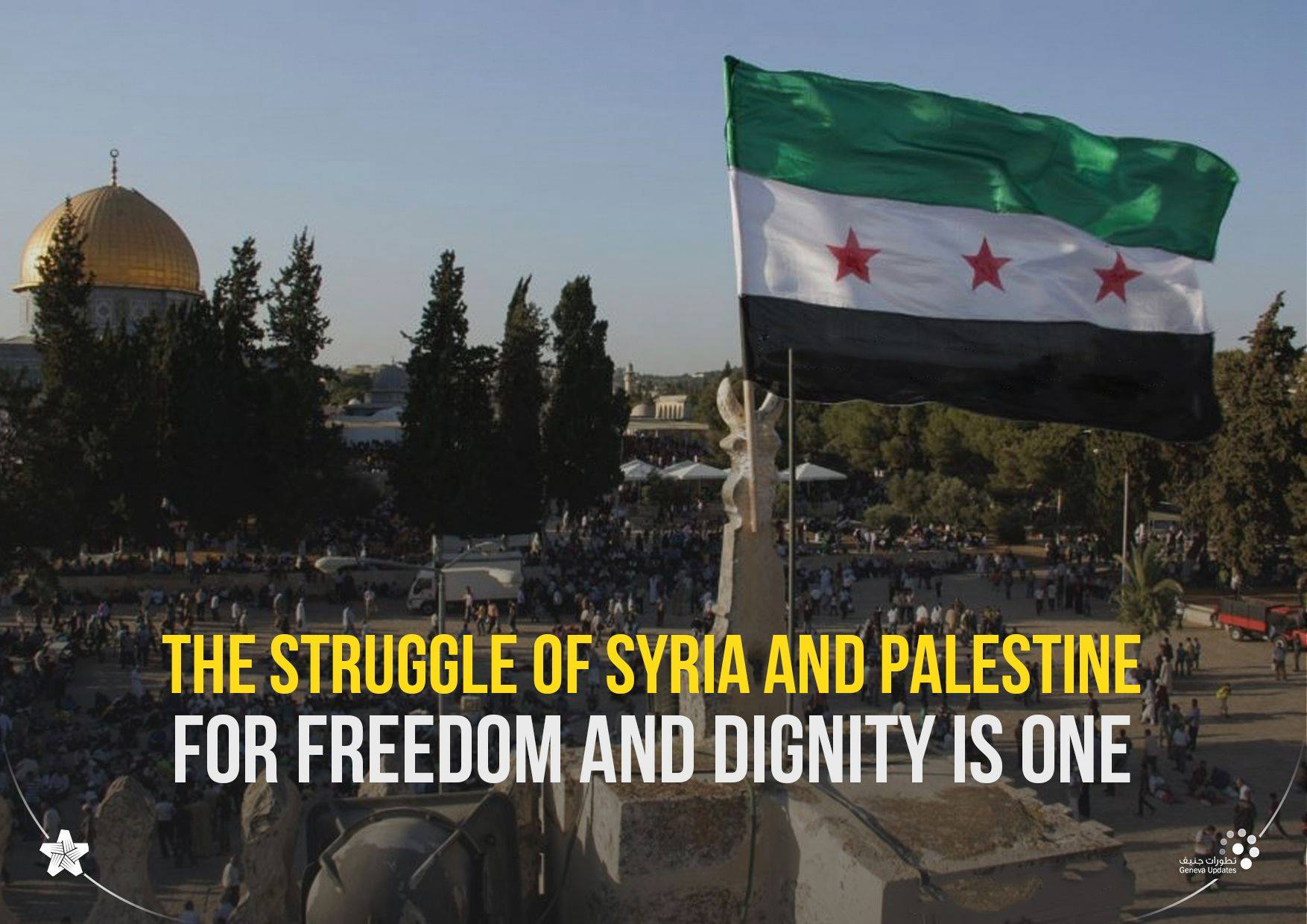
Syrian Coalition Condemns Israeli Occupation Massacre against Palestinians & Transfer of US Embassy to Jerusalem

32703914_1706692566083188_1725815183491727360_o
https://buff.ly/2rSD7Tl

The Syrian Coalition condemns the horrific massacre that was committed by the Israeli occupation against Palestinian demonstrators demanding their rights on Monday. The massacre claimed the lives of dozens of demonstrators and left hundreds more injured, including women and children.

The Coalition also reiterates its categorical rejection of the US president’s decision to recognize occupied Jerusalem as the capital of Israel and to transfer the US embassy to the city. The move violated international resolutions, most notably UN Security Council resolution 478 (1980) which condemned any attempt by Israel to annex Jerusalem.

The Coalition also denounces the continuing violations being committed by the government of the Israeli occupation against the Islamic and Christian holy sites. It stresses that nothing can justify violence, repression and crimes or grant legitimacy to occupation and mass forced displacement.

The Syrian people will always support the legitimate rights of the Palestinian people to their land and to build their independent state with Jerusalem as its capital, which will remain a Palestinian Arab land. No other party has the right to claim sovereignty over the city. It will not be long before the Palestinian people regain all their rights and achieve a just, comprehensive solution that ends violence and restores stability to the region.

The struggle of the Syrian and Palestinian peoples for freedom and dignity is one. The resistance and resilience that the Palestinian people have shown over the past decades will always remain an example for steadfastness and patience.


* * * *

Russia back on the front line

Some “quick off the cuff notes” by Arthur Dent in response to The Australian’s Tom Switzer who wrote an article on 30 September titled ‘Russia back on the front line’. The notes were originally published at Strange Times. I’m running Arthur’s notes first, followed by Tom Switzer’s article.

****

1. Vivid demonstration that realists live in a parallel universe with a different “reality”. Switzer is actually quite clear that he wants to go back to the old US policy of backing the autocracies and tyrants against their people to maintain the region as a backward swamp (originally for cheap oil and anti-communism then contention with Soviet imperialism and “security” – especally Israeli security in occupying more and more territory and then sheer inertia and blind stupidity of an entire generation of the foreign policy establishment who had devoted their careers to it and persisted with it long after the collapse of the Soviet empire, the end of cheap oil and the failure of the war for Greater Israel having made Israel a strategic albatross hanging around the US neck rather than a US base in the region (the only regional power that could not join the coalition liberating Kuwait from Baathist Iraq and who had to be told their planes would be shot down if they pretended to be part of it by sending any into coalition airspace).

2. In Switzer’s alternate universe, the problem in the Ukraine is “.. the widespread Western failure to recognise an old truth of geopolitics: that a great power fights tooth and nail to protect vital security interests in its near abroad”.

In our universe there is no such Western failure. No Western government is even allowing the Ukrainian government to buy weapons to defend itself against the Russian bullying because they understand with total clarity that they have no power to confront Russian bullying behaviour in that part of the world. The facts Switzer recites about that from lessons about geopolitics drummed into him more than half a century ago are totally obvious to every policy maker and ignored only by the usual shouters.

3. In Switzer’s alternative universe “Putin fears that if Bashar al­Assad’s regime falls, Russia’s presence in western Syria and its strategic military bases on the Mediterranean will be gone.” and “Russia’s navy and advanced anti­aircraft missile systems are based along the Mediterranean. It’s likely to deploy ground troops to the eastern coast.”

In fact Russia’s navy in the Meditarranean is about the size of the US army in the Ukraine. If the Russians were imbeciles attempting what Switzer imagines they are going to do in Syria and Obama was indeed as inept and vacillating as he has successfully convinced pretty well everybody he has always been then the British, French and Turks would have both vital national interests in their near abroad and the capability to act that would compel them to stop the nonsense immediately without waiting a day longer for Obama to stop dithering.

By now Turkey would have closed the Dardanelles (not of course as a hostile act towards that deeply respected partner and Mediterranean Great Power, the Tsar of all the Russias, but simply because they were too busy dealing with the problem of two million refugees having been driven out of Syria by the Assad regime to remember to keep it open).

A few hours sailing time later, the British would have announced that their are command mines laid at Gibraltar that are currently turned on but will be turned off at the approach of any ship that is known not to be assisting anyone forcing millions of Syrians to flee Syria to Europe. Naturally this too would not be a hostile act against anybody but merely a precaution against the possible arrival of the Daesh navy, just as the Russian air to air and surface to air missiles at Latakia are to protect them from the Daesh air force. Naturally the ships of a Meditarranean Great Power like Russia would not be subject to compulsory inspection and the mines would be respecfully turned off as they went about their entirely legitmate business and if any ships of any nation were accidentally sunk by a mine that had failed to remain turned off then Her Majesty’s Government would of course pay full compensation as required by international law etc etc.

All available British and French forces would move as rapidly as possible to the British sovereign base in Cyprus not as a hostile act against anybody but merely as friendly observers of the joint naval exercises that had been announced nearby by the navies of the Russian and Austro-Hungarian empires. After those exercises were completed they would be happy to assist their partners the Russians in returning to Vladivostok via the Suez canal without any danger of becoming subject to inspection by any Arab Gulf states wanting to check whether they were helping any notorious Syrian war criminals to escape as Britain and France are rather in favour of any assistance their Russian partners might be willing to give to Syrian war criminals leaving Damascus right now and don’t really care where they end up as long as they don’t stay in Syria.

4. In Switzer’s alternate universe Putin “has sent tanks, warships, fighter jets and troops to bolster the regime, which has faced a troop shortage and loss of towns as it seeks to maintain Alawite rule over an overwhelming Sunni majority”. Pretty well everbody agrees with Switzer about that, perhaps because those who know better have no reason not to want everybody to think that at the moment.

For my part I’ll just end by saying that Switzer and others should remember what Kissinger said the word would go out about another Great Power:

“To be an enemy of America can be dangerous, but to be a friend is fatal”

****

Tom Switzer’s piece from The Australian (30 September 2015):

Since Russia’s incursion into Ukraine 18 months ago, the West has indulged in the rhetoric of moral indignation, punished Moscow with economic sanctions and treated Vladimir Putin as a pariah in world affairs. “Russia is isolated with its economy in tatters,” President
Barack Obama declared in January. “That’s how America leads — not with bluster but with persistent, steady resolve.”

Somebody forgot to tell the Russian President. Putin’s address to the UN General Assembly this week, following his lightning military deployment to Syria, marks Russia’s resurgence on the global stage. The Russians, far from being marginalised in international relations, are playing a weak hand rather skilfully and are being allowed to do so because of considerable ineptitude and vacillation on the part of the Obama administration.

The upshot is that Washington will have to take the Kremlin far more seriously in the future. This is not just because Putin’s support for the embattled Assad regime will help degrade and destroy Islamic State jihadists in a four ­year civil war that has claimed nearly 250,000 lives and displaced more than nine million people. Rather, Russia’s intervention in Syria shows how rational Moscow’s concerns over Western policy in the Middle East are, and that the Obama administration had better start treating it like the great power it still is.

After the fall of the Berlin Wall, Moscow voluntarily jettisoned the Warsaw Pact and acquiesced in the expansion of NATO and the EU on to the frontiers of the former Soviet Union. But the limits of Russia’s post ­Cold War retreat have been evident since the Western ­backed coup against a pro-Russian ally in Kiev in February last year. Putin has played hardball to protect what Russia has deemed as its sphere of influence in the Baltics long before Vladimir Lenin and Joseph Stalin appeared on the scene. And in the Middle East it is determined to protect what it perceives as its vital interests.

Putin fears that if Bashar al­Assad’s regime falls, Russia’s presence in western Syria and its strategic military bases on the Mediterranean will be gone. That is why he has sent tanks, warships, fighter jets and troops to bolster the regime, which has faced a troop shortage and loss of towns as it seeks to maintain Alawite rule over an overwhelming Sunni majority.

And by reaching an understanding with Syria as well as Iraq and Iran to share intelligence about Islamic State, Putin is positioning Russia again as a key player in the Middle East, and one that is
more willing than the West to defeat Sunni jihadists. In the process, he has exposed the shortcomings of the White House’s policy towards Syria.

Until recently, the prevailing wisdom held that the Assad regime — the nemesis of Sunni militants was on the verge of collapse, an outcome that Washington, London and Canberra had enthusiastically encouraged for much of the past four years. And although Malcolm Turnbull and Foreign Minister Julie Bishop now recognise that Assad must be part of any negotiated political
solution, the Obama administration continues to insist that any resolution of the conflict must lead to the exit of the dictator.

US Secretary of State John Kerry warns Russia’s continued support for Assad “risks exacerbating and extending the conflict” and will undermine “our shared goal of fighting extremism”. British Chancellor George Osborne goes so far as to say the West’s aim should to be to defeat both Assad and Islamic State. But given Washington’s futile attempts to destroy the Sunni jihadist network
during the past year, most seasoned observers of the Syrian crisis are entitled to think that such strategies are manifest madness.

The consequences of removing Assad would be dire. The regime would collapse and its Alawite army would crumble. Sunni jihadists such as Islamic State and al­Qa’ida’s Syrian affiliate Jabhat al­Nusra, also known as al­Nusra Front, would exploit the security vacuum and dominate all of Syria. The ethnic minorities — the Alawites, Shi’ites and Syrian Christians — would be massacred. And there would be the flight of millions more refugees into Lebanon, Jordan and Turkey.

If we are to avoid these horrific outcomes, Russia will have to play a central and positive role. It has had significant influence in Damascus during the past half century; indeed, many Syrian
military officers have received training in Moscow. Russia’s navy and advanced anti­aircraft missile systems are based along the Mediterranean. It’s likely to deploy ground troops to the eastern coast. And Moscow has recognised that notwithstanding Assad’s brutal conduct, his regime is fighting the jihadists that Western leaders repeatedly say pose a grave and present danger to the world.

Obama says the US would work with any nation to end the fighting in Syria. But to engage Russia, the West needs to change its policy approach substantially. Alas, the prevailing Russophobia in
Washington and Brussels remains a serious obstacle in the path of reaching accommodation with Moscow.

The problem in Ukraine is not related to a revival of the Soviet empire, as some hyperventilating politicians and pundits argue. The problem is the widespread Western failure to recognise an old
truth of geopolitics: that a great power fights tooth and nail to protect vital security interests in its near abroad. Take Ukraine: it is a conduit for Russian exports to Europe and covers a huge terrain
that the French and Germans crossed to attack Russia in the 19th and 20th centuries. Most Crimeans are glad to be part of the country they called home from Catherine’s rule to that of Nikita Khrushchev.

From Moscow’s standpoint, the expansion of NATO and the EU into Russia’s traditional sphere of influence, taken together with efforts to promote democracy, is akin to Moscow expanding military alliances into Central America. Some may respond by saying that Ukraine, however ethnically and politically divided it remains, has every right to join the West. But did communist Cuba have a right to seek political and military ties with the Soviet Union in 1962? Not from Washington’s perspective. Does Taiwan have a right to seek nationhood? Not from Beijing’s perspective.

This is a shame, but it is the way the world works, and always has. Not only does Putin know it, he calculates that a weak, inept and cautious Obama administration won’t push the issue despite the dire threats and warnings from congress and the Pentagon.

And so it was inevitable that the Russians would push back in the Baltics, first to secure the Crimean peninsula, the traditional home of the Russian Black Sea fleet (which Russian intelligence feared would become a NATO base), then to destabilise Ukraine with the aim of persuading Kiev’s anti ­Russian regime to protect the minority rights of ethnic Russians and maintain its status as a buffer state.

As for Syria, the problem here is not the Russians — or even Iran’s Shia crescent of Damascus, Baghdad, Hezbollah and the Yemeni rebels. After all, they’re committed to fighting Sunni jihadists. The problem is that US ­British aligned Sunni states — Turkey, Saudi Arabia and the Gulf Arabs — have aided and abetted the Sunni rebellion that has morphed into Sunni jihadism.

Yet these reactionary regimes still have the temerity to call for Assad’s ouster. Following regime change, we’re told, a US­ led coalition of Arabs and Turks can create a peaceful and prosperous Syria.

Leave aside the fact Assad’s support stems not just from Moscow and Tehran but also from Syria’s military, political and business elites, including many urban Sunnis. Assad is a brutal tyrant. He
has used chemical weapons against his own people. And he has launched relentless barrel bombs in rebel areas. But he is more popular than ever in the one ­third of Syria his regime still controls
(which happens to be the major cities and the coastland). That is largely because many know his demise would lead to widespread ethnic cleansing.

The idea that Assad’s fall would lead to something approaching a peaceful transition of power is as delusional as the neo­conservative views about Iraq and Libya in 2003 and 2011 respectively. The
downfall of Saddam Hussein and Muammar Gaddafi, it was onfidently asserted, would lead to viable democratic states. If anything, both post­Saddam Iraq and post­Gaddafi Libya are failed
states that have attracted terrorists like flies to a dying animal.

As in the case of Iraq, Syria is an artificial state and an ethnically divided society created out of the ruins of the Ottoman Empire. In both nations the invasion and civil war, respectively, have unleashed centrifugal forces that are eroding political structures and borders that have prevailed since the end of World War I.

In Iraq, the 2003 invasion ended the nation’s sectarian imbalance between the minority Sunni and majority Shia communities. Ever since, the Shia have been more interested in seeking revenge against their former Sunni tormentors than in building a nation. The result: a Sunni insurgency that has morphed into a plethora of jihadist groups, including Islamic State.

In Syria, the Arab Spring in 2011 encouraged the Sunni majority to challenge and destroy the minority Alawite regime. The result: centrifugal forces that threaten the viability of Syria as we have known it for nearly a century.

As unfashionable as it is to acknowledge, partition is the likely outcome of the civil war. According to Joshua Landis, a veteran Syria observer and director of the Centre for Middle East Studies at the University of Oklahoma, many Syrians, and Alawites in particular, privately acknowledge that the prospect of outright military victory against the Sunni militants is highly unlikely and that it would be impossible to coexist with Sunni fanatics.

For Syria, partition would most likely mean an Alawite Shia state in the regime’s western heartland and a Sunni state to the southeast. Notwithstanding statements to the contrary, this is the emerging reality on the ground.

As long as the regime endures, it at least prevents Sunni jihadists from consolidating their hold over the whole nation and creating a strategic sanctuary along Syria’s coasts.

The moral and political problems posed by Syria’s civil war during the past four years have been real and extremely difficult ones. Assad heads a brutal regime that, according to The Washington Post, has killed about seven times as many people as Islamic State in the first six months of this year.

But the cold, hard reality is that if the US and its allies are serious about defeating the Sunni jihadists, and not merely determined to feel virtuous and moralistic, we will need to tone down our
anti­Russian bombast, restore a dialogue with Putin and recognise the madness of regime change in Damascus. And if that means accommodating Putin’s power play in the Middle East, so be it.