The Communist Manifesto Project

The Communist Manifesto was published in 1848. That’s a long time ago. And the communist revolutions of last century have ultimately failed. So what would a C21st version look like?

That’s the aim of an exciting new project that seeks to ‘save Marx from the Marxists’!

download

****

Here’s the preamble from the project’s draft document:

The Communist Manifesto Project, October 2015

Preamble

Marx and Engels published The Communist Manifesto in 1848 and “Marxists” have been disregarding its message ever since. It tells us how communism cannot emerge without capitalism first creating both the pre-conditions and the forces that will bring it to fulfillment. Capitalism is like the caterpillar to the communist butterfly. Communism is a consequence of capitalism and the next step in the progress of humanity

Present-day “Marxists” totally oppose this view. Their anti-capitalism is reactionary. They believe capitalism is destroying much of the past that should be preserved and is leading us down a path from which we must retreat. There are no prospects for their backward looking project and if there were it would be self-defeating because we would be simply reverting to conditions that history shows would eventually bring us back to where we are. In their day Marx and Engels had to contend with similar trends and, indeed, a section of The Communist Manifesto is devoted to them.

The message of The Communist Manifesto of course is also ignored by those for whom capitalism is the best of all possible worlds. It gets in the way of their “communism has failed” mantra which they base on abortive revolutions in backward essentially pre-capitalist regions during the 20th century. This experience in fact only confirms the message that communism can only successfully emerge from advanced capitalism.

****

Dialectics – what is it, what are examples of it?

KM


I learned from this philosophical discussion of dialectical materialism in 2004 when it was published at the lastsuperpower site, and thus reprint it now for readers’ consideration and comment.

****

Question “The only experience that I have with dialectics is a horrible essay that I had to write at university about Mozart and Beethoven. I’ve never really understood what dialectics means, except that it’s a great word to use when pretending to be intellectual over a cup of coffee. Most other people don’t really seem to understand the concept either, but would prefer not to admit it. I know this as I regularly drop it into conversations and no one has pulled me up on it yet.. see emperor’s new clothes post!”

Dialectics – What is it, what are examples of it?

by Keza 2004

I mentioned in The relation between materialism and idealism topic that materialist philosopher Daniel Dennett doesn’t mention the word dialectics – so in reading Dennett I’ve been looking out for what language he uses when describing concepts that are dialectical.

I’ve found one instance – he uses words like paradoxical to describe the problem and then in detailing his solution says things like, “this is not paradoxical at all”

An example is that Mother Nature / Evolution has no foresight and yet has managed to create humans who have foresight.

• Re: progress and dialectics

Posted by keza at 2004-12-28

The best laid plans of mice and men…. if practically everything that we do results in something not intended then why do we plan, why do we struggle, why do we try to move the world in a certain direction?

When Engels wrote that consciously willed actions often result in quite unintended consequences I think he was disputing the Hegelian idea that history is “the gradual realisation of ideas”. His point was that what happens in history comes about not as a direct result of abstract ideas, wishes, intentions (and so on) but is governed by ‘inner laws’ – ie what is possible (and therefore real and rational) in a given epoch. Movements don’t arise just because someone comes up with a good or bad) idea and manages to convince lots of people to follow them. Movements for change arise out of material conditions – the possibility for change is present and that opportunity is seized. The ideology in which the movement is clothed is (somewhat) secondary.

“The distinction should always be made between the material transformation of the economic conditions of production … and the legal, political, religious, aesthetic or philosophic — in short, ideological — forms in which men become conscious of this conflict and fight it out.”

Marx: Contribution to the Critique of Political Philosophy (1859)

An example is the idea of “equality” in the bourgeois democratic revolution. The idea that “all men are created equal” stood in direct opposition to the feudal belief that all men are most definitely not created equal. The growth of capitalism made it not only possible but also necessary for the idea that rulers are made rather than born to take hold. Thus on a conscious level the motivation for bourgeois revolution was belief in ‘liberty, equality and fraternity’ but at a more fundamental level, the revolution was driven by the necessity to liberate the productive forces from the constraints of feudalism. That reason (or motivation) was only dimly appreciated however.

Friedrich Engels wrote in 1893 that:

“Ideology is a process accomplished by the so-called thinker. Consciously, it is true, but with a false consciousness. The real motive forces impelling him remain unknown to him; otherwise it simply would not be an ideological process. Hence he imagines false or seeming motive forces.

I don’t think this means that bourgeois revolutionaries didn’t really believe in liberty, equality, fraternity – or that the battles they fought weren’t really for these things. We all know (except perhaps for the pseudo left) that as a result of the democratic revolution we have freedoms and rights that were hardly even dreamed of previously. However the ideas themselves weren’t the driving force – these ideas could only take hold because the material conditions were crying out for them (so to speak).

I think what bothers a lot of people is the feeling that perhaps this means that what they as individuals actually do doesn’t really matter – that somehow we are all carried along by a tide of “underlying forces” , that we are seized by ideas rather than seizing them ourselves etc etc. Engels refuted this when he said “freedom is the recognition of necessity” (Anti Duhring?) … once we come to understand “how things work” – “the rules of the game” then we do have a real chance of using our understanding to influence the course of history. Engels’ Letter to Franz Mehring in Berlin is interesting in this respect.”

He starts by pointing out that both he and Marx tended to neglect the role of ideas/ consciousness in bringing about change…

“Marx and I always failed to stress enough in our writings and in regard to which we are all equally guilty. That is to say, we all laid, and were bound to lay, the main emphasis, in the first place, on the derivation of political, juridical and other ideological notions, and of actions arising through the medium of these notions, from basic economic facts. But in so doing we neglected the formal side – the ways and means by which these notions, etc., come about – for the sake of the content. This has given our adversaries a welcome opportunity for misunderstandings and distortions…..”

and later:

“Hanging together with this is the fatuous notion of the ideologists that because we deny an independent historical development to the various ideological spheres which play a part in history we also deny them any effect upon history. The basis of this is the common undialectical conception of cause and effect as rigidly opposite poles, the total disregarding of interaction. These gentlemen often almost deliberately forget that once an historic element has been brought into the world by other, ultimately economic causes, it reacts, can react on its environment and even on the causes that have given rise to it.”

No time to write any more now!! I’ll finish with a quote I quite like though:

“Men make their own history, but they do not make it just as they please; they do not make it under circumstances chosen by themselves, but under circumstances directly encountered, given and transmitted from the past. The tradition of all dead generations weighs like an Alp on the brains of the living…. “
(Marx: The Eighteenth Brumaire of Louis Napolean)

end Keza

Posted by kerrb at 2004-12-19 01:54 AM

More about the usefulness of dialectics, being a bit more specific about it than in my previous reply to sally.

1) socialist / not socialist dialectic

A few years ago (maybe 20) I went to a debate where someone from the pro-Soviet so called communist party was arguing that the Soviet Union was still a socialist country. This person was so wrapped up in the details and scope of his argument that I could see that no single point could be made in question time that could possibly persuade him that he might be wrong. I wanted to support the case that the Soviet Union wasn’t socialist and so was racking my brains for a question that might get through, if not to the speaker, then at least to the audience.

What I thought of and asked the pro-Soviet speaker was: ” Are there any possible circumstances that might arise in the future which would persuade you that the Soviet Union was no longer socialist?”

To the amusement and bemusement of some of the audience, he replied, “No, the Soviet Union will always be socialist”

2) progressive / reactionary dialectic

I think a similar sort of point can be made to the pseudo-left in connection to the US invasion of Iraq.

In my view it’s pretty straightforward that the US has led a campaign to overthrow the fascist government of Saddam Hussein and is now proceeding to help Iraqis create a democratic government. That has to be progressive.

Because historically US Imperialism has been very reactionary, as exemplified by the Vietnam war and much more, there are now many people in the world who seem incapable of conceptualising that the US could possibly do something progressive. It’s always possible for these people to point to bad things that the US does – there is no shortage of examples.

Maybe part of the problem is that they have an ingrained black and white, non dialectic world view, which implicitly denies the very possibility that the US could do something progressive.

I’m not saying that thinking dialectically is a substitute for studying the details of processes in detail – including the details of what the Soviet Union became historically and the details of what is happening in Iraq and the Middle East. But that having the concept of dialectics (the coexistence of opposites in things) might help prevent falling into the rigid black and white thinking illustrated in the two examples above. If some people can’t even conceptualise that it might be possible for US Imperialism today to do something progressive then no amount of detail is going to change their mind about Iraq. Their thinking is dogmatically stuck at another level to do with their whole world view. I’m arguing that studying dialectics is useful because it helps us keep our minds open to these possibilities.

Here’s a paragraph from Dennett:

“One of the standard (and much needed) correctives issued to those who study evolution is the old line about how natural selection has no foresight at all. It is true, of course. Evolution is the blind watchmaker, and we must never forget it. But we shouldn’t ignore the fact that Mother Nature is well supplied with the wisdom of hindsight. Her motto might well be “If I’m so myopic, how come I’m so rich?” And while Mother Nature is herself lacking in foresight, she has managed to create things – us human beings, preeminently – who do have foresight, and are even beginning to put this foresight to use in guiding and abetting the very processes of natural selection on this planet. I occasionally encounter even quite sophisticated evolutionary theorists who find this paradoxical. How could a process with no foresight invent a process with foresight? One of the main goals of my book “Darwin’s Dangerous Idea” was to show that this is not paradoxical at all. The process of natural selection, slowly and without foresight, invents processes or phenomena that speed up the evolutionary process itself – cranes, not skyhooks in my fanciful terminology – until the souped up evolutionary process finally reaches the point where explorations within the lifetime of individual organisms can affect the underlying slow process of genetic evolution, and even, in some circumstances, usurp it.”
– Freedom Evolves, page 53

So, this illustrates that one can think dialectically without formally studying dialectics or even using the word dialectic. Dennett’s ability to do this would presumedly arise out of his deep study of the science of evolution combined with his materialistic philosophy.

In dialectical language no foresight and foresight would constitute a unity of opposites and in the process of development one can transform into the other. I think this way of looking at it is preferable to Dennet’s apparent paradox that turns out not to be a paradox.

But it’s probably more important to really study the topic deeply (in this case, evolution) than just to be able to spout the magic words. But I also believe that it’s important to study dialectics itself (Mao, Hegel etc.) because this creates an awareness or sensitivity to possibilities of things turning into their opposite that we otherwise might not even notice – it has the potential to make our thinking more fluid and flexible.

end post

Posted by kerrb at 2004-12-19

Dialectics is the co-existence of opposites in everything, nature, mind, society. I’ll explain by reference to something said in The Emperor’s New Clothes thread:

Think of all the people scared to speak in public, or scared to admit how they feel about something, or someone! I know for a fact that my private side is very different from my public face. So in my opinion this is a ‘problem’ that stretches right across the board, it’s not just in intellectual circles. People in general are afraid to speak their minds! Me too, so afraid that I don’t want to post this, but I will anyway.

What you are saying here is full of dialectics IMO. You talk about fear of speaking out and feeling compelled to speak out coexisting in your mind. Both of these opposites co-exist side by side. In some circumstances the fear might be stronger and you don’t speak. In other circumstances the compulsion to speak out might be stronger.

I think it’s fair to say that these opposite tendencies exist in everybody and so we are talking about something that is universal.

So, by contrast, what would be a non dialectical way of looking at this? We might view some people as always speaking out, the sort of people we wish would shut up sometimes. We might view other people as never speaking out, the sort of people that we don’t know what they are thinking. We might form black and white opinions about people with these extreme tendencies and as a result lose our curiosity, for example, not notice that a normally garrulous person has gone quiet in certain circumstances.

But of course there are no people like either of these two extremes. Although some people speak too much and others hardly at all these are just tendencies across the spectrum of possibilities. In reality, the two opposite tendencies coexist within everyone.

I’ve just taken one example of dialectics here from something you wrote in order to explain the idea. But whatever you are thinking about or studying I would argue that you can always conceptualise opposites that coexist within that thing. At the least I think it’s a very handy way to think about things because it can open up new ways of looking at something.

Turn down the hype (by Arthur Dent, formerly Albert Langer)

the-end-isnt-near


Originally published as a guest post at Bill Kerr‘s blog by Arthur Dent on 21st May, 2015.


* * * * * *

According to the World Bank:

“By acting now, acting together and acting differently, we will be able to transition to a low emissions, climate resilient development path and hold warming below 2°C.”(1)

To help achieve this, a MOOC sponsored by the World Bank (Turn Down the Heat) requires students to produce “digital artefacts” with the aim “create a sense of urgency and a call to action for individuals, companies or countries to change behaviors associated with a warming planet”.

My call is for the World Bank to change its behaviour and “turn down the hype”.

It should be obvious that none of the measures advocated by the World Bank have had much impact on the planet warming, and there is no reason to expect that creating a sense of urgency in support of more of the same will have a better result.

The IPCC’s authoritative report on Mitigation of Climate Change(2) shows clearly that there is no realistic prospect of holding warming below 2°C.

The simple reality is that most emissions will result from the rapid industrialization of developing countries like India and China who cannot and will not switch from the cheapest energy sources available while they remain poor. No amount of hype will change that reality.

If the problem was as grave and urgent as claimed there would be no alternative but for developed nations who can afford the cost to switch from cheaper fossil fuels to more expensive nuclear power and also pay the costs of the entire world doing the same. But the World Bank does not advocate that, so it is difficult to believe it takes its own hype seriously.

Wind and solar power cannot solve the problem because they are intermittant. Power is also needed when the wind is not blowing and the sun is not shining. There is no technology on the horizon that could store energy cheaply enough to compete with the dispatchable power from fossil fuels, even if wind and solar power was free. Instead of pretending that wind and solar could do the job it is clearly necessary to act differently. Since there is no viable replacement for fossil fuels on the horizon that developing countries could afford, it is necessary to do something very different from what the World Bank advocates.

We will need some breakthroughs in fundamental technology. Neither the regulatory nor the market pricing mechanisms advocated by the World Bank can achieve that. Massive investments in research and development and fundamental science are required. Contrary to the hype there is no “return” on that investment. As with all fundamental science, the results have to be made freely available to the countries that are too poor to pay for it. So the “free rider” problem ensures that no carbon pricing mechanism could motivate such investment. At present each developed country is hoping that somebody else will pay to develop the necessary technology. There is no “national” benefit in doing so. It is a global, not a national problem. The most ambitious national targets for R&D are about 3% of GDP for all purposes. These targets are not being met, despite the fact that new technology is the driving force for economic growth.

A global levy on developed countries that can afford it is required, to pay for the costs of a massive global R&D program that is not expected to produce any “return” on the investment, other than “merely” solving the problem of global warming.

That may require a significant expansion in the total scientific workforce and consequently a long lead time for education.

If it is not successful, then we will have to resort to some combination of geo-engineering, adaptation strategies and subsidizing nuclear power in all countries, at potentially vastly greater costs. But even if a massive global R&D program failed to produce clean energy competitive with fossil fuels, it would at least accelerate economic growth generally and enable the whole world to afford more expensive energy than fossil fuels more quickly.

“Modernization has liberated ever more people from lives of poverty and hard agricultural labor, women from chattel status, children and ethnic minorities from oppression, and societies from capricious and arbitrary governance. Greater resource productivity associated with modern socio-technological systems has allowed human societies to meet human needs with fewer resource inputs and less impact on the environment. More-productive economies are wealthier economies, capable of better meeting human needs while committing more of their economic surplus to non-economic amenities, including better human health, greater human freedom and opportunity, arts, culture, and the conservation of nature.”(3)

We need more modern technology, not medieval windmills.

(1) WDR 2010: Development and Climate Change
(2) Working Group 3
(3) An Ecomodernist Manifesto

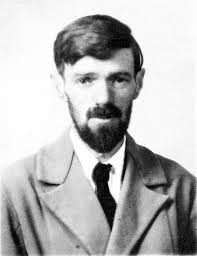
DH Lawrence, his poem ‘Poverty’ – and what does it mean to be progressive?

dhl

DH Lawrence (1885-1930)


Marx understood perfectly well that capitalism was disruptive; that was what he liked about it, that, along with the possibilities that such disruption opened up in its wake.

The following is contributed by guest blogger TomG.

* * * *

DH Lawrence’s poem ‘Poverty’ was read to me by an old friend several years ago as a birthday gift. It turned out to be a very good one. I knew that DH Lawrence had a reputation as a right wing sympathizer; I also knew he hated the bourgeoisie and had written a poem, ‘How Beastly the Bourgeoisie Is’, to that effect. But aside from that poem I was unfamiliar with any other of his poetry. Beside liking ‘Poverty’ and appreciating my friend’s consideration of me I became sufficiently intrigued to pursue Lawrence’s poetry and ended up reading a collection of his shorter poems, Pansies, written toward the end of his life and which contained both ‘Poverty’ and ‘How Beastly the Bourgeoisie Is’. Both of these poems were written after the 1926 General Strike in the U.K. but before the rise of Hitler or the outbreak of the Spanish Civil War, neither of which Lawrence lived to witness or offer an opinion about.

What is it about this man, who died in 1930, age 44, who hates poverty and the bourgeoisie with a visceral intensity (the bourgeoisie were not too keen on him either), and whose sympathies lie with the right? On a flippant note I think: this is the perfect man for today’s strange and politically discordant times. On a more serious note, on reading his poems, ‘Poverty’ in particular, I am reminded of the confusion that abounds today about just what terms like “progressive” and “reactionary” mean. Since my initial political schooling in the 1970’s, particularly in supporting the National Liberation Front in the Vietnam War and embracing revolutionary Marxism, these terms seem to have morphed into one another, the revolutionary left in the developed world has collapsed completely, the reformist left looks cadaverous and economic development and internationalism, once proud mantles of the left, are being championed more by the right. Go figure.

So looking at Lawrence’s poem became a vehicle for raising some very contemporary questions. But first, the poem.

Poverty

The only people I ever heard talk about my Lady Poverty
Were rich people, or people who imagined themselves rich.
Saint Francis himself was a rich and spoiled young man.

Being born among the working people
I know poverty is a hard old hag,
and a monster, when you’re pinched for actual necessities.
And whoever says she isn’t is a liar.

I don’t want to be poor, it means I’m pinched.
But neither do I want to be rich.
When I look at this pine-tree near the sea,
That grows out of rock, and it plumes forth, plumes forth,
I see it has a natural abundance.

With its roots it has a natural grip on its daily bread,
And its plumes look like a green cup held up to the sun and air
And full of wine.

I want to be like that, to have a natural abundance
And plume forth, and be splendid.

I remember being impressed when I first heard it and further readings deepened my appreciation. It captures the grim determination to survive that those subjected to the rule of the old hag need to have as they try to escape her grip; and it evokes their desire to flourish. One of its great strengths is its authentic tone; no privileged condescension here, Lawrence is speaking from a personal and very individual experience. This, I think, also proves to be its central weakness; more on this below. Its aims of natural abundance and splendour are modest; who could possibly deny the right to material comfort, to the personal and cultural growth Lawrence yearns for in the poems last lines, to those who either do not enjoy them or whose experience of them is tenuous or subject to the caprice of external forces?

But the question I returned to was how progressive is the poem? It would have been a pertinent question when Lawrence wrote it; and in today’s climate where confusion reigns about what it means to be progressive, it remains pertinent. In trying to answer this I ended up looking at the poem from two angles. The first of these is aspirational, deeply personal and all the more powerful because of it. The second deals with the ‘how to?’ question, the road to take to consign the old hag to the history books. The poem’s silence on this last point should not forbade us from taking this matter up for the silence contains suggestions which are implicit in the poem and are faithful to the man.

The Aspirational

Lawrence knew poverty first hand and arguably its effects contributed to his early death from tuberculosis; there is a bitterness, a knowing, which is intimately felt and communicated. Like those who feel her pinch now, the desire is to escape, to get out from under, to get ahead. This is a progressive yearning; it always has been and it remains so whether or not the pinch is felt in the so-called developed world or in the undeveloped or third world.

Lawrence’s attack on the romanticism accorded “lady poverty” by the privileged, his exposure of their hubris is also personally felt, hard edged and progressive. He wants the old hag removed, along with the pieties of her well heeled apologists; he wants to develop, to move forward (literally, to progress). No problems here. In spite of his generally right wing sympathies he could be speaking for workers everywhere; so too for those ground down and “pinched” by poverty over the millennia.

You take the high road and I’ll take the low road*

If Lawrence offers suggestions here, of what is the best path to take escape from the old hag’s grip, they are ambiguous to the point of being opaque; the poem is, after all a personal testament and not a manifesto. And I must confess to liking the way the question is left open. It is up to the reader to pick up and develop this should they be inclined to do so.

Being a communist I’m inclined to do so and somewhat absurdly perhaps the first person that popped into my mind when I read the poem was Richard Burton. The second was Deng Xiaoping, but more on him later. Actually the Burton reference is not so absurd: both he and D.H. were sons of miners who knew what it was to be pinched, and both became famous in their respective artistic fields, one being sympathetic to the left, the other the right. So while the reference to the dearly departed Welsh thespian is playful, it is also serious. Burton described himself as a socialist (a communist on occasions – because, he said, he didn’t exploit others) and justified his wealth and lifestyle by pointing out that everyone should be able to live like him. He was right. He too wanted to have a natural abundance and be splendid and it is something he thought all people should have. Greens and assorted pseudo-leftists, please take note.

If Marxists, of whatever stripe, are to promote beliefs in economic and social development and the cultural and personal transformations which spring from these, then we aim to level upwards, not downwards. We can argue about roads, (can of worms anyone?) but as soon as we concede, hands wringing, that development may have gone too far, too quickly, too disruptively; that it is ruinous to the environment or to ‘fragile eco-systems’ and must therefore be stopped; that the human footprint is bad; that modernity has sold us a lemon and so on, we cease to be progressive let alone Marxist and we give the old hag a legitimacy she does not deserve. We may remain concerned, decent and politically active souls involved in any number of things; and, heaven knows, there is a chance that some of these activities may even be progressive, but we ourselves are left at the starting blocks.

Marx understood perfectly well that capitalism was disruptive; that was what he liked about it, that, along with the possibilities that such disruption opened up in its wake. He understood too that in order to create a propertyless working class capitalist development dispossessed the mass of peasants and drove them into the arms of what was then (and is now, in developing countries) an unregulated free labour market with all the uncertainty, impoverishment, degradation and possibilities that accompanied this. But even before the Manifesto was written he also understood the need and opportunity that these same developments afforded the working class to organise and fight for political rights and economic concessions. And while it is true that he had wanted and expected the working class to recognise the need for revolutionary transformation – a task that still beckons – it is also true that the working classes in all advanced countries has been able to wrest significant democratic and economic concessions from their respective ruling classes, thereby ameliorating the kind of poverty that characterised the Industrial Revolution of Marx’s and Dickens’ time. While the old hag is still with us, she has been forced to give ground and develop the capacity to ‘shape shift’ as developed economies see a widening wealth gap accompanied by a decline in absolute poverty. In the undeveloped world she remains a traditional old hag while in the developed world she has also assumed a distinctly post modernist capacity.

Hit the road Jack …

Above I had indicated that Lawrence had made no suggestions about what road to take or whether there was even a choice of route. However such a view is disingenuous.
Sometimes a cigar is just a cigar and a silence is just a silence; but not here, not with DH Lawrence. While this has something to do with his right wing sympathies, leaving it at this is a cheap shot. More at issue is his individualism and how this individualism is largely cut off from his working class roots. There is, for example, a warmth and a fidelity to his past in Burton which one struggles to find in DH Lawrence. It is as though the experience has been too painful and embittering for him to want to do anything other than turn his back on it and escape. He doesn’t want to be rich, to be one of “them”; he just wants to get out from under and to flourish. This is a modest enough desire on the one hand, but it’s all about him (as opposed to him and his mates, and beyond this, his class) on the other. And this is where Deng comes in.

Two sayings of Deng’s stand out above all others: “Black cat, White cat? Who cares so long as it catches mice?”, and “To get rich is glorious”. The former was a metaphor for promoting capitalist economic development over socialist economic development, was uttered under proletarian rule and was designed to fudge. The latter is a blunt, honest admission of his position and was said under restorationist rule where the need to fudge had disappeared. Cats may not matter, but roads do and Deng knew it. So too did his protagonists, which is why they were after his hide.

DH Lawrence and Deng neither knew, or knew of, each other and at first take they make strange bedfellows. But there exists a certain similarity between them, between their yearnings and the politics each is drawn to or promotes. The similarity is around paths to development or what Lawrence may describe as escaping the clutches of the old hag. When Deng uttered his infamous ‘black cat, white cat’ line he was not meaning the he was indifferent as to what approach was taken or that he valued each equally – no post modernist relativism for this man or the newly emerging class that he represented. He had an antipathy to the ‘socialist road’ and favoured the ‘capitalist road’. His appeal was both to the new, privileged class that found organisational and political expression in the communist party (those in power taking the capitalist road) and to the narrow type of individualistic aspirations this class nourished. It is all about getting ahead any way you can and Deng’s way (the capitalist way) will get you there quicker because you won’t have to worry about who you step over, or step on, on your way to achieve your “glorious” prize.

So far as I am aware DH Lawrence did not take an active interest in political economy and it is not on this level that he sidles up to Deng. Lawrence mistrusted and was estranged from his class. The idea of collectivism, of collective action as a means of getting out from under – and in the process, of finding himself as an individual, a very different individual from the one he became – scared him viscerally. My guess is he feared being overwhelmed individually to the point of losing himself. Nietzsche’s modernist affirmation of individualism – that the individual has always had to struggle against being overwhelmed by the tribe and that nothing was more important than the privilege of owning oneself – would have struck a deep chord in Lawrence. It is his rejection of his class and of class politics as such that place Lawrence alongside Deng and places his poetry in a very different political camp than that of the great communist poets like Mayakovsky, Brecht or Hikmet.

DH Lawrence ‘s path to salvation, to getting out from under, is an individual and lonely one. While there is occasional reference made in his poetry to workers, the poor, the rich… there is no sense of attachment or connection and even less of trust. There is a chasm that separates him from his class of origin which finds expression in his poetry. His attempts to bridge this chasm, to really connect, fail. He reaches out to individuals, generally women, never to his class. I think he would have argued that he didn’t reach out to any class, certainly not to the bourgeois class that he despised. While this is true in one sense it also reinforces my point. In terms of class, or even community attachment, he felt and was isolated. This affected his yearnings and his means of escape. It leaves him and Deng sharing an affinity around roads. While the encouragement to get rich would have stuck in his craw the idea of black cat, white cat, of get me out of here any which way, would have appealed.

Lawrence’s mistrust of class, particularly the class consciousness and loyalty that the working class requires if it is to overthrow the capitalist class and to rule society itself, his elevation of individual aspiration above all else, is precisely the bait that Deng (and his equivalents elsewhere) rely upon and appeal to. One doesn’t have to agree with all of it – as mentioned above, Lawrence would have rejected the appeal to be a bourgeois fat cat – to be hooked and reeled in. This is one of the appeals of petty bourgeois individualism (to give it its PC, old school description); we may be genuinely appalled at the behaviour of those who stab others in the back, push or keep others down as they go for glory and we may even protest the fact. But so long as we abjure a class identification and solidarity and put all of our eggs into the narrow form of individuality that appealed to Lawrence, such protest would be as effective as pissing into the wind and the pull of that lone pine tree, flourishing and abundant, becomes impossible to resist. No wonder the tree appealed – it was as cut off from its kind as Lawrence was from his. This type of reaction would have suited Deng and the new Mandarins right down to the ground.

(As an aside, the term ‘petty bourgeois individualism’ certainly describes the kind of individualism Lawrence was drawn to. Unfortunately it’s a term that has been typically used by the radical (and, too often, censorious) left as a term of abuse designed to silence rather than to critically analyse. This is a pity because it tends to discourage communists from asking what kind of individualism, or perhaps more accurately, individualisms, will flourish in post revolutionary and communist societies and how we can recognise their beginnings and encourage their development under capitalism.)

Lawrence’s poem, then, is progressive in so far that it is identifying a problem and in aspiring to rise above them, but reactionary in the solution it implies – individual talent and enterprise cut off from its social base – a solution that, by definition, excludes most of those in the old hag’s grip, leaving them to their own devices as well as to hers.

It might be eighty-five years since Lawrence’s early death from tuberculosis but the question of what constitutes progressive, the question of ‘roads’, if you like, is contemporary and urgent. As mentioned above, this piece is not so much about Lawrence as it is about us. Marxists, there have been numerous incarnations, have been the inheritors and are now the remnants of a once vibrant revolutionary movement (or movements, depending on your stripe) who are now so marginalised and irrelevant to the day to day life and struggles of the modern working class and, very importantly, the individuals who make up this class, that we can now comfortably meet in the roomy confines of a broom closet. To become relevant enough to move out of the broom closet, let alone be credible as a challenge to bourgeois hegemony we need to rediscover what it means to be progressive as well as revolutionary (Marx is a good place to start) and be prepared to fight for it.

If some of the divergent strands of DH Lawrence’s poetry can be of assistance with this then, eighty five years on, we can happily acknowledge the contribution he is now making to a progressive cause.

*The reference is to an old Jacobin song The Bonnie Bonnie Banks o’ Loch Lomond. While the Jacobin cause of Bonnie Prince Charlie was a dud one the song is correct to suggest that roads matter (and that the low road, the one the common folk were made to take, is the right one). The chorus, which has a very familiar ring, is reproduced here:

O ye’ll tak’ the high road and I’ll tak’ the low road
And I’ll be in Scotland afore ye
For me and my true love will ne-er meet again
On the bonnie, bonnie banks o’ Loch Lomon’.

If the Dalai Lama is Marxist, then so was Leo X111.

jetsons

Last month at a university lecture in Kolkata, India, the Dalai Lama declared that, when it comes to “socio-economic theory”, he is a Marxist. His reasoning was as follows:

“In capitalist countries, there is an increasing gap between the rich and the poor. In Marxism, there is emphasis on equal distribution.”

The Dalai Lama joins a growing list of religious leaders, including Pope Francis, and other global celebrities, to declare an affinity with the notion of ‘equal distribution of wealth’, an idea that is widely (but wrongly) regarded as being Marxist. A leftist influenced by Marxism does not ask, “How can wealth be distributed more equitably?” but rather “Who produces the wealth in the first place?” And: “Why does socially produced wealth end up in the hands of the owners of the means of producing it (machines, factories, raw materials, etc) rather than in the hands of those without whom it could not have been generated?”

The positive side of the publicity is that Marxism is of international interest again, as a theory that helps to understand the dynamics of capitalism. This is happening  at a time when, in the advanced economies, capitalism isn’t delivering the promised goods any more and growing numbers of people are pissed off.

But, one must feel some sympathy for old Karl. His exasperation with those who adopted the brand without understanding the content led him to declare 150 years ago that “If anything is certain, it is that I myself am not a Marxist”. Marxism is not, and has never been, about the equal distribution of wealth.

‘To each according to his contribution’: Marx’s Critique of the Gotha Programme

In his Critique of the Gotha Programme, written as a letter in 1875 in response to the draft platform of the German Social Democratic Workers Party (SDAP), Marx pulled no punches when he described the idea of “fair distribution” being proposed by the SDAP as “obsolete verbal rubbish”, which ‘perverted a realistic outlook’.

He first tackles the proposal in the draft platform that “the proceeds of labor belong undiminished with equal right to all members of society” and asks: “’To all members of society’? To those who do not work as well? What remains then of the ‘undiminished’ proceeds of labor? Only to those members of society who work? What remains then of the ‘equal right’ of all members of society?”

Marx then dissects the notion of “proceeds of labor” in the sense of “a product of labor” with the co-operative proceeds “the total social product”.

“From this”, he points out, “must now be deducted: First, cover for replacement of the means of production used up. Second, additional portion for expansion of production. Third, reserve or insurance funds to provide against accidents, dislocations caused by natural calamities, etc. These deductions from the ‘undiminished’ proceeds of labor are an economic necessity, and their magnitude is to be determined according to available means and forces, and partly by computation of probabilities, but they are in no way calculable by equity”.

He continues: “There remains the other part of the total product, intended to serve as means of consumption. Before this is divided among the individuals, there has to be deducted again, from it: First, the general costs of administration not belonging to production. This part will, from the outset, be very considerably restricted in comparison with present-day society, and it diminishes in proportion as the new society develops. Second, that which is intended for the common satisfaction of needs, such as schools, health services, etc. From the outset, this part grows considerably in comparison with present-day society, and it grows in proportion as the new society develops. Third, funds for those unable to work, etc., in short, for what is included under so-called official poor relief today. Only now do we come to the ‘distribution’… to that part of the means of consumption which is divided among the individual producers of the co-operative society”.

As Marx notes, the “undiminished” proceeds of labor in the draft have now become converted into the “diminished” proceeds, “although what the producer is deprived of in his capacity as a private individual benefits him directly or indirectly in his capacity as a member of society”.

And what of the obvious and natural inequality among individual workers?  “… one man is superior to another physically, or mentally, and supplies more labor in the same time, or can labor for a longer time; and labor, to serve as a measure, must be defined by its duration or intensity, otherwise it ceases to be a standard of measurement. This equal right is an unequal right for unequal labor. It recognizes no class differences, because everyone is only a worker like everyone else; but it tacitly recognizes unequal individual endowment, and thus productive capacity, as a natural privilege. It is, therefore, a right of inequality, in its content, like every right. Right, by its very nature, can consist only in the application of an equal standard; but unequal individuals (and they would not be different individuals if they were not unequal) are measurable only by an equal standard insofar as they are brought under an equal point of view, are taken from one definite side only — for instance, in the present case, are regarded only as workers and nothing more is seen in them, everything else being ignored. Further, one worker is married, another is not; one has more children than another, and so on and so forth. Thus, with an equal performance of labor, and hence an equal in the social consumption fund, one will in fact receive more than another, one will be richer than another, and so on. To avoid all these defects, right, instead of being equal, would have to be unequal”.

The Critique of the Gotha Programme is one of my favourite works by Marx. In it, he is thinking practically about how the future society based on socialism – ‘To each according to his contribution’ – and then communism – ‘From each according to his ability, to each according to his needs’ – might develop. A most important point is that the new socialist society emerges from the old capitalist one and will still be marked by the culture and habits of the past. It will not be a wholly new system simply because the old social relations have been overthrown.

Accordingly, argues Marx, the individual producer in socialist society receives back from society – after the deductions have been made – “exactly what he gives to it”. He continues: “What he has given to it is his individual quantum of labor…The same amount of labor which he has given to society in one form, he receives back in another”. Marx’s view of how this could be done involved certificates rather than money.

And, “the same principle prevails as that which regulates the exchange of commodities, as far as this is exchange of equal values… a given amount of labor in one form is exchanged for an equal amount of labor in another form. Hence, equal right here is still in principle – bourgeois right, although principle and practice are no longer at loggerheads, while the exchange of equivalents in commodity exchange exists only on the average and not in the individual case. In spite of this advance, this equal right is still constantly stigmatized by a bourgeois limitation. The right of the producers is proportional to the labor they supply; the equality consists in the fact that measurement is made with an equal standard, labor.”

Progressive taxation as a distributive measure

It is true that in the Communist Manifesto, Marx advocated a system of “heavy progressive or graduated income” taxation, which is the way wealth is redistributed by governments, and argued about, in capitalist societies today. But progressive taxation has now been part and parcel of capitalism for more than a century. It would be absurd to regard the Prussian government of 1891, when modern progressive taxation was first introduced, as Marxist; even if Emperor Wilhelm 11 did regard himself as “king of the mob”.

Progressive taxation imposes a greater rate of tax on the wealthier income-earners. In Australia, people who earn less than $18,200 per year pay no income tax, those who earn between $18,200 and $180,000 pay (an average of) 20%, while those who earn over $180,000 pay at a rate of 45%. It can be a way of redistributing wealth downwards, as in the case of funding the Welfare State, or upwards through subsidies and ‘bail-outs’ to the capitalist class. Labor parties, or right-wing social democratic parties, are particularly good at the latter. In Australia, under the former Labor government led by Prime Minister Gillard, subsidies amounting to hundreds of millions of dollars were handed out to the big capitalists. In 2012 alone, nearly $90 million went to General Motors Holden.

Mind you, the US experience shows that ‘right-wing’ parties, like the Republicans, are also extremely good at it too. Witness Bush jr’s $700 billion bail-outs to failed financial-services capitalists over there. It doesn’t matter whether it’s Democrats or Republicans, or Labor or Coalition, they will do what it takes with workers’ money to keep zombie capitalism going. Naturally, people become disenchanted with a political party system of that kind and it becomes common to hear phrases such as “No matter who you vote for, you end up with a politician”.

It cannot be disputed that progressive taxation occurs under capitalism and does not in any way challenge the basic set of social relations defining it.

Rerum Novarum, distributism and fascism

By the measure of the notion of fair wealth distribution, the Rerum Novarum of Pope Leo X111, which was formulated in 1891 as a Catholic conservative response to the ills of capitalism and the ascendancy of secular democracy and the growing interest in socialism among the working classes, might also be regarded as ‘Marxist’. Rerum Novarum advocated ‘distributism’, a system in which means of production and property are distributed throughout society as in medieval times, as an alternative to both capitalism and socialism. It was, and is, a desire to return to the era of the guild, an economy centred on small land holdings and artisan production, and based on class collaboration (ie, the peasants/workers ‘accepting their place’ in return for being exploited more nicely).

In Australia, the best known advocate of this system was B.A. Santamaria. In his book, The earth, our Mother (1945), the basis of the new small-scale distributive society was to be the family unit living as close to possible to self-sufficiency on the land. As in medieval times, prior to industrial capitalism, this society would be protected from the ‘corrupting’ influences of big cities and secular materialism by the unifying ‘higher’ spiritual values of the Church. The cooperation of owners and producers would also be cemented through the promotion of nationalism, adherence to custom and tradition, and ethnic solidarity (the folk or volk).

Much of this has resonance today in E. F. Schumacher’s Small is beautiful (1973) and the Green movement. The higher spiritual value from the viewpoint of green ideology is Gaia, or the idea of harmony with, and subservience to, Nature.

Not surprisingly, in the twentieth century, Rerum Novarum and distributism influenced fascist movements, including Italy’s with its corporatist form of tyranny under Mussolini. That influence is also seen in the right-wing social democratic and Christian Democratic commitment to systems of arbitration between workers and owners of means of production. Australia currently has one avowedly ‘distributionist’ parliamentary political party: the Democratic Labour Party. Appropriately, its representative in the federal Senate is a practitioner of one of the medieval era’s ‘mechanical arts’: blacksmithing.

Given that the medieval feudal past cannot – (and should not!) – return, then the quest for more equitable distribution of wealth ends up being a defence of the status quo, capitalism. To socialists influenced by Marxism, capitalism was a revolutionary leap forward from feudalism, because feudalism limited the capacity of individuals to expand their horizons and to be freer. It trapped people in what Marx called “rural idiocy”. At best, from a Marxist perspective, the issue of wealth distribution – the gap ‘between rich and poor’, as the media likes to put it – is useful because it can raise the real question of production rather than distribution, of how value is produced and how it is appropriated. And, from there, why the appropriators need to be expropriated.

The revolutionary nature of capitalism in the nineteenth century

To Marx, capitalism was revolutionary in the way it overturned feudal claptrap and “at last” compelled people “to face with sober senses their real conditions of life and their relations with their kind”.

In the Communist Manifesto, he put it poetically:

“The bourgeoisie has disclosed how it came to pass that the brutal display of vigor in the Middle Ages, which reactionaries so much admire, found its fitting complement in the most slothful indolence. It has been the first to show what man’s activity can bring about. It has accomplished wonders far surpassing Egyptian pyramids, Roman aqueducts, and Gothic cathedrals; it has conducted expeditions that put in the shade all former exoduses of nations and crusades.

“The bourgeoisie cannot exist without constantly revolutionizing the instruments of production, and thereby the relations of production, and with them the whole relations of society. Conservation of the old modes of production in unaltered form, was, on the contrary, the first condition of existence for all earlier industrial classes. Constant revolutionizing of production, uninterrupted disturbance of all social conditions, everlasting uncertainty and agitation distinguish the bourgeois epoch from all earlier ones. All fixed, fast frozen relations, with their train of ancient and venerable prejudices and opinions, are swept away, all new-formed ones become antiquated before they can ossify. All that is solid melts into air… “

Industrial capitalism created material conditions that cannot be unmade but only taken further, and social relations that can be overturned and transformed into something new and better.

Marxists are all for progress with a big ‘P’. It’s about the future, not yearning for a ‘small is beautiful’ rural past.

Distribution of wealth and relations of production

Under capitalism, with private ownership of means of production, and production for private profit, distribution of social wealth flows from the relations of production. The resultant scale of inequality can be no other way. Increases in inequality between rich and poor or, more to the point, between the owning class and the working class is part of the system of exploitation of wage labour itself, through which value is created.

In Wage Labour and Capital, Marx points out how,

“…even the most favorable situation for the working class, namely, the most rapid growth of capital, however much it may improve the material life of the worker, does not abolish the antagonism between his interests and the interests of the capitalist. Profit and wages remain as before, in inverse proportion. If capital grows rapidly, wages may rise, but the profit of capital rises disproportionately faster. The material position of the worker has improved, but at the cost of his social position. The social chasm that separates him from the capitalist has widened…

“Growth of productive capital and rise of wages, are they really so indissolubly united as the bourgeois economists maintain? We must not believe their mere words. We dare not believe them even when they claim that the fatter capital is the more will its slave be pampered. The bourgeoisie is too much enlightened, it keeps its accounts much too carefully, to share the prejudices of the feudal lord, who makes an ostentatious display of the magnificence of his retinue.”

On this last point, I think Marx would reconsider his position were he alive today. The ostentatiousness of the big bourgeoisie is sometimes astonishing – be it in the USA, the Russian Federation or China.

Marx would also be amazed at the material progress that has taken place, especially for the working class, but any great thinker from the nineteenth century would be the same. Marx acknowledged that the material conditions for the workers were improving even in his time. The important point is that the social chasm widens. (There are, of course, plenty of other reasons why capitalism sucks and has outlived its usefulness).

Labour theory of value: Marx meets the Jetsons!

The Marxist labour theory of value (LTV) explains how exchange value is created by labour’s interaction with nature and how, in the capitalist mode of production, wage labour is exploited. Bourgeois economists hate the theory because it lay at the heart of Marx’s analysis of the need for revolution. Capitalism reaches a point where it is a fetter on production – as we have seen for some decades now. Workers as a class without borders have nothing to lose by overthrowing this system based on their exploitation. Some real productivity can then occur, free from the constraints of production geared to the pursuit of private profit. For starters, we’ll be able to mass produce and have our own flying-cars!

I wanted to find a good summary of the theory that wasn’t too scant, and found the following at a non-Marxist economics blog called ‘Unlearning Economics’:

“Marx’s theory goes as follows: under capitalism, the value of commodities is determined by the ‘socially necessary’ amount of labour required to produce them (‘variable capital’), plus the current necessary cost of the capital used up in production (‘constant capital’). Fixed capital, such as machines, adds value at the same rate it depreciates, while raw commodities are used up completely and so add all of their value. Labour is generally paid less than the value it adds, and therefore is the sole source of profit.

“Here’s a brief mathematical example: say an hour of labour adds £1 of value, and a certain type of chair requires 8 hours of labour (‘labour-time’), uses £2 worth of wood and depreciates a saw worth £10 by 1/10th (i.e. after the saw is used 10 times it will break). It follows that, according to the LTV, the value of this chair is:

“(1/10)*£10 + (8*£1) + £2 = £11

“The only way the capitalist can make a profit is to pay the labourer less than the value he creates (for the most part, Marx suggested wages were determined by a social subsistence level). So if the wage is, say, £0.50, the capitalist will have £4 worth of profit. Contrary to what many think, this does not imply that capital-intensive industries will have lower rates of profit, as the rate of profit will tend to equalise between industries, ‘sharing out’ the total surplus value produced in the economy.

“The qualifiers of “necessary” costs and “socially necessary” labour are also important. It’s logically possible that a madman could purchase a saw for £100 for some reason, or that a lazy labourer could take 10 hours to make the chair, but this would do nothing to alter the resultant value of the chair. Marx was concerned with general rules, not specific cases, which could obviously fluctuate wildly as they are based on human behaviour.

“The main implication of this theory is that, since capitalists tend to use labour saving technology to increase productivity, over time they use relatively more constant capital – which cannot be a source of surplus – and this drives down the rate of profit: the Tendency of the Rate of Profit to Fall (TRPF). Though the first capitalist who uses the technology will be able to sell at the market price, and thus gain, once the technology is widely adopted, the value of the commodity will decrease – a ‘fallacy of composition’. Again, this may not be true in particular industries at any one time, but it holds true across the economy as a whole. The result will be intermittent crises as capitalists face lower profits and try to increase them by pushing down wages, devaluing their constant capital, or through technological progress. Marx never predicted capitalism would collapse in on itself, though he did suggest that the working class would revolt as their wages were pushed down”.

Conclusion

A shared prosperity can only spring from common ownership of the means of production. It is not possible under capitalism. The system would grind to a halt. The capitalist would not invest and they would have no incentive to force alienated workers to keep their noses to the grind stone. The system of distribution cannot be separated from the system of ownership.


* * * *

INTERVIEW WITH A UKRAINIAN MARXIST AND SOLDIER FIGHTING IN THE DONBAS (from Ukraine Solidarity Campaign)

“In Russia right-wing conservatism and authoritarianism are not just a tendency but full reality”.

Reprinted with permission from ukrainesolidaritycampaign in Donbas, January 12, 2015

* * * *

anti-imperialist-action

Ukrainian soldiers in Donbas with the symbol of Anti-Fascist Action – and slogan ‘Anti-Imperialist Action’.

Andriy M. (the name was changed) is one of those Kiev white-collar leftists, who after some hesitations supported Maidan last winter and in spring took a decisive stand against the reaction in Crimea and in Eastern Ukraine. His stand finally led him to the Ukrainian army and now Andriy is taking part in the ATO (Anti-Terrorist Operation) in the Donbas. Having known this, “Nihilist” [1] asked him a few questions. Republished courtesy of Zbigniew Marcin Kowalewski.

– How did you come to join the army? What unit is it?

– A very ordinary one, the 72nd Separate Mechanized Brigade. The one that was surrounded near Izvarino in July. In that time it was constantly being shot at, while suffering heavy personnel and equipment losses. Four hundred soldiers were even forced to withdraw to Russian territory, an outcome that generated a lot of media hype. Later the Ukrainian troops gained control of Savur-Mohyla barrow, liberated the surrounded brigade, and led it out of the ATO zone. In August-September near Melitopol the brigade was replenished with personnel and armored fighting vehicles. I then joined that brigade as a gunner and was mobilized in August. At the moment the brigade is again in the ATO zone.

– Could you have evaded military service?

– Technically yes, definitely I could. But already in March I went to the military commissariat and told the commander that the army can count on me. At that time Crimea was just annexed and the riots in the Donbas and Kharkov had begun. It was clear to me that a big war was coming. I was also convinced that Russian Army intrusion was a matter of a few weeks. For me the Putin regime, Russian occupation, and ideas of “Russian World” are absolutely unacceptable. Therefore it was impossible for me to remain a bystander. Then everything went a bit different than expected. Instead of regular army invasion, Putin began by using local paramilitary formations, but in reality it did not change the situation. Of course, lots of friends offered me “help” – shelter, leaving Kiev and going abroad, applying for a visa etc. I did not take such alternatives into consideration for reasons of principle.

– Do you characterize yourself as a leftist and a Marxist today?

– In respect of beliefs, a worldview – definitely yes. However, if one takes a point of view that sees Marxism as a political practice in the first place, I could be reproached that according to this criteria I am not a Marxist. I will not argue with that, but I just ask whether the Bolsheviks were Marxists when they were defending the Kerensky government from the Kornilov Revolt.

As a Marxist, I am aware of the fact that today a Ukrainian state is an unpleasant thing. There are very strong rightist conservative and nationalist tendencies there, with the power in the hands of big capital – the same as before, a powerful offensive is launched against the social component of state spending and workers’ rights. You know, as in the “socialist realist” art, the priority was depiction of a conflict between the good and the better, today in the Donbas there is a conflict between the bad and the worse. In Russia right-wing conservatism and authoritarianism are not just a tendency but full reality. The new expansionism in the sauce of the “Russian World” is a disgusting reactionary ideology that in reality is translated into war, violence, lies and hatred. In the Donbas all of them are in full bloom and trying to expand themselves. In my opinion, the main task is to stop it. Referring to the Kornilovism analogy, I will mention that a good friend of mine, a socialist, says that this war takes place between Petliuraites [2] and White Guards. This analogy is a bit lame, but in the situation when at war there is no communist side, for me as a Marxist the choice between White Guards and Petliuraites is obvious: in favor of the latter. At the same time it is evident that we are not even allies but just fellow travellers and just to the first crossroad.

– What do you think about Maidan? What was that?

– Maidan is a very complicated theme. On the one hand, it was a popular uprising and an experience of the self-organization of the masses, followed by the creation of volunteer battalions and a powerful and effective network of volunteers supporting those battalions, but on the other hand, there was an openly right-wing political wrapping. My approach to Maidan was changing from careful neutrality towards critical support following the infamous 16 January Laws. In any case, even the very right-wing wrapping was not sufficient to discredit the powerful democratic component of Maidan. In my opinion, it is enough to deserve acknowledgment. In any way, Maidan is in the past now; we live in the post-Maidan epoch and at the moment that mixture of progress and reaction, prepared on Maidan, is breaking down into its components: so much the better. It would be easier to separate the wheat from the chaff.

– What is this war for you?

– Firstly, it is a huge tragedy for millions of people – sorry for the banality. The civilian population is being disinformed, deceived and terrorized by both sides. In those rare cases, when the dialogue with the local inhabitants is held, the majority of them ask: “Why have you come armed to our land?” When you answer: “To prevent separatists and Putin’s soldiers from coming armed to our land”, they do not accept it. However, this is a real goal. There are lots of aspects of this war and I clearly see political profits gained by the Ukrainian and Russian elites – the profits generated from sufferings of local population and Ukrainian and Russian soldiers. For me personally, such phantasms as a territorial integrity or a national statehood have no meaning and I do not see them worth life and blood. However, if Ukraine lays down arms, the war will not stop but imperialist Russia will just continue its bloody expansion undisturbed. It is an aggression and the aggressor must be stopped not appeased. Unfortunately, there is no good solution here. One has to choose between the bad and the worse.

– What are Ukrainian soldiers in the East fighting for?

– Every soldier is fighting for his own reasons. For example, my colleague, a Maidanist and romantic nationalist, Sanya is fighting for his fatherland and the centuries-old Ukrainian dream of independence. A robust peasant, Misha, is fighting so that no-one from abroad tells him, his children, and grand-children what rules they should live by. An electrician Serhiy is fighting only because he was mobilized and he is very unhappy with it. He is also personally unhappy with the commissar who sent him to the slaughter instead of somebody more suitable. However all that does not prevent him from performing combat missions with dignity. Some people do not hide that they are fighting for money – due to the poverty and unemployment in civilian life, going to war has become a noteworthy alternative for a number of people. The majority of soldiers are convinced that they are fighting for Ukraine, its territorial integrity, the right to live not on orders from Kremlin, preventing “Donetsk bandits” and “commies” for good from trying to govern the country. That is the main motivation.

– It turns out that the soldiers are anticommunists and it is a mass phenomenon. How could you explain it?

– There is a great temptation to shift the entire responsibility to the Communist Party of Ukraine (KPU). The party of Petro Simonenko did really all that could have been done to make the word “communist” offensive. Years of serving the interests of oligarchs accompanied by the socialist rhetoric and last year’s explicit support for the enemy – all that leaves a trace. However, this is not only the matter of the KPU. The ancestors of numerous soldiers and officers were victims of Stalinist repressions or died during the Holodomor (extermination by famine). For each of them those things are not an abstraction or historical events but a tragedy that directly touched their families, a crime committed by the Soviet government. And through two decades the Ukrainian state propaganda machine was successfully flooding the masses with the idea that the famine, violence and executions are the essence of communism. No wonder people easily adopt it as their own viewpoint.

– Does a communist feel comfortable in such an environment?

– Of course not. But there is one good principle: “neither to cry nor to laugh but to understand”. To keep one’s cool. To notice that the hatred to communism among the masses of soldiers is not hatred toward the ideas of justice, cooperation, solidarity and freedom. On the contrary, it is hatred of the social parasitism that typifies communist party hierarchies, and hatred of the total physical, ideological and economical violence. And it is entirely compatible with sharp non-acceptance of the new post-Maidan government. For the majority of soldiers Poroshenko, Yatseniuk and Klychko are no better than Yanukovych. The timeliness of the social question has not been abolished. Certainly, today the ultra-right forces are trying to speculate with it but that is because the left in Ukraine turned out unable to play on its traditional political field.

– Is that why the left has lost in Ukraine?

– It is a complicated question. Now I am to say a handful of standard phrases about the combination of objective and subjective factors. And where did you see a victory of the left in the period of primitive accumulation and redistribution of capital? The actual left-wing class-oriented mass movement has not been able to form yet – one cannot take for the left the Soviet-conservative KPU or pale pink bourgeois socialists! Not to mention commercial and technological political projects like Borotba, which, from the very beginning, were created to fulfill completely non-leftist tasks. Those left-wing organizations that were actually trying to fulfill the proper tasks, either were organizationally too weak to grow out of little circles or turned out to be so accustomed to the certain conditions that they were not able to realize themselves outside those conditions – like for example the Direct Action [3].

– Has your approach to the Western and Russian left changed?

– It has not changed but rather definitely formed. In the West the left is characterized by rational conformism, by dogmatism or – most often – by a combination of both of those unpleasant features. They, more or less successfully, fulfill the tasks in their own countries but in respect to Ukraine their position is affected in varying degrees by adjusting their thinking on the Ukrainian situation to some of the usual dogmas and to “export” opinions of their Ukrainian contacts that very often turn out to be presenting and analyzing in bad faith Ukrainian developments. As a result, numerous Western leftists believe that there is a socialist revolution in the Donbas, that Ukraine is a fascist state and this state is drowning the popular uprising in blood on the orders from Washington. To make them change their mind is incredibly hard, even impossible. Therefore, in my view, it is easier and better to live as if there was no Western left. As for the Russian left, a huge part of it is under the impression of bygone “Soviet socialism” and the “great victory against fascism”. The Soviet Union passed away long time ago, in the Kremlin there are no people in power who defeated fascism in 1945. Meanwhile in Kiev the power is not in hands of Bandera and Shukhevytch, but the matrix is in use and people who curse the regime furiously turn out to be faithful Putinists when it comes to the issue of Ukraine. Fortunately, not all Russian left is like that, but…

– What should be done?

– To observe attentively. In no case to shut away in an ivory tower but, quite the contrary, to be in the thick of things, as close to people as possible. As a matter of fact, it is another reason why I am in the war now. As long as we have the first-hand experience of what the people of Ukraine live and breathe, we will be able to create an effective strategy and tactics. A very complicated time is coming. A right-wing consensus in the society combined with an unsolved social question can lead to a fascist coup. One should become aware of this danger and prepare for it. To educate the masses, to propose a solution to social conflicts that would be based on a class approach. That solution must be more effective than the one proposed by the right-wing national-social populism. And I have fallen into the abstract again. Let us finish the war and then we will talk about this issue in more detail, ok?

Nihilist, December 6, 2014

Translated by Katarzyna Bielińska and edited by Louis N. Proyect

[1] “Nihilist” is a web portal edited in Ukraine by anarchists and left-wing anti-authoritarian radicals who try to “combine constant theoretical search with everyday revolutionary practice”.
[2] Petliuraites was the popular name of supporters of the Ukrainian People’s Republic, formed in Kiev after the fall of the Russian Empire. It existed since January until April 1918 and since December 1918 until November 1920. It was in war both with Soviet Russia and the imperialist Great Russian White Guards. Its Commander-in-Chief and, since February 1919, its President was Symon Petliura.
[3] The Direct Action (PD) is a network of independent students’ unions, with a left-wing anti-authoritarian and syndicalist orientation, established in 2008 in Kiev and active also in some other universitary centers of the country.

REVIEW: Bright Future: abundance and progress in the 21st century

This is a review I wrote in 2007 of David McMullen’s book “Bright Future – Abundance and Progress in the 21st Century“. The review appeared in the Canberra Times (Saturday 3 February 2007, Panorama supplement, p. 17)

* * * *

As a young long-haired student radical in the late 1960s, I used to gain inspiration from a cartoon that appeared in my university newspaper. The multi-panelled strip commenced with two characters crouched tightly in a sparse door-less little room. One of the characters stretches out his arms, accidentally damaging a wall. He becomes curious and starts making a hole in the wall but his companion is distressed and urges him to desist, lest he damage the room. The final panel shows an aerial view of the scene: both figures are actually confined in a tiny box but outside the box is a beautiful big sunny world. The message was and is clear: creativity requires destruction, a better world only comes from overturning the familiar safe one.

David McMullen’s book is refreshing in that it revives that spirit in consideration of the future.  His analysis will jar anyone who uncritically accepts the prevailing ethos of ‘doom and gloom’. He reclaims rational optimism and rebelliousness, rejecting the inherent conservatism of opposition to globalisation and modern industrial society – which he characterises as pseudo-left.

Bright Future is no mere polemic. McMullen’s training in economics informs his view as much as his decades of involvement in left-wing movements. His analysis is essentially a Marxist one, though this is not stated in the book. The text is meticulously researched and there are nearly 700 endnotes to lead the critical reader into sources of substantiation for claims made. The book will either be ignored or, hopefully, will have an influence in promoting debate about the issues canvassed, including, controversially, the author’s support for ‘collective ownership’ as an alternative to capitalism.

The content is wide-ranging but focuses strongly on the question of food production and world hunger, affluence and resource exploitation. Specific issues discussed include GM foods, soil degradation, water, fisheries, non-renewable resources, fossil fuels, global warming, alternative energies, nuclear power, pollution, deforestation and species extinction. He shows how food production can be increased through technological and scientific advance and better management practices. It is possible he argues, to eliminate hunger by the end of the century ‘The planet’s capacity to comfortably accommodate us’, he says, ‘is limited only by the application of human ingenuity, something we are never going to run out of’.

While not downplaying environmental problems, McMullen’s take is that Nature is remarkably resilient and human impact is minor compared to the planet’s ‘battering on a regular basis from super volcanoes, meteors and ice ages’. Moreover, the affluence of modern industrial societies is what allows for environmental awareness and protection.  For example, the best way to save the tropical forests is to integrate the children of subsistence farmers into the modern economy rather than to idealize their way of life.

The author sees capitalism as playing a continuing progressive role in those places still emerging from pre-industrial feudalistic systems and a section of the text dealing with the problem of kleptocracy in Africa is particularly informative and cogently argued.

What makes McMullen’s book unusual and important however is that it does not reach the conclusion of those who argue from the Right that material progress under capitalism is our benefactor and that this system is therefore the ‘end of history’. McMullen points out that affluence under capitalism continues to mask gross inequality and is only achieved through the alienation of wage slavery which chokes personal development and human initiative.

He argues that the continuing industrial revolution creates the conditions necessary for capitalism’s demise. As technological change progressively does away with the old back-breaking, dangerous and boring jobs, making work more complex, interesting and challenging, the need for a capitalist ruling class becomes less and less. More than half the workforce in the most advanced industrial societies now requires post-secondary education. With the automation of the most unpleasant jobs, who needs the profit motive? And who needs what McMullen calls “the master class”?

Collective ownership, he argues, will be ‘the obvious way to go’ and would unleash the creative energies of the individual, ‘freeing the economy from the distorting effects of sectional interest’. This, he says, is ‘real free enterprise’.

The obvious challenge to McMullen’s thesis is that socialism, when attempted under Communist governments, has failed. To this he responds that the experience of such socialism has been limited to places that had barely emerged from feudalism and had not yet developed advanced forms of industrial capitalism.

‘Bright Future’ is a scintillatingly dangerous book; a threat to the stability of walls and boxed thinking everywhere.

Review of the major “radical” trends and their attitudes: Part 4 (final part) of ‘Outline on technology and progress’ – a Marxist view (Written by Albert Langer in October 1979)

“Quite politically conservative people like businessmen or revisionist party bureaucrats can contribute to social progress by developing the productive forces, but only revolutionaries can tackle the central issue of overturning the obsolete social relations”.

* * * *

17. Let us now review the major “radical” trends and their attitudes to these issues.

18. The ideology of the “soft technology” trend is well expressed in the journal Resurgence whose Editor Satish Kumar has summarised its aims thus: “The breaking down of our over-large and over-centralised political and economic structure into smaller autonomous units in order that institutions should become responsive to the needs and desires of everybody and that everyone should thus feel involvement with and responsibility for the conduct of affairs.” (“Time Running Out? Best of Resurgence”, Prism Press 1976)

The belief that smaller autonomous units guarantee responsiveness to the needs and desires of everybody is somewhat quaint in view of the history of feudalism. Nevertheless, in one form or another, this whole approach is still extremely popular in “left” circles. It seems that Marxism never did defeat anarchism after all.

Although many adherents of this trend are very nice, gentle people who would probably find themselves on the right side of the barricades if it came to that (even if only as stretcher bearers), the ideological content of this trend is undiluted reaction against modern society.

The best known exponent of this trend is E.F. (“Small is Beautiful”) Schumacher, whose social views are not radically different from B.A. Santamaria’s and are based on the same papal encyclicals (ibid p103). But Resurgence points out Schumacher should be paired with Professor Leopold Kohr in a “Kohrmacher”, like the “Chesterbelloc” of the last generation’ (an interesting comparison with another pair of religious medievalists)(ibid p1).

To show just how openly reactionary this trend can be, without the admiring disciples even noticing, we need not consider the promotion of Zionist kibbutzes as a model for the new society (p108). Let us just take an article by Professor Kohr on “The Economics of Progress” (p18).

Kohr starts with a conversation between two college professors discussing how to wash their shirts, and also “plumbing, floor polishing and cooking, glorying in the fact that progress had so simplified matters that all these things could now be done by themselves”.

But one of them sighs and declares:

…fifty years ago we would have had maids. Instead of having to wash, plumb, and cook like unspecialised pioneers, we might have been better engineers and economists. Moreover, our shirts would have looked pressed, and our meals have tasted better. And instead of discussing housework at a party of scholars, we might have discussed our subjects.

According to Kohr:

“The experience of the two professors is shared by an increasing number of people. On one hand, we witness the gigantic pace of progress and continuously rising output figures. But on the other hand, we have the strange feeling that, instead of getting ahead in life, we have to give up every year something we could afford when, according to living standard experts, we must have had less”.

To support this conclusion, Kohr notes that:

“When I was a student in the early 30’s, I drove a racy sports car”. (During the Great Depression). Now as a University Professor he rides a bus.

“And the income classes above me have fared still worse… Mr Dupont had to abandon his palatial residence.. Now it is a museum…Where are the people who have become richer as a result of Mr Dupont having become poorer? On the contrary, most seem to be carried along the same road: downhill… Those who previously drank wine with their meals now drank water, and those who had maids now have none.”

“As to maids, it is frequently said that their disappearance is precisely a sign not of decline but of rising standards. For maids of former days are now housewives or businesswomen. Quite. But why should maids have aspired to these higher levels except in the hope of having maids themselves?…

“And workers seem to have fared only outwardly better. True, they have record incomes and record quantities of goods to spend them on. But if all is taken into account, can they really be said to be better off than workers of earlier times? They can write and read. But what is their main literature? They can send their children to college. But what has college education become under the levelling impact of intellectual mass production made necessary by the unprecedented numbers of those now able to afford it?…With so many other workers going to school, higher education, already intellectually sterile, seems without added material benefit, having become the competitive minimum requirement for almost any job.”

(Exactly the same point is made by Braverman, but dressed up as “Marxism”)

“As a result, what has actually risen under the impact of the enormously increased production of our time is not so much the standard of living as the level of subsistence. We swim in more water, but we are still in it up to our necks, In addition, along with the rising water level, many who previously enjoyed the luxury of the dry shore, are now up to their necks in water too”.

(Braverman makes a similar point to this too).

“…the problem is…no longer how to foster growth, but how to stop it..”

The above is not a distortion of Professor Kohr’s views, but an accurate picture of the introduction to an article that goes on with the usual theme of the need for smaller, more decentralised communities.

It is perfectly clear what section of society this “aristocratic socialism” speaks for – that part of the financial aristocracy being ruined as the proletarianisation of society proceeds (just as the old feudal socialism spoke for the declining feudal aristocracy).

To his credit, Professor Kohr does not attempt to conceal this in the slightest. But why are his views, or those of “Kohrmacher” nevertheless perfectly respectable in “left” circles?

Since a critique of Braverman’s romanticism necessarily includes a critique of this even more reactionary opposition to modern society, I will leave the matter there.

19. A second major trend, which may be called “Luddite” has closer connections with genuinely working class and socialist movements, and is in part a theoretical reflection of the ideas naturally arising in the course of trade union struggles to safeguard the rights of workers affected by automation.

This trend is not opposed to modern technology in itself, and emphasises the benefits that could flow from it in a socialist society. But it has a negative attitude towards the introduction of new technology within capitalist society, seeing this as a means of doing workers out of jobs and strengthening capitalist control.

The question “For Whom?” is repeated continuously and with enormous self-satisfaction as though it throws some penetrating light on the issues at stake, although in fact it obscures the question “What are the social implications?”. Since the answer to “For Whom?” in capitalist society is naturally “For them” (the capitalists), it is rare to find people who ask this question actually in favour of any new technology being introduced now.

20. Typical of this genre is a pamphlet called “Computers vs Journalists who wins?” (40 cents from Box 175, P.O. 367 Collins St Melbourne 3000)

Under the subhead “Problems, Problems, Problems…” we read:

“Sub editors are particularly affected, as the new technology not only means removal of some existing skills, but makes it more difficult to perform many traditional ones. ‘Casting off’, or determining the length of a story, can be done automatically by computer, making redundant a skill acquired over a long period by subs…The skill in writing a headline, which “fits” will be greatly de-valued because the computer can reject those which “bounce” before they are set in type.

Some subs will welcome the job of casting off, or headline counts being made easier, but by transferring the skills involved from men and women to a computer the human component involved in the highly-skilled task of good sub-editing is weakened”.

The appeal here is unmistakably conservative. One can imagine similar warnings about moveable type being addressed to monks in defence of their highly skilled craft copying manuscripts (which was indeed completely destroyed by the new technology).

It has not even occurred to the writer that it might be an advance for a machine to do routine counting operations while the human sub-editor concentrates on the content of the material sub edited. Obviously one should fight for people whose skills have been made obsolete by new technology to be re-trained, re-employed and not to suffer in the slightest. But this preference for human labour when something can be done as well by machine is really quite different, and quite reactionary. It means using people like machines.

The conservatism involved is made quite explicit when the pamphlet quotes approvingly from an agreement between the Swedish Unions of Journalists and Graphic Workers, recommending similar agreements between Australian unions:

“GF and SJF agree that the introduction of the new technology shall not affect the traditional basic principles of a division of labour among the categories of employees concerned. Thus, mechanical production tasks fall to the lot of graphic workers, while journalistic tasks are the domain of the staff members. Special importance must be attached to the workload of the staff, which must not be increased in such a manner that creative journalistic work is made to suffer. Nor may the tasks of graphic workers be made to include functions embracing journalistic work of a creative or decision-making nature”.

This desire to preserve “the traditional principles of a division of labour” against a new technology that tends to break down those divisions can only be called reactionary. Why shouldn’t journalists set their own copy? Why shouldn’t printers’ jobs include work of a creative or decision making nature?

The other side of this coin is attempts to prove that a new technology is deepening the division of labour and therefore should be opposed, when in fact like most new technology the actual effect is to break down that division.

Word processing is a classic example. No serious person could argue that a typewriter with editing and correcting features is in itself worse for humanity than one without these features (although some people have tried). Yet from all the “left” literature on the subject, one would think that the main social impact of word processing under capitalism would be to reduce the status of typist/secretaries to the level of the typing pool, and reinforce the division between “executive” and “clerical” Labor.

Naturally some reactionaries will try to take advantage of any change in work methods to make things worse for the workers by introducing typing pools and what have you. Although it is easier to maintain word counts and so forth with a word processor, there is nothing inherent in the technology that would make it easier for bosses to impose typing pools and other worse conditions on the workers, and in fact they have not been successful in doing so.

While word processors are still new and expensive, there is some tendency to try and achieve maximum utilisation of the machine and so attempt tighter control over the Labor using it (especially since such intensification of labour is feasible in the present economic climate of increasing unemployment). But the inherent trend of the technology is in the opposite direction (as will become clear, when word processing keyboards and VDUs become cheaper than electric typewriters and replace them on a one for one basis – with a separate printer shared between several typists).

The actual impact of word processing has been and will be to reduce the total requirement for typing Labor, especially by eliminating the repetitive typing of similar documents with minor variations (“personalized” form letters with different addresses, revised drafts etc). These are precisely the applications where typing pools have been common, and they are being eliminated, so typing pools must be declining.

The jobs previously done by “secretaries” are now being done by smaller numbers of “administrative assistants” on the one hand, and word processors on the other. This elimination of the Executive’s personal secretary/body slave is a clear-cut upgrading in job status (except for the Executive’s some of whom are complaining) and a break down in the division of Labor. As has already happened with printers and journalists, the next logical step is for all “word originators”, whether “Executives” or not, to do their own typing, since no special manual dexterity is required with the new machines and the difference in wage levels does not “justify” specialisation. These trends will be accelerated, with similar impacts on the Labor presently required for fileing and other clerical work, as communication between word processors on different desks, and direct access to mass data storage is developed. Even for purely “typist” Labor in typing pools, the use of a machine with editing and correcting facilities is a clear upgrade in job function.

People who are afraid to confront bosses with the simple demand that there be no intensification of Labor under cover of the new technology will rationalise this fear by pretending that the new technology, rather than the bosses, are the source of the pressure for Labor intensification. But most workers know how to fight such pressures and have been successful in doing so (although the degree of Success or failure always ultimately depends on the state of the Labor market and the ease of transferring between jobs, hence on the overall economic climate, rather than on the militancy of struggle in individual workplaces).

This awareness that one’s fate is bound up with that of all other workers develops in the proletariat and helps develop its consciousness as a class for itself. It seems to be sadly lacking in many “left” writers about the “Labor process” who picture the class struggle as unfolding in particular workplaces rather than on a national scale, and seem to be under the illusion that workers are tied to their particular employers for life.

21. Leaving aside the overall struggle for a new society, even within capitalism, the natural reaction of socialist toward new Labor saving technology should be to demand its speedy introduction and a share of the benefits. Thus the earlier replacement of handicrafts by machine industry prompted agitation for a shorter working day in the factories, and so should the latest stage in automation promote agitation for a shorter working day.

Instead we have the modern Luddites repeating the mistake of the earlier Luddites who tried to prevent the new machinery replacing handicraft Labor in the.first place. An attempt as futile as it is reactionary.

22. This term “Luddite” is not used here simply as a form of abuse. It is admitted by representatives of this trend themselves, despite the whole history of scientific socialism since the Industrial Revolution. Here is Chris Harmon of the UK Socialist Workers Party in a pamphlet titled “Is a machine after your job? New Technology and the Struggle for Socialism”. (p21)

“… the Luddites were a group of workers suffering from miserably low wages and facing a destruction of their jobs by new working methods. Their attempts to fight back by destroying machines may not have been successful (although they did succeed in holding down a bigger army than the Duke of Wellington had in the same years to fight his war against the French in Spain).

“But the result of their failure was not something good. It was grinding desperate poverty for hundreds of thousands of people, enduring for a whole generation…

“…Our response has to start from the same suspicion of the way the new technology is being used that motivates those who simply say “No”. We are on the same side as the Luddites, not against them .”

The “microprocessor revolution” promises (not “threatens”) to have as big an impact on the labor process as the development of automatic machinery in the earlier industrial revolution. Just as the dexterity of human fingers was for most purposes replaced by machinery, so now some higher functions of control and supervision will also be replaced (although not yet much in the way of actually creative intellectual processes). It is truly amazing that instead of the further development of Marxism, which based itself on a theoretical comprehension of the social consequences of the age of machinery, we should see a revival of earlier and cruder varieties of socialism that have long been discredited in favour of Marxism, by the history of modern society.

Once again, since a critique of Braverman’s romanticism necessarily embraces a critique of modern Luddism, I will leave the matter there. But I should stress that this “theoretical” difference does put me on the opposite side to modern Luddites on strictly practical questions. When they are agitating against the introduction of word processors, I would be agitating for workers to demand their immediate introduction and refuse to operate obsolete typewriters that haven’t got all mod cons.

23. Before turning to Braverman and romanticism, it may be worth pointing out the important differences between the Liberal and Social Democratic defence of modern technology and economic growth on the one hand, and the Marxist view on the other, since so far we have been mainly talking about the similarities.

Both the similarities and differences are made clear in an article on “Technology and the Left” in the CPGB organ Marxism Today of May 1979. Here Ian Benson, a British Labor Party and trade union activist, makes much the same criticisms of “romanticism” and the CPGB’s line (similar to the CPA’s), as would be made by Liberals on the one hand and Marxists on the other.

24. After quoting Lenin’s analysis of the socialisation of Labor, Benson argues:

“From this perspective the simple classification of technology into exploitative and non-exploitative is seen to contribute little either to the raising of the cultural level of mankind or the solution of the political problems of establishing democratic control over the means of production.

The defence of particular skills amounts to an attempt to freeze the existing division of Labor, and defers the satisfaction of material and cultural needs by the rest of the population which would be met by automation. The principled opposition to centralisation on the grounds of the alleged greater democracy of decentralised production, is both contrary to the need for further integration of the world economy as a prerequisite for the breakdown of skill, class and national barriers, and offers nothing to solving the problem of establishing democratic control over the economy as a whole.

A socialist technology policy with these ends must be based on an analysis of the constraints on the development of science as a productive force, “preparing the ground for the dissolution of human alienation”.

This whole approach is so foreign to the romantic outlook that dominates most “left” thinking that people replying cannot even grasp what is being said. Consider this from a reply titled “What Type of Technology do we want” by Dave Elliott in the same issue of Marxism Today:

“…Benson believes that science and technology somehow develop independently from other forces in society. They are “neutral” resources of knowledge and techniques which can be applied either to the benefit of society generally (under socialism) or for the benefit of a few (under capitalism).”

Manifestly Benson does not believe that at all.

He quite clearly treats technology as a positive force which pushes society forward and helps transform it from capitalism to socialism. This is a view common to Social Democrats and Marxists. But it is so unthinkable to romantics that the worst accusation they can fling at the pro-technology camp is that we view technology as merely neutral, which we do not!

I have seen numerous articles loftily criticising the “old fashioned”, “economic determinist” and “simplistic” view that technology is neutral and that a socialist society could simply take over the previous technology and apply it to more humane ends. This “neutral” view is often attributed to Engels, Lenin and Stalin although Marx and Mao are often claimed to have been more sympathetic to the romantic school. But I have hardly seen any material directly confronting the “unthinkable” explicitly pro-technology view which was in fact articulated loud and clear by Marx as well as the rest.

What this “criticism” proves is simply that the critics are quite ignorant of the views of their opponents, let alone being in a position to advance on those views from a more comprehensive understanding.

It is rather like accusing atheists of the Protestant heresy because we will not pray to the virgin Mary, when in fact the problem is even more serious!

26. The differences between the Marxist and Social Democratic approaches to the social implications of modern technology are made clear when Ian Benson proceeds “Towards a Socialist Technology Policy”: “It should call for the removal of all barriers to the full development of science and technology in the interests of society, through a programme of radical institutional, scientific and political reforms.”

Benson then outlines a program of reforms to promote “re-skilling,”Democratic Control”, “Social Ownership”, “Development of Science” and “Socially Useful Production” – all with the aim of “liberation of science”.

What this omits is precisely the Marxist concept that the main “institutional” barrier to the full development of science and technology in the interest of society, is the capitalist mode of production based on commodities and wage labour itself. This has been obsolete since the age of electricity (never mind micro-electronics) and needs to be swept away by revolution (not reform).

Social Democrats share with Marxists the fundamental concept that the development of the productive forces, modern technology and economic growth, is the positive dynamic factor which pushes forward the transformation of social relationships. But they stand this conclusion on its head by calling for reforms to push forward new technology and economic growth (which are dynamic and pushing forward spontaneously anyway), instead of concentrating on the obsolete social relations which are the passive factor that has been left behind and is acting as a brake on further progress. In fact in an era such as this, where the social relations are obsolete, it is precisely by social revolution that the productive forces can be unleashed for further and more rapid development (and in the act of social revolution, the relations of production temporarily assume the role of the most active dynamic factor).

Although the terms “productive forces” and “relations of production” have been turned into an almost meaningless cliche, once grasped, the concept is almost tautologous in its simplicity.

27. Economic growth, and especially technical progress, is essentially cumulative. New developments, even if quite useless, or only capable of being used in a harmful way, always add to the range of possibilities open and never shut off possibilities that were open before. We still spend most of our waking hours “Making a living” and our social relationships are formed in the course of doing so. It is hardly surprising that the continous opening up of new ways of making a living should continuously leave behind and render obsolete the old social relationships founded on the basis of obsolete ways of making a living.

28. The whole point about the productive forces being the active dynamic factor, is that they have an in-built tendency to develop spontaneously, which the relations between people do not.

Whenever an enterprise improves its production technique, or an individual worker improves his or her lot (eg. by obtaining a more responsible position), there is a development of the productive forces. But it is not automatically accompanied by any corresponding change in social relations. Under capitalism such developments are proceeding spontaneously all the time, indeed they are a necessary condition for the expansion of markets and the possibility of re-investing surplus value in the expanded reproduction.

29. The social relations of production can get left behind as the productive forces develop, so that today for example, we still have essentially capitalist relations between people, based on commodity exchange and wage labour, which were appropriate to the petty production of the middle ages but are no longer compatible with large scale machine industry (let alone being compatible with the latest developments).

30. Just as the institutions of slavery and serfdom once held back the further development of the productive forces and had to give way against the slave and surf revolts, so the institution of wage labour is now holding things back and giving rise to revolts. Eg. apart from the obvious contradictions between capitalism and economic growth expressed in business crises, there is the day to day stifling of the enormous creative energies of the workers themselves, which could be unleashed in a system where they had an interest as masters of production, instead of a direct interest in sabotaging it and “conserving” their jobs. Then scientific and technical innovation would not only be unhindered by mass unemployment and crises, but would be the conscious activity of the majority instead of the province of “management control”.

31. It follows from this analysis that the critical task facing society is to smash the obsolete social relations as the only way to liberate the productive forces or “liberate science” as Benson puts it.

32. Quite politically conservative people like businessmen or revisionist party bureaucrats can contribute to social progress by developing the productive forces, but only revolutionaries can tackle the central issue of overturning the obsolete social relations.

33. Therefore in every society in transition from capitalism to communism, whether a capitalist society like Australia or post-Mao China, with the bourgeoisie in power, or a socialist society like Mao’s China, the central political issues are often expressed in terms of whether to focus on developing the productive forces or on transforming the relations of production

34. The representatives of the old capitalist relations, the bourgeoisie, the conservatives, whether they be “businessmen” or “party officials” share much the same rhetoric in calling for “hard work” to “make more cake” and in dismissing the workers struggle to transform social relations as an interference in that process. It is interesting to note how Ian Benson appeals to both the Czechoslovak Communist Party Program of Dubcek’s time, and the “four modernisations” stuff coming out of China today, in support of his views. The only difference between Social Democrats and Liberals in this regard is that Social Democrats place greater stress on making necessary concessions to the workers: “share the cake more equally and don’t waste it”.

35. In opposition to the Malcolm Fraser’s and Hua Kuo-feng’s, the representatives of the new communist relations of production the proletariat, the radicals, raise the question of “all power to the cooks”. This (after a certain amount of cake-mix spoiling due to confusion among the cooks), is the only way to really transform cake production.

36. Unfortunately the Marxist analysis of forces and relations of production can only be grasped by the majority in communist society where the majority of humanity are consciously engaged in changing themselves. If it was the dominant view, even among the “left”, and did not have to continuously fend off assaults from reaction, Luddism, romanticism and Social Democracy, then we would have already have had the revolution.

* * * *

Technocratic priesthood, Centralisation, Unemployment : Part 3 of ‘Outline on technology and progress’ – a Marxist view (Written by Albert Langer in October 1979)

“… in its most absurd form, we even get complaints about the large scale and “centralisation” of the means of production themselves, and not of their ownership. Thus in arguments about nuclear power, we are told to beware of oppression by the controllers of big, centralised power stations. Apparently the theory is that if all power comes from a central source we have less control over our destiny than if we have smaller, local power stations. Taken to an extreme, some people are mad keen on windmills, solar panels, methane generators etc and hope to combine these with vegetable plots, mud brick construction and what have you to create a life style in which one can escape the clutches of capitalism as completely as possible by avoiding all buying and selling and isolating oneself from the market economy. While I have no objection to other people tinkering with such things if they really want to, personally I prefer being able to obtain electric power at the flick of a switch and without tinkering with anything. This does not “alienate” me in the slightest and I am quite sure most people feel exactly the same way”.

* * * *

14. f) Technocratic Priesthood

The very term “priesthood” evokes images of barbaric societies in which the mass of the population were ignorant of natural phenomena and paid homage to a minority elite who were sufficiently literate to be able to pass on knowledge about the seasons, tides and other matters essential to production as well as culture.

To believe that such a priesthood rules society today, requires considerable imagination. It is perfectly obvious that power in our society is held by capitalists and stems from their wealth and not from any monopoly of technical knowledge. In the more backward capitalist countries like the Soviet Union and China, one might confuse the ruling Party bourgeoisie with a priesthood because of superficial resemblances in forms of organisation and alleged service to a “Marxist-Leninist” religion. This may have something to do with the survival of more backward semi-feudal relationships. But there is clearly nothing “technocratic” about it and the interrelationship between wealth and power and the role of managers and bureaucrats is quite similar to more advanced Western capitalist countries.

Scientists and engineers are employed by the ruling class and work for wages like the rest of us. They too have no monopoly on technical information, which is widely diffused among the literate population and can be readily acquired in libraries and even newsagents. The mythology about a “technocratic priesthood” is most widespread among liberal arts graduates who have gone through school and university doing only “humanities” courses and have thus been denied the basic technical education which is acquired by most school and University students in our society.

There is no excuse for this one-sidedness however, since any literate person can pick up the fundamentals of modern technology by just browsing through the “How and Why” type of children’s’ encyclopaedias readily available in every newsagent.

Nuclear power is held up most often as an industry where the dangers of a “technocratic priesthood” are greatest. In fact it is the most publicly regulated industry with the least initiative in the hands of technocrats. The whole technology down to blueprints and detailed engineering reports is completely in the public domain and there is no mystery about it whatever.

The average worker today has far more grasp of basic industrial technology, and is given a far more “theoretical” education than in earlier times. If some liberal arts graduates feel left behind and overawed by modern technology, they would do better to learn something about it than to continue writing speculative nonsense about a “technocratic priesthood”.

15. g) Centralisation

Socialists have always welcomed the centralisation of capital as a progressive development paving the way for Communism. In everyday practical terms, most people understand that the big multi-nationals have more “enlightened” management, produce better products and pay better wages than the smaller “sweatshops”, that supermarkets are a better place to do one’s shopping, that family farms are on the way out and so forth.

But many “radicals” actually stake their hopes on retarding monopolisation, propping up the small businessmen, shopkeepers and farmers against the multi-nationals and so on.

Fundamentally the complaints about “centralisation” reflect an awareness that wealth and power in our society is concentrated in the hands of a very tiny elite, but with a conservative reaction to try to turn the clock back, instead of pushing forward to socialism and communism.

But in its most absurd form, we even get complaints about the large scale and “centralisation” of the means of production themselves, and not of their ownership. Thus in arguments about nuclear power, we are told to beware of oppression by the controllers of big, centralised power stations. Apparently the theory is that if all power comes from a central source we have less control over our destiny than if we have smaller, local power stations. Taken to an extreme, some people are mad keen on windmills, solar panels, methane generators etc and hope to combine these with vegetable plots, mud brick construction and what have you to create a life style in which one can escape the clutches of capitalism as completely as possible by avoiding all buying and selling and isolating oneself from the market economy.

While I have no objection to other people tinkering with such things if they really want to, personally I prefer being able to obtain electric power at the flick of a switch and without tinkering with anything. This does not “alienate” me in the slightest and I am quite sure most people feel exactly the same way. We have simply never felt oppressed by power stations (except by the bills which are of course much lower than they would be with less centralisation).

It is difficult to even imagine how centralisation of power stations could be used as an instrument of oppression. Is it suggested that in a crisis the embattled bourgeoisie might take refuge in the power station and threaten to turn it off if we didn’t return to wage slavery? On the contrary, they seem concerned to ensure that “essential services” are not disrupted during major strikes. In any case the electricity grid that links power stations in every industrialised country is about as “decentralised” as one could ask.

It is hard to imagine a more direct reversal of traditional socialist attitudes towards the implications of large scale industry. The point is not to refute this wooly thinking about “centralisation” but to ask what process of mental atrophy could produce such patent nonsense, repeated so often with such authority?

The only answer I can see is that the extinction of Marxism by revisionism during the period of capitalist re-stabilisation has been so complete that most “radicals” have never even heard of Marxist views and have had to re-discover for themselves all the pre-Marxian socialist theories. (This certainly seems to have been the case with the “New Left” that grew up in the middle sixties, even when Marxist phrases were used.)

16. h) Unemployment

It is a well known proposition of Marxism that as capitalism develops with an increasing organic composition of capital, the size of the industrial reserve army increases and this is particularly manifested in mass unemployment during crises.

The obvious conclusion is that capitalism should be abolished so that people are not “employed by” capital but instead “employ” means of production to satisfy their own requirements.

Instead we have extraordinary proposals from “radicals” to freeze technological development, or at least control and retard it, so as to “safeguard jobs”. The whole trend of most “left” analysis of technology and unemployment involves an acceptance of capitalist irrationality as permanent, and a willingness to restrict the growth in productive forces and therefore living standards so as to adapt them to this irrational economic system (without mass unemployment).

Surely the most elementary socialist consciousness would involve welcoming Labor saving technology and demanding its speediest and widest adoption. If the social and economic system can’t cope then that’s its problem! It is very strange to see “socialists” arguing that since capitalism can’t cope with new technology without unemployment, we should keep the capitalism, but do without the technology. Yet that is exactly what is implied when people complain about Labor saving technology. They are even prepared to put up with having to work longer hours to produce fewer goods, just as long as they can keep their precious capitalism!

Ricardian economics long ago accepted that the introduction of new technology can be against the real immediate interests of workers who lose their jobs because of it. But its a long way from there to adopting a program that tries to inhibit new technology. In fact it has always been when technological change is most rapid that the scope for expanded capital accumulation is greatest and new jobs are created soaking up the reserve army and raising wages. Stagnation simply means a larger and larger reserve army.

Actually most remarks about technology are prefaced by a reference to “the current economic climate”. This reflects awareness that technological change and the accompanying destruction and creation of jobs is a permanent factor of capitalism, both when there is “full employment” and when there is mass unemployment.

Obviously the fact that mass unemployment suddenly started to develop throughout the Western world a few years ago cannot be attributed to any equally sudden change in technology and must be attributed to the particular stage in the capitalist business cycle that was reached then. So why do people persist in blaming a process of technological change that has been going on all the time?

It can only be because they don’t want to face up to the implications of capitalism as the source of our problems. Its easier to fight “the machines” than “the bosses”, or at any rate it’s more respectable to do so.

Final installment next time… Reviewing the major “radical” trends and their attitudes…

Limits to growth, Third World dependency and Consumerism: Part 2 of ‘Outline on technology and progress’ – a Marxist view (Written by Albert Langer in October 1979)

… it is no task of the “left” to support protectionism and try to retard the integration of the world capitalist market. We can only support “Free Trade”, not oppose it – but in the same revolutionary and critical spirit that Karl Marx did.

* * * *

11. c) Limits to Growth

Depletion of non-renewable resources is another fashionable attempt to find some barrier other than capital itself. The club of Rome’s project, and all derivatives, carry out exactly the same exercise as Malthus in comparing geometric growth of consumption to arithmetic growth of production and drawing tautologous conclusions.

Of course it’s true that any positive rate of growth, no matter how small, must eventually (and in fact quite quickly) exhaust any finite non-renewable resources. But if this spells doom for industrial society, then it should be added that any positive rate of consumption at all even if there is a declining rate instead of growth, must also eventually exhaust any finite non-renewable resources, though it may take longer. The issue is whether “resources” are “finite”. If they are then we are doomed, growth or no growth.

As Ehrlich points out, with any positive rate of population growth, humanity would eventually occupy a volume larger than the planet earth and expanding faster than the speed of light. But what does this actually have to do with the real and pressing problems of the world we really live in?

Again the Liberal answer to these themes is straightforward and irrefutable:

“As an historical fact, the long-term trend has been for the cost of mineral inputs to decline as a proportion of total production costs. Numerous studies of the available statistical data, spanning more than a century, have demonstrated that the tendency during this phase of unprecedented growth in the world economy and in the use of minerals has not been towards scarcity but towards abundance. In the United States the real cost of minerals output was less than one-half the average 1870-1900 level by 1929; and by 1957 it was less than one-half the 1929 level…(ibid p33)

…Such resources may be being ‘used up’, but they are also – and as an integral part of the same process- being ‘created’. It is in the twentieth century that the essential uniformity of energy and matter has been discovered, that the development of new synthetic materials has become almost commonplace, and that technological advance has become virtually continuous, each improvement creating new opportunities for further advance. The extension of knowledge about the world has not only confounded past predictions of resource scarcity but has been in directions which make such predictions less and less defensible as time goes by.” (p39)

Since such predictions are less and less defensible, why are they also more and more popular? It seems clear that the degree of rejection of this “bourgeois optimism” is not related to the degree of one’s knowledge of industrial processes, but to the degree of one’s rejection of modern society. Those who recognise there is a barrier, but do not fully understand the barrier is capital itself, look for that barrier in something else, like “Limits to Growth”.

12. d) Third World Dependency

This theme has been adequately refuted by Bill Warren, who belongs to the Social Democratic rather than purely Liberal trend. As a Social Democrat, Warren tends to defend imperialism, playing down its contradictions in a Kautskyite way opposed to Leninism, although some of this can be excused as iconoclastic shock treatment against the excesses of “dependency theory”. Warren’s refutation of the “radical” conventional wisdom about the Third World is quite crushing and no serious attempt has been made to refute him.

It is a historical fact (not emphasised by Warren) that the development of technology and economic growth has been extremely uneven, with imperialist exploitation of the poor nations by the rich (just as internally too, industrialisation has meant the exploitation of the poor by the rich and polarisation of society).

But it is equally a historical fact (denied by dependency theorists), that imperialism has meant the more rapid spread of capitalist social relations throughout the world and that far from becoming more and more dependent, the backward countries are proceeding very rapidly along the same path of commercialisation and industrialisation that Europe undertook a few hundred years ago.

The world is becoming more polarised, with even imperialist “second world” countries joining the Third World in suffering from superpower exploitation and domination, but it is doing so in the course of a rapid progressive social development – just as the internal polarisation of capitalist societies into a smaller and smaller handful of exploiters (the Rockefellers and such) against a larger and larger proletariat including the ruined middle classes, was also part of a progressive social development.

Lenin’s classic work “The Development of Capitalism in Russia” described this process, which is now taking place in most Third World countries,as it took place in the then backward agrarian and semi-feudal Tsarist Russia. Answering the Narodnik “dependency theorists” of his day: “The Russia of the wooden plough and the flail, of the water-mill and the hand loom, began rapidly to be transformed into the Russia of the iron plough and the threshing machine, of the steam-mill and the power-loom. An equally thorough transformation of technique is seen in every branch of the national economy where capitalist production predominates. This process of transformation must, by the very nature of capitalism, take place in the midst of much that is uneven and disproportionate: periods of prosperity alternate with periods of crisis, the development of one industry leads to the decline of another, there is progress in one aspect of agriculture in one area and in another aspect in another area, the growth of trade and industry outstrips the growth of agriculture, etc. A large number of errors made by Narodnik writers spring from their efforts to prove that this disproportionate, spasmodic, feverish development is not development.” (Collected Works Vol 3, p597)

Precisely because the Third World is industrialising, its importance in world affairs is greatly increasing, to an extent that has not been recognised by most Western “radicals”. This profound social change which is affecting some two thirds of the world’s people is obviously of enormous importance and cannot simply be dismissed.

We have lived through the post-war decolonisation and have only recently experienced the defeat of the USA by Vietnam, as well as the general rise of the Third World in the United Nations. It is quite clear that economic growth and technical progress has not reinforced the conditions for dependence, but has been abolishing the situation which made it possible for backward regions to become colonies or “mandated territories” of the “civilised countries” who bore the “white man’s burden”. “Countries want independence, nations want liberation, and the people want revolution”.

On an international scale, the trans-national corporations are creating and uniting an international proletariat to be their grave diggers, as earlier the bourgeoisie broke down local boundaries and created nations with a national proletariat, In defending national independence and other democratic rights, it is no task of the “left” to support protectionism and try to retard the integration of the world capitalist market. We can only support “Free Trade”, not oppose it – but in the same revolutionary and critical spirit that Karl Marx did.

13. e) Consumerism

Instead of the “old-fashioned” socialist critique, which condemned capitalism, even in England, the richest capitalist country of the time, for holding down the living standards of the masses,we have a “new” critique which condemns it for inundating us with “useless” and “wasteful” products. Although often coupled with moralising lectures about the poverty of people in Third World countries, this is really quite irrelevant to the issue and the “new” theme bears a strong resemblance to the old “barracks communism” of Weitling.

Certainly some quite useless and even harmful products are sold because of advertising and this should be opposed. But people who make “consumerism” their theme are talking about something more fundamental than that, and calling for a far reaching change in Western consumption patterns towards a “simpler” and allegedly more “wholesome” lifestyle based on “necessities” and with less emphasis on “unnecessary” consumer durables, “gadgets”, motor vehicles etc.

It is not clear whether these changes are to be compulsory, with restrictions to prevent people from buying the dishwashers, cars or electric toothbrushes that our “radicals” disapprove of, by inhibiting their production. Or is it to be voluntary, with a massive propaganda (advertising) campaign to dissuade people from buying products the “radicals” don’t like?

Either way involves an enormous elitist contempt for the common sense of ordinary people. Part of this is a reaction against the political backwardness which has led many people to accept the continuation of capitalism without revolt, in exchange for the post-war “affluence” (a mess of potage). Understandable as this is, it is still elitist.

People are entitled to want, and to be satisfied to get, access to things that used to be regarded as luxuries. There has been a very substantial improvement in mass living standards since the 1930’s and it is hardly surprising that while the post-war boom continued, the capitalist social order was relatively stable. Not only material standards, but also the “quality of life” with access to culture, education etc has improved with the rise in real wages (even if the value of wages in terms of labour time has declined, exploitation increased and the social position of workers worsened). There are even some progressive aspects to the way capitalism stimulates new “wants” to expand its markets.

The higher standards of living which have been achieved involve an increase in people’s expectations and their determination to defend the greater dignity that they have won. It is sheer arrogance to condemn all this as “consumerism”. People will revolt when they find that the existing social order cannot provide them with what they want, not when some “radical” persuades them that they shouldn’t want it. Now that living standards are again starting to decline, we will see whether the generation that was brought up on “consumerism” will put up with more or less shit from capitalism than their parents did in the last Great Depression. From general attitudes towards “authority” etc, it seems likely that the “consumerist” generation will be more ready to revolt, not less.

At least Malcolm Fraser’s proposal to reduce living standards by cutting real wages is more democratic than the “radical” attacks on consumerism. Why can’t the radicals who oppose “wasteful consumption” settle for demanding a general wage cut? This would leave people free to choose for themselves without manipulation what they regard as necessary and what “wasteful” items they could do without.

Of course I’m not saying we’ll all still have private cars after the revolution despite the various social problems that go with them. We’ll have helicopters and spaceships. (“We want bread and roses too…”)

To be continued. Next installment, Part 3, Technocratic priesthood, Centralization and Unemployment…