Dialectics – what is it, what are examples of it?

KM


I learned from this philosophical discussion of dialectical materialism in 2004 when it was published at the lastsuperpower site, and thus reprint it now for readers’ consideration and comment.

****

Question “The only experience that I have with dialectics is a horrible essay that I had to write at university about Mozart and Beethoven. I’ve never really understood what dialectics means, except that it’s a great word to use when pretending to be intellectual over a cup of coffee. Most other people don’t really seem to understand the concept either, but would prefer not to admit it. I know this as I regularly drop it into conversations and no one has pulled me up on it yet.. see emperor’s new clothes post!”

Dialectics – What is it, what are examples of it?

by Keza 2004

I mentioned in The relation between materialism and idealism topic that materialist philosopher Daniel Dennett doesn’t mention the word dialectics – so in reading Dennett I’ve been looking out for what language he uses when describing concepts that are dialectical.

I’ve found one instance – he uses words like paradoxical to describe the problem and then in detailing his solution says things like, “this is not paradoxical at all”

An example is that Mother Nature / Evolution has no foresight and yet has managed to create humans who have foresight.

• Re: progress and dialectics

Posted by keza at 2004-12-28

The best laid plans of mice and men…. if practically everything that we do results in something not intended then why do we plan, why do we struggle, why do we try to move the world in a certain direction?

When Engels wrote that consciously willed actions often result in quite unintended consequences I think he was disputing the Hegelian idea that history is “the gradual realisation of ideas”. His point was that what happens in history comes about not as a direct result of abstract ideas, wishes, intentions (and so on) but is governed by ‘inner laws’ – ie what is possible (and therefore real and rational) in a given epoch. Movements don’t arise just because someone comes up with a good or bad) idea and manages to convince lots of people to follow them. Movements for change arise out of material conditions – the possibility for change is present and that opportunity is seized. The ideology in which the movement is clothed is (somewhat) secondary.

“The distinction should always be made between the material transformation of the economic conditions of production … and the legal, political, religious, aesthetic or philosophic — in short, ideological — forms in which men become conscious of this conflict and fight it out.”

Marx: Contribution to the Critique of Political Philosophy (1859)

An example is the idea of “equality” in the bourgeois democratic revolution. The idea that “all men are created equal” stood in direct opposition to the feudal belief that all men are most definitely not created equal. The growth of capitalism made it not only possible but also necessary for the idea that rulers are made rather than born to take hold. Thus on a conscious level the motivation for bourgeois revolution was belief in ‘liberty, equality and fraternity’ but at a more fundamental level, the revolution was driven by the necessity to liberate the productive forces from the constraints of feudalism. That reason (or motivation) was only dimly appreciated however.

Friedrich Engels wrote in 1893 that:

“Ideology is a process accomplished by the so-called thinker. Consciously, it is true, but with a false consciousness. The real motive forces impelling him remain unknown to him; otherwise it simply would not be an ideological process. Hence he imagines false or seeming motive forces.

I don’t think this means that bourgeois revolutionaries didn’t really believe in liberty, equality, fraternity – or that the battles they fought weren’t really for these things. We all know (except perhaps for the pseudo left) that as a result of the democratic revolution we have freedoms and rights that were hardly even dreamed of previously. However the ideas themselves weren’t the driving force – these ideas could only take hold because the material conditions were crying out for them (so to speak).

I think what bothers a lot of people is the feeling that perhaps this means that what they as individuals actually do doesn’t really matter – that somehow we are all carried along by a tide of “underlying forces” , that we are seized by ideas rather than seizing them ourselves etc etc. Engels refuted this when he said “freedom is the recognition of necessity” (Anti Duhring?) … once we come to understand “how things work” – “the rules of the game” then we do have a real chance of using our understanding to influence the course of history. Engels’ Letter to Franz Mehring in Berlin is interesting in this respect.”

He starts by pointing out that both he and Marx tended to neglect the role of ideas/ consciousness in bringing about change…

“Marx and I always failed to stress enough in our writings and in regard to which we are all equally guilty. That is to say, we all laid, and were bound to lay, the main emphasis, in the first place, on the derivation of political, juridical and other ideological notions, and of actions arising through the medium of these notions, from basic economic facts. But in so doing we neglected the formal side – the ways and means by which these notions, etc., come about – for the sake of the content. This has given our adversaries a welcome opportunity for misunderstandings and distortions…..”

and later:

“Hanging together with this is the fatuous notion of the ideologists that because we deny an independent historical development to the various ideological spheres which play a part in history we also deny them any effect upon history. The basis of this is the common undialectical conception of cause and effect as rigidly opposite poles, the total disregarding of interaction. These gentlemen often almost deliberately forget that once an historic element has been brought into the world by other, ultimately economic causes, it reacts, can react on its environment and even on the causes that have given rise to it.”

No time to write any more now!! I’ll finish with a quote I quite like though:

“Men make their own history, but they do not make it just as they please; they do not make it under circumstances chosen by themselves, but under circumstances directly encountered, given and transmitted from the past. The tradition of all dead generations weighs like an Alp on the brains of the living…. “
(Marx: The Eighteenth Brumaire of Louis Napolean)

end Keza

Posted by kerrb at 2004-12-19 01:54 AM

More about the usefulness of dialectics, being a bit more specific about it than in my previous reply to sally.

1) socialist / not socialist dialectic

A few years ago (maybe 20) I went to a debate where someone from the pro-Soviet so called communist party was arguing that the Soviet Union was still a socialist country. This person was so wrapped up in the details and scope of his argument that I could see that no single point could be made in question time that could possibly persuade him that he might be wrong. I wanted to support the case that the Soviet Union wasn’t socialist and so was racking my brains for a question that might get through, if not to the speaker, then at least to the audience.

What I thought of and asked the pro-Soviet speaker was: ” Are there any possible circumstances that might arise in the future which would persuade you that the Soviet Union was no longer socialist?”

To the amusement and bemusement of some of the audience, he replied, “No, the Soviet Union will always be socialist”

2) progressive / reactionary dialectic

I think a similar sort of point can be made to the pseudo-left in connection to the US invasion of Iraq.

In my view it’s pretty straightforward that the US has led a campaign to overthrow the fascist government of Saddam Hussein and is now proceeding to help Iraqis create a democratic government. That has to be progressive.

Because historically US Imperialism has been very reactionary, as exemplified by the Vietnam war and much more, there are now many people in the world who seem incapable of conceptualising that the US could possibly do something progressive. It’s always possible for these people to point to bad things that the US does – there is no shortage of examples.

Maybe part of the problem is that they have an ingrained black and white, non dialectic world view, which implicitly denies the very possibility that the US could do something progressive.

I’m not saying that thinking dialectically is a substitute for studying the details of processes in detail – including the details of what the Soviet Union became historically and the details of what is happening in Iraq and the Middle East. But that having the concept of dialectics (the coexistence of opposites in things) might help prevent falling into the rigid black and white thinking illustrated in the two examples above. If some people can’t even conceptualise that it might be possible for US Imperialism today to do something progressive then no amount of detail is going to change their mind about Iraq. Their thinking is dogmatically stuck at another level to do with their whole world view. I’m arguing that studying dialectics is useful because it helps us keep our minds open to these possibilities.

Here’s a paragraph from Dennett:

“One of the standard (and much needed) correctives issued to those who study evolution is the old line about how natural selection has no foresight at all. It is true, of course. Evolution is the blind watchmaker, and we must never forget it. But we shouldn’t ignore the fact that Mother Nature is well supplied with the wisdom of hindsight. Her motto might well be “If I’m so myopic, how come I’m so rich?” And while Mother Nature is herself lacking in foresight, she has managed to create things – us human beings, preeminently – who do have foresight, and are even beginning to put this foresight to use in guiding and abetting the very processes of natural selection on this planet. I occasionally encounter even quite sophisticated evolutionary theorists who find this paradoxical. How could a process with no foresight invent a process with foresight? One of the main goals of my book “Darwin’s Dangerous Idea” was to show that this is not paradoxical at all. The process of natural selection, slowly and without foresight, invents processes or phenomena that speed up the evolutionary process itself – cranes, not skyhooks in my fanciful terminology – until the souped up evolutionary process finally reaches the point where explorations within the lifetime of individual organisms can affect the underlying slow process of genetic evolution, and even, in some circumstances, usurp it.”
– Freedom Evolves, page 53

So, this illustrates that one can think dialectically without formally studying dialectics or even using the word dialectic. Dennett’s ability to do this would presumedly arise out of his deep study of the science of evolution combined with his materialistic philosophy.

In dialectical language no foresight and foresight would constitute a unity of opposites and in the process of development one can transform into the other. I think this way of looking at it is preferable to Dennet’s apparent paradox that turns out not to be a paradox.

But it’s probably more important to really study the topic deeply (in this case, evolution) than just to be able to spout the magic words. But I also believe that it’s important to study dialectics itself (Mao, Hegel etc.) because this creates an awareness or sensitivity to possibilities of things turning into their opposite that we otherwise might not even notice – it has the potential to make our thinking more fluid and flexible.

end post

Posted by kerrb at 2004-12-19

Dialectics is the co-existence of opposites in everything, nature, mind, society. I’ll explain by reference to something said in The Emperor’s New Clothes thread:

Think of all the people scared to speak in public, or scared to admit how they feel about something, or someone! I know for a fact that my private side is very different from my public face. So in my opinion this is a ‘problem’ that stretches right across the board, it’s not just in intellectual circles. People in general are afraid to speak their minds! Me too, so afraid that I don’t want to post this, but I will anyway.

What you are saying here is full of dialectics IMO. You talk about fear of speaking out and feeling compelled to speak out coexisting in your mind. Both of these opposites co-exist side by side. In some circumstances the fear might be stronger and you don’t speak. In other circumstances the compulsion to speak out might be stronger.

I think it’s fair to say that these opposite tendencies exist in everybody and so we are talking about something that is universal.

So, by contrast, what would be a non dialectical way of looking at this? We might view some people as always speaking out, the sort of people we wish would shut up sometimes. We might view other people as never speaking out, the sort of people that we don’t know what they are thinking. We might form black and white opinions about people with these extreme tendencies and as a result lose our curiosity, for example, not notice that a normally garrulous person has gone quiet in certain circumstances.

But of course there are no people like either of these two extremes. Although some people speak too much and others hardly at all these are just tendencies across the spectrum of possibilities. In reality, the two opposite tendencies coexist within everyone.

I’ve just taken one example of dialectics here from something you wrote in order to explain the idea. But whatever you are thinking about or studying I would argue that you can always conceptualise opposites that coexist within that thing. At the least I think it’s a very handy way to think about things because it can open up new ways of looking at something.

You don’t know the half of it: temperature adjustments and the Australian Bureau of Meteorology

Recently on an ABC current affairs program, favourable passing reference was made to how the Coalition’s Environment Minister, Greg Hunt, had thwarted an independent inquiry into the Australian Bureau of Meteorology’s methodology in homogenzing and assessing it historical temperature data. The term ‘conspiratorial’ was used to describe those who questioned the methodology. My ears pricked up as I had read articles by Dr Jennifer Marohasy, a biologist and former research fellow in the Centre for Plant and Water Science at Central Queensland University, and it seemed very unfair to dismiss her argument, based on evidence, as ‘conspiratorial’ (not that they named her).

Dr Marohasy is a Senior Fellow with the IPA, the Institute of Public Affairs, a right-wing think-tank. This fact does not strike me as a reason not to consider her arguments, and the evidence on which it is based, though sadly most of my friends who self-identify as left-wing certainly do so. It is a good way to avoid having to think, and is the opposite of the fine example set by Marx and Engels, who drew on the widest sources of information and argument – and relished doing so.

Comments are welcome on Dr Marohasy’s point of view which has been summarised as an article for On-Line Opinion , below.

* * * *

For the true believer, it is too awful to even consider that the Australian Bureau of Meteorology could be exaggerating global warming by adjusting figures. This doesn’t mean though, that it’s not true. In fact, under Prime Minister Tony Abbott, a panel of eminent statisticians was formed to investigate these claims detailed in The Australian newspaper in August and September 2014. The panel did acknowledge in its first report that the Bureau homogenized the temperature data: that it adjusted figures. The same report also concluded that it was unclear whether these adjustments resulted in an overall increase or decrease in the warming trend. No conclusions could be drawn because the panel did not work through a single example of homogenization, not even for Rutherglen. Rutherglen is of course in north eastern Victoria, an agricultural research station with a continuous minimum temperature record unaffected by equipment changes or documented site-moves, but where the Bureau nevertheless adjusted the temperatures. This had the effect of turning a temperature time series without a statistically significant trend, into global warming of almost 2 degrees per Century.

According to media reports last week, a thorough investigation of the Bureau’s methodology was prevented because of intervention by Environment Minister Greg Hunt. He apparently argued in Cabinet that the credibility of the institution was paramount. That it is important the public have trust in the Bureau’s data and forecasts, so the public know to heed warning of bushfires and cyclones.

This is the type of plea repeatedly made by the Catholic Church hierarchy to prevent the truth about paedophilia, lest the congregation lose faith in the church.

Contrast this approach with that by poet and playwright Henrik Ibsen who went so far as to suggest ‘the minority is always right’ in an attempt to have his audience examine the realities of 19th Century morality. Specifically, Ibsen wanted us to consider that sometimes the individual who stands alone is making a valid point which is difficult to accept because every culture has its received wisdoms: those beliefs that cannot be questioned, until they are proven in time to have been wrong. British biologist, and contemporary of Charles Darwin, Thomas Huxley was trying to make a similar point when he wrote, “I am too much of a skeptic to deny the possibility of anything.”

Mr Hunt defends the Bureau because they have a critical role to play in providing the Australian community with reliable weather forecasts. This is indeed one of their core responsibilities. They would, however, be better able to perform this function, if they used proper techniques for quality control of temperature data, and the best available techniques for forecasting rainfall. Of concern, there has been no improvement in their seasonal rainfall forecasts for two decades because they use general circulation models. These are primarily tools for demonstrating global warming, with dubious, if any skill, at actually forecasting weather or climate.

Consider for example, the Millennium drought and the flooding rains that followed in 2010. Back in 2007, and 2008, David Jones, then and still the Manager of Climate Monitoring and Prediction at the Bureau of Meteorology, wrote that climate change was so rampant in Australia, “We don’t need meteorological data to see it“, and that the drought, caused by climate change, was a sign of the “hot and dry future” that we all collectively faced. Then the drought broke, as usual in Australia, with flooding rains. But the Bureau was incapable of forecasting an exceptionally wet summer, because such an event was contrary to how senior management at the Bureau perceived our climate future. So, despite warning signs evident in sea surface temperature patterns across the Pacific through 2010, Brisbane’s Wivenhoe dam, a dam originally built for flood mitigation, was allowed to fill through the spring of 2010, and kept full in advance of the torrential rains in January 2011. The resulting catastrophic flooding of Brisbane is now recognized as a “dam release flood”, and the subject of a class action lawsuit by Brisbane residents against the Queensland government.

Indeed, despite an increasing investment in super computers, there is ample evidence that ideology is trumping rational decision making at the Bureau on key issues that really matter, like the prediction of drought and flood cycles. Because a majority of journalists and politicians desperately want to believe that the Bureau knows best, they turn away from the truth, and ignore the facts.

News Ltd journalist Anthony Sharwood got it completely wrong in his weekend article defending the Bureau’s homogenization of the temperature record. I tried to explain to him on the phone last Thursday, how the Bureau don’t actually do what they say when they homogenize temperature time series for places like Rutherglen. Mr Sharwood kept coming back to the issue of ‘motivations’. He kept asking me why on earth the Bureau would want to mislead the Australian public. I should have kept with the methodology, but I suggested he read what David Jones had to say in the Climategate emails. Instead of considering the content of the emails that I mentioned, however, Sharwood wrote in his article that, “Climategate was blown out of proportion”, and “independent investigations cleared the researchers of any form of wrongdoing”.

Nevertheless, the content of the Climategate emails includes quite a lot about homogenization, and the scientists’ motivations. For example, there is an email thread in which Phil Jones (University of East Anglia) and Tom Wigley (University of Adelaide) discuss the need to get rid of a blip in global temperatures around 1940-1944. Specifically Wigley suggested they reduce ocean temperatures by an arbitrary 0.15 degree Celsius. These are exactly the types of arbitrary adjustments made throughout the historical temperature record for Australia: adjustments made independently of any of the purported acceptable reasons for making adjustments, including site moves, and equipment changes.

Sharwood incorrectly wrote in his article that: “Most weather stations have moved to cooler areas (i.e. areas away from the urban heat island effect). So if scientists are trying to make the data reflect warmer temperatures, they’re even dumber than the sceptics think.” In fact, many (not most) weather stations have moved from post offices to airports, which have hotter, not cooler, day time temperatures. Furthermore, the urban heat island creeps into the official temperature record for Australia, not because of site moves, but because the temperature record at places like Cape Otway lighthouse is adjusted to make it similar to the record in built-up areas like Melbourne, which are clearly affected by the urban heat island.

I know this sounds absurd. It is absurd, and it is also true. Indeed, a core problem with the methodology that the Bureau uses is its reliance on “comparative sites” to make adjustments to data at other places. I detail the Cape Otway lighthouse example in a recent paper published in the journal Atmospheric Research, volume 166, page 145.

It is so obvious that there is an urgent need for a proper, thorough and independent review of operations at the Bureau. But it would appear our politicians and many mainstream media are set against the idea. Evidently they are too conventional in their thinking to consider that such an important Australian institution could now be ruled by ideology.

Syria: the facts and figures – the Syria Campaign

As Europe struggles to deal with a surge in refugees, attention is now shifting to Syria where most people are coming from. But what is the violence they’re fleeing?

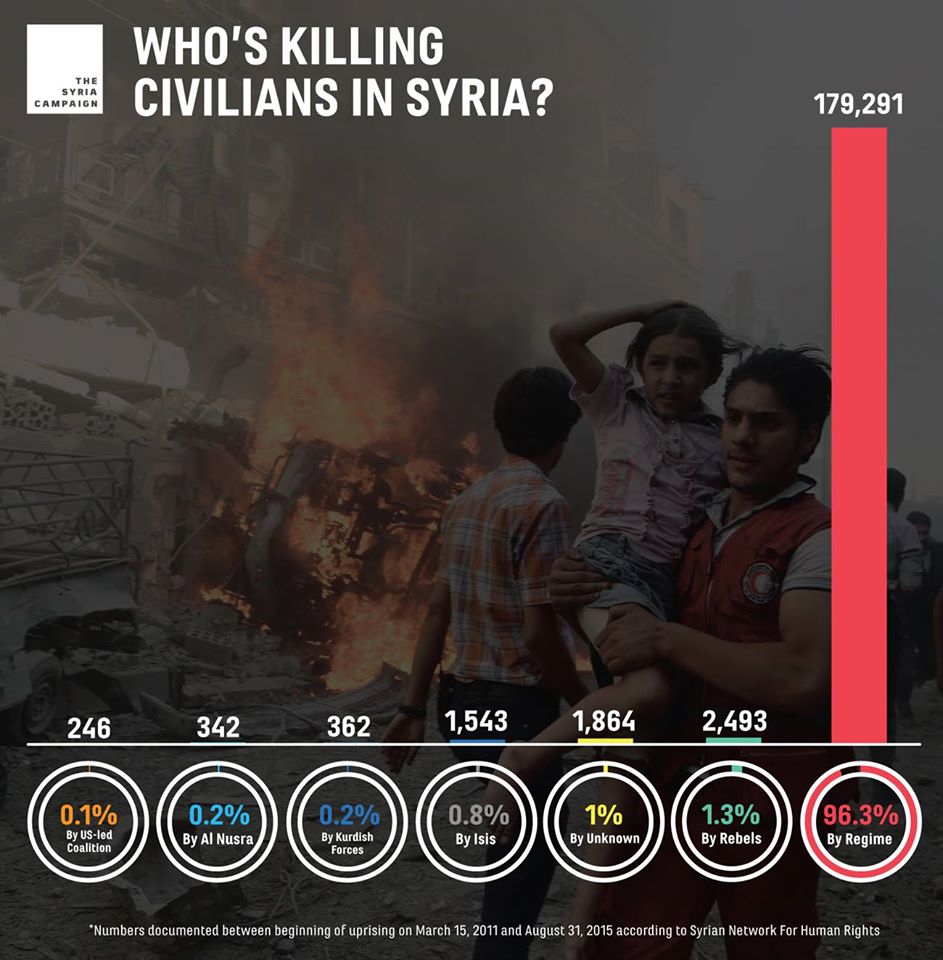
Many assume that Isis is doing most of the killing, which is partly why so many countries are now talking about bombing Isis in Syria. But the truth is different – and shocking. The vast majority of Syrian civilians killed – more than 95% according to human rights groups – have been killed by the regime of Bashar al-Assad.

Have a look at the data from the Syrian Network for Human Rights [1]:

12017617_910929855665695_3506046935164010625_o

Lots of people respond with astonishment when they see these figures, mostly because they don’t fit with their existing picture of the conflict. Some even say the numbers are lying. They’re not. While no monitoring group claims to have perfect data since their methodology and sources all differ, there appears to be agreement about the proportion of civilians killed by the Assad regime. [2]

So why do so many of us have such a bad understanding of where the violence is coming from?

Part of the answer may lie in how we hear about the conflict in Syria. The media talks about it increasingly as a “civil war”, a phrase that conjures up images of messy chaos, of various similarly-matched sides fighting each other. Likewise, the United Nations and well-meaning NGOs diligently criticise “all parties to the conflict” which promotes a perception of equal sides – or some sort of balance.

But there’s something else too. Part of the answer may lie in the disproportionate obsession with Isis. Our news is full of stories of Isis horror and brutality, but the larger scale state repression of the Bashar al-Assad regime seems to slip by mostly unreported.

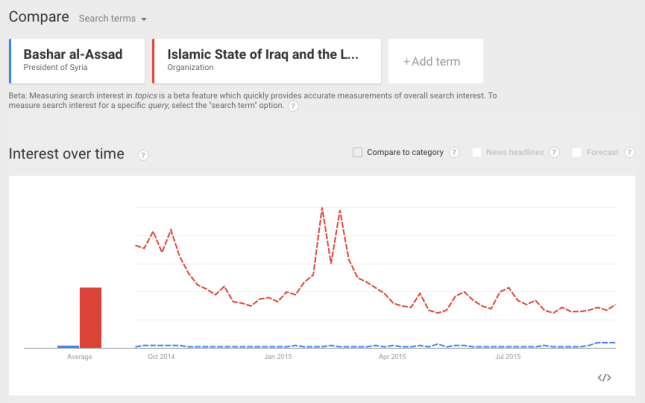
Have a look at Google Trends for news over the past year:google_trend_assad_2

Google Trends: Assad vs Isis

There was 43 times more interest in Isis than there was in Bashar al-Assad. And that’s taking in global internet users.

When we filter by United States only, we get an error message:

“Bashar al-Assad wasn’t searched for often enough to appear on the chart. Try selecting a longer time period.”

Same goes for the UK, France and Germany.

Astonishing. Together we have collectively airbrushed the biggest perpetrator of human rights violations out of the the Syrian conflict – Bashar al-Assad.

Why has the world chosen to ignore Assad’s crimes? Is it because he claims to be a secular leader? Is it because he is clean shaven and wears a suit? Is it because we don’t realise that by ignoring these crimes by the regime, we are becoming recruiting cheerleaders for Isis? [3]

Whatever the reason, the obsession with Isis over Assad bears no relation to their respective levels of violence.

The implications of this skewed focus are serious.

Right now the UK government is debating intervening in Syria to strike Isis. [4] Australia has just started anti-Isis strikes too. [5] France is about to join.[6] Russia has moved a heavy deployment of fighter jets and tanks into Syria to fight alongside Assad. [7] Russia has just days ago agreed to coordinate with Israel on its Syria operations. [8]

And yet nobody, nobody, is doing anything to curtail the biggest killer in Syria by far – the Assad regime and its air war on civilians.

As the United Nations envoy to Syria, Staffan de Mistura said, it is “totally unacceptable that the Syrian airforce attacks its own territory in an indiscriminate way, killing its own citizens. The use of barrel bombs must stop. All evidence shows that the overwhelming majority of the civilian victims in the Syrian conflict have been caused by the use of such indiscriminate aerial weapons.” [9]

All efforts at stopping the violence in Syria will fail unless we understand where it is coming from. The story of the data is unarguable – if we want to stop the killing of civilians in Syria we have to address the Assad regime.

What can you do?

Arm those around you with the facts. Share this with your friends and family.

We have used data from the Syrian Network of Human Rights to put together more infographics, on children, medical workers and media activists. You can view and share them here:

https://diary.thesyriacampaign.org/whats-happening-to-civilians-in-syria/

It’s crucial that we get the story right.

James Sadri – The Syria Campaign

[1] http://sn4hr.org/

[2] Nine months ago, data from a separate human rights organisation, the Violations Documentation Center, revealed an almost identical proportion of civilian killing by the regime – 95%.

[3] http://soufangroup.com/tsg-intelbrief-assads-atrocities-continue/

[4] http://www.ft.com/cms/s/0/84184f06-5e05-11e5-a28b-50226830d644.html

[5] http://www.rt.com/news/315150-australia-raaf-syria-mission

[6] http://www.dailymail.co.uk/news/article-3225008/France-prepares-airstrikes-against-ISIS-begins-reconnaissance-missions-terror-targets-Syria.html

[7] http://time.com/4043955/russia-syria-latakia-28-aircraft-assad-isis/

[8] http://www.aljazeera.com/news/2015/09/russia-coordinate-syria-military-actions-israel-150922045752894.html

[9] http://www.un.org/apps/news/story.asp?NewsID=51011#.VfAUos6x47w

——————————————————————————–

The Syria Campaign is building an open, global movement working for a peaceful future for Syria. We are people from all over the world who are coming together to tackle what the UN has described as “the greatest humanitarian tragedy of our time”.

‘Fairness and Accuracy in Reporting’ serves up more lies on Syria

Reblogged with permission of Bill Weinberg and his World War 4 Report.


syria banner

“Leftist” (sic) shilling for fascist dictator Bashar Assad reaches new levels of deception in an entry from one Adam Johnson of Fairness and Accuracy in Reporting (FAIR), perversely entitled “Down the Memory Hole: NYT Erases CIA’s Efforts to Overthrow Syria’s Government.” The chutzpah of invoking Orwell in his title is downright Orwellian, as his distortions reveal the very name “Fairness and Accuracy in Reporting” to be pure doublethink. Wedded to the persistent pseudo-left hallucination of a US campaign to destabilize Assad, Johnson gripes: “This past week, two pieces—one in the New York Times detailing the ‘finger pointing’ over Obama’s ‘failed’ Syria policy, and a Vox ‘explainer’ of the Syrian civil war—…didn’t just omit the fact that the CIA has been arming, training and funding rebels since 2012, they heavily implied they had never done so.” So what is Johnson’s evidence that the CIA has been doing this? In defense of his claim, he links to articles in (funny) the New York Times, The Guardian,Der Spiegel and the Washington Post. But if you bother actually click on the links (perish the thought), you’ll find that none of them quite back up Johnson’s assertions…

The Times story, from March 24, 2013, says nothing about the US “training” or “funding” the rebels—only a “secret airlift of arms and equipment.” If this support was ever “secret,” it wasn’t for very long. The very next month, John Kerry was openly boasting of US support for the Syrian rebels at an Istanbul meeting—although it is questionable how much of the promised aid actually reached the rebels. And by the end of 2013, Kerry had announced a cut-off of “non-lethal” aid to the FSA. National Security Advisor Susan Rice later stated that “lethal aid” had continued—but emphasized that it was in the interests of “counterterrorism”; that is, fighting ISIS, not Assad. (Haaretz, June 7, 2014)

The Guardian story (March 8, 2013) says nothing about the CIA, only “Western” training of Syrian rebels in Jordan. Actually read the story (persih the thought) and it turns out to be the British and the French, and the whole thing is based on anonymous sources. The only indirect reference to the CIA is the following line: “A Jordanian source familiar with the training operations said: ‘It’s the Americans, Brits and French with some of the Syrian generals who defected. But we’re not talking about a huge operation.'”

The story from Der Spiegel (the actual link is to a March 10, 2013 Reuters story citing Der Spiegel) is essentially a recapitulation of The Guardian’s claims, and concludes: “The reports could not be independently verified.”

The Washington Post story (June 12, 2015) actually reports that Congress was moving to cutCIA aid to the rebels. Again citing unnamed or fuzzy sources, the account claims the CIA has spent around $1 billion over the past “several years” to arm and train Syrian rebels—but emphasizes again that the primary enemy is ISIS, not Assad.

So of Johnson’s four sources, it is only the last that vaguely backs up his claim. And he leaves out two salient facts: that the aid is primarily directed against the jihadists who Assad is also fighting, not Assad; and that it is coming to an end.

Johnson does mention the far less ambitious but better publicized Pentagon program to train Syrian rebels, admitting it has been an “abysmal failure.” He doesn’t mention (as we have) that the fighters trained under this program amount to a whopping 54—of whom only 37 were still actually in combat last time we checked back in August. Nor does he mention (as we have) that rebels have refused to participate in the training program because of the Pentagon’s insistence that they do not use their training to fight Assad—only ISIS.

After this subterfuge, Johnson goes on to gripe that the Sept. 13 New York Times story fails to mention the CIA training program. Distortions, eh? Cast the beam from thine own eye, Adam.

He closes with the usual sickening bogus neutrality:

As the military build-up and posturing in Syria between Russia and the United States escalates, policy makers and influencers on this side of the Atlantic are urgently trying to portray the West’s involvement in Syria as either nonexistent or marked by good-faith incompetence. By whitewashing the West’s clandestine involvement in Syria, the media not only portrays [sic] Russia as the sole contributor to hostilities, it absolves Europe and the United States of their own guilt in helping create a refugee crisis and fuel a civil war that has devastated so many for so long.

Oh really, Johnson? How many of the refugees are fleeing the FSA, as opposed to Assad’srelentless aerial bombadment and ISIS sectarian cleansing? A case can be made that it is the West’s failure to meaningfully support the rebels—without condescending conditions that they don’t fight Assad—that has led to the disaster in Syria. The notion that “the West” is to blame for the refugees is literally echoing Assad’s propaganda. See CNN Sept. 16 (“Syria’s Bashar al-Assad: West is to blame for refugee crisis”).

In fact, even ISIS is a distant second to Assad as the aggressor the refugees are fleeing. An account based on refugee interviews on the German website Qantara quotes one refugee in its headline: “Stop Assad’s bombs, then we’ll go back.” A salient passage:

Indeed, the key reason for displacement in Syria is not IS, but Assad. The regime’s air force is killing at least seven times as many people as IS. This “terror from the air”, as it is referred to by civil groups, is destroying all those areas controlled by rebels—both moderate and Islamist. The aid organisation Doctors Without Borders reported that in August “heavy bombardments were carried out on 20 consecutive days in besieged Eastern Ghouta” where it is supporting 12 provisional underground clinics… One in every four victims—whether dead or injured—was a child under the age of five.

But you would get no sense of that from the ironically named Fairness & Accuracy in Reporting. This is the same FAIR, recall, that was eager to jump on utterly dubious claimsthat the rebels and not the Assad regime were behind the Ghouta chemical attack. Now it is plugging the utterly fictional notion of a “CIA Effort to Overthrow Syria’s Government.” Bunk. On the contrary, the US is tilting to Assad, viewing ISIS as the greater and common enemy. This is a betrayal of the Syrian revolution, which is ultimately even counter-productive to the aim of fighting ISIS. Telling the secular and pro-democratic forces they must accept rule under one tyrant is hardly conducive to a strong resistance against a rival gang of fascists.

Why does the increasingly reactionary FAIR continue to have any legitimacy whatsoever?

Letter from a Syrian refugee – Stop Assad’s bombs and “I would be the first to go home”

The Assad regime is still in power, killing seven times more civilians than Isis. World leaders have to act to stop the bombs from the sky. We can survive sniper fire, chemicals but the barrel bombs are unbearable. A no-fly zone or creation of safe zones would save lives instantly. And I would be the first person on the way home.

– Abo Adnan, Syrian refugee in a German refugee camp

****

Dear Friends,

I’m writing this to you from a refugee camp in Germany. All the Syrians here are so grateful for the welcome people have given us but we want to live in Syria, not Germany.

I was 22 when the fighting started in 2011. I was living in a neighbourhood called Ghouta, a short drive from Damascus. A year after the uprising the regime of Bashar al-Assad placed Ghouta under siege – this means nothing comes in or out – no food, no medicine, nothing. A year after that the regime attacked us with chemical weapons and more than a thousand were gassed to death. For years they have also dropped barrel bombs and missiles on us from regime aircraft. Normally we got struck eight times a day. How could we continue to survive that hell on earth?

I had to cross twenty checkpoints on fake documents to make it out of Syria. Each time your heart stops as you know that there is a chance you will be arrested and taken away. I made it out and survived a death boat. I have survived so many ways a human being can be killed.

At home I was a medical student. We had so many attacks I assisted more surgeries than most surgeons do by the time they retire. My dream is to only have to perform ‘normal surgeries’, what I trained for, not picking shrapnel from bombs out of children’s limbs.

We cannot go back while the war continues which is why we are asking for you to do everything you can to stop the war. All your governments agree there needs to be a political transition in Syria but no amount of words have made it happen. The Assad regime is still in power, killing seven times more civilians than Isis.

World leaders have to act to stop the bombs from the sky. We can survive sniper fire, chemicals but the barrel bombs are unbearable. A no-fly zone or creation of safe zones would save lives instantly. And I would be the first person on the way home.

Right now everybody in Europe is talking about us refugees. But not many are listening to us. Please sign this petition to Europe’s leaders asking them to do more to stop the bombs and help us return home:

https://act.thesyriacampaign.org/sign/we-want-to-go-home

Thank you,

Abo Adnan

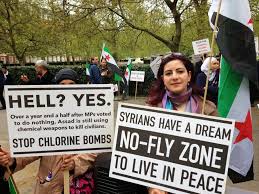
Syrian activists call for no-fly zone (shared from alaraby)

The regime of Syrian President Bashar al-Assad is the root cause of the conflict in Syria and, by extension, the refugee crisis that is now hitting Europe, as Syrians flee their homeland in their millions.

NFZone


Abubakr al-Shamahi (Date of publication: 8 September, 2015) Originally published at alaraby

Planet Syria, a network of more than 100 civil society groups working across Syria, briefed MPs and journalists at the Houses of Parliament in London before a parliamentary foreign affairs select committee meeting on Syria.

The panel assembled by Planet Syria argued that the regime of Syrian President Bashar al-Assad was the root cause of the conflict in Syria, and, by extension, the refugee crisis that is now hitting Europe, as Syrians flee their homeland in their millions.

“We asked activists how the world can help… People on the ground are specifically asked for a no-fly zone,” Mustafa Haid, a spokesperson for Planet Syria and the chairperson of Syrian nonprofit Dawlaty, told al-Araby al-Jadeed.

“We came to deliver their message, people under the barrel bombs are asking for this,” Haid added.

The imposition of a no-fly zone would almost certainly involve a barrage of bombing raids against Assad’s many airbases, refuelling infrastructure, storage hangars and other facilities spread around the country. Such operations are rarely casualty-free.

Haid, as well as his fellow spokesperson Assaad al-Achi, an economist before he became an activist, relayed their own experiences in Syria.

They also highlighted the damage caused by barrel bombs, which were described by Human Rights Watch in August as a greater threat to Syrian lives than the Islamic State group that has ravaged parts of Syria and Iraq.

“Syrians have described to me the sheer terror of waiting the 30 seconds or so for the barrel bomb to tumble to earth from a helicopter hovering overhead, not knowing until near the very end where its deadly point of impact will be,” HRW executive director Kenneth Roth said.

The British parliament rejected a move by Prime Minister David Cameron for military action against Assad in 2013, a vote that eventually weakened US President Barack Obama’s resolve to attack the Syrian regime, following a chemical weapons attack that killed hundreds of civilians in Damascus.

Activists, however, argue that prior inaction by the international community and the non-implementation of various UN resolutions against Assad have led to the current catastrophic situation, and that a no-fly zone would not involve Western troops fighting on the ground.

– See more at: http://www.alaraby.co.uk/english/news/2015/9/8/syrian-activists-call-for-no-fly-zone#sthash.POpMrnra.J1t6yflL.dpuf

Junk the international refugee system, and open the borders (reblogged from Open Borders: the Case)

Nothing about the modern refugee system makes sense. The way I see it, we have two choices. Either we can accept that, as much as we wish otherwise, we are little better than the governments of World War II who chose to let people fleeing violence die and suffer, in the name of “national defence” and “sovereign borders”. Or we can accept that every human being has the right to pursue a better life, as long as they are willing to pay the price to get there — the price of their ticket, and the price of lodging.

****

Refugee and asylum are hot topics these days, with conflict across the world and criminal violence often forcing people to set off for distant lands in search of a better life. It seems to me that most people arguing this issue operate under two misapprehensions regarding how refugee law works:

  1. They believe that refugees don’t have very particular or special rights to migrate under the law — refugees crossing a border without submitting to inspection is unlawful, and countries don’t have special obligations to accept refugees who set foot on their territory.
  2. They believe that international and domestic law adequately protects the rights of refugees, and that most of the problems to do with refugee and asylum-seeker rights originate from governments failing to adhere to their legal obligations, rather than any fundamental failing of refugee law.

Remarkably, I’ve encountered people who hold both views. Usually adherents of #1 are people who don’t know much about refugee law, and/or anti-immigration restrictionists, while adherents of #2 are generally mainstream left liberals. But there are certainly some people who appear to hold both sets of beliefs (possibly because they completely misunderstand both how refugee law works and the actual situation refugees face).

It’s actually pretty easy to debunk belief #1 — international law, and the domestic law of most developed countries (the US included) gives anyone fleeing persecution or torture the right to seek and obtain asylum outside their home country, becoming a refugee. You need to do nothing special to enter another country. If you have a legitimate refugee claim, crossing the border without initially obtaining any papers or passing any government inspection is completely legal. (If you think this doesn’t make sense, then consider that it wouldn’t make sense to prevent people from fleeing the Holocaust because their papers at the time weren’t in order.)

After you’ve left your home country and entered the country you’d like to seek asylum in, you must begin the formal process of obtaining refugee status — i.e., you have to start filling out forms and making your case for asylum. In most cases, this means a judge or other government official has to formally rule that you are a legitimate refugee. If they do, then you’re typically scot free and become a legal immigrant under the country’s immigration laws. If the judge rules you’re not a legitimate refugee — maybe the violence you fled wasn’t the right kind of violence — then you’ll be sent home.

Sometimes, you might not want to resettle permanently in the country you initially flee to. In some cases, governments, charities, and/or international bodies will help you migrate elsewhere under a formal refugee resettlement programme. This is usually centrally managed or planned by some large government or intergovernment bureaucracy.

Most countries are reluctant to help refugees resettle; the United Kingdom for example has said it will only resettle 500 refugees from Syria — a country beset by a civil war which has displaced millions of innocents. (“Displaced” of course is an euphemism for “forced millions to leave their home under the threat of murder, rape, or torture”.) As a result, the queues for resettlement are long and few refugees have any serious prospect for being resettled elsewhere — which is why most Syrian refugees are trapped in Jordan, Turkey, and Lebanon.

What I’ve just described is not fanciful or imagined — it’s the international refugee system as codified in international law and the domestic law of many countries. The “illegals” who show up in your waters on rickety boats or cross the desert straddling your border are, in many cases, people with legitimate asylum claims — which makes what they’re doing completely legal. They are no more wrong than a Jew fleeing the Holocaust would have been in trying to get to your country.

Now, it seems funky that I think the belief #2 I described is wrong. This system of refugee management has its flaws like any human creation, but it certainly sounds like it would, if implemented properly and in good faith, enable refugees to migrate away from persecution and violence. The line it draws between refugees and those seeking to migrate for other reasons is perhaps arbitrary, but not unreasonable on the face of it — if we had to pick and choose only one type of migrant for some reason, most of us would probably agree we ought to welcome the person fleeing murder.

But in the real world, it turns out that figuring out which side of this arbitrary line one is on can be difficult. It’s actually unclear, for example, whether child migrants to the US fleeing gang violence in El Salvador (“fleeing gang violence” here being an euphemism for “running away from people who’ve threatened to rape and then kill them”) actually legally qualify for refugee status. Even if they don’t, they arguably qualify for other protective status of some kind offered by US immigration law, but this is hardly a well-settled legal issue.

Some refugee advocates think the US government should offer special parole to these Latin American migrants, since they don’t fit any typical legal category of refugee. Others, like the UN and even the president of Honduras, argue that although they might not meet the technical definition of refugee, these people certainly fit the spirit and intention of refugee law, and should be classified as such.

Putting aside the thorny issue of child asylum-seekers for the moment, let’s reflect on the ludicrousness of the fact that most countries will not permit anyone claiming refugee status to actually legally travel there. If you enter irregularly, you can fully assert your legal right to stay — but it is illegal for you to travel in order to assert this legal right of asylum!

Say you want to fly from Guatemala to the US, or from Syria to the US, you need a visa. If you can’t prove you have the legal right to travel to the US, no airline or shipping company will issue you a ticket. Since almost all refugees can’t prove they have this right — thanks to the legal system requiring you to be present on the country’s territory to assert your asylum claim — almost all refugees and asylum-seekers are compelled to enter via irregular means, and seek out the aid of smugglers.

The refugees or migrants undertaking an arduous and dangerous journey from Somalia to Italy or Guatemala to the US do so not because they are criminals who have to resort to illegal means by virtue of their own evil — they do so because there is no legal way for them to travel to the US. Some refugees and asylum-seekers resort to other types of crime to travel in search of safety — I have heard stories of Tamil refugees from Sri Lanka flying to Western countries by faking fraudulent tourist or immigrant visas in their passports. After boarding their flight using this false documentation, they destroy the fraudulent documents, and claim asylum upon landing. This sort of fraud or human smuggling is just the perfectly-foreseeable and indefensible outcome of a legal system which criminalises the ordinary travel of people who already have the legal right to migrate.

Worse still, any good faith implementation of this legal system still must grapple with the problem of differentiating legitimate refugees from mere “economic migrants” or people seeking to reunite with family. Since international refugee law is silent about the rights of non-refugee migrants, even countries following this legal system in good faith feel free to persecute economic migrants. So if, say, the US government takes measures to deter Latin Americans from coming, this will inevitably discourage not just economic migrants. This will also discourage those who already have the legal right to migrate from exercising those legal rights accorded to them under US and international law. And there’s nothing wrong with this under refugee law, because state violence and coercion of economic migrants is perfectly fine.

To put the implications here in more concrete terms, ostensibly civilised developed countries really do try hard to intercept migrants — almost indiscriminately — before they reach their soil. If you can keep a potential asylum-seeker from touching land, then you can prevent them from ever asserting an asylum claim in the first place — even if they would be completely entitled to do so under your country’s laws. The international refugee system creates a perverse incentive to try very hard to keep refugees from coming, by offering this as a legal channel to stop them. And while states can certainly go overboard in taking harsh measures here, virtually all of them can find some ostensibly good-faith justification for doing so. After all, they aren’t intercepting these migrants for the sake of punishing refugees — they just want to stop economic migration!

This is exactly why Australia tries very hard, for example, to intercept migrants before they reach its waters, and to “process” any asylum claims offshore in countries like Nauru. While what they are doing might run afoul of the spirit of the law, Australia claims to be abiding by the exact letter of international and domestic refugee law. Similarly, the coast guards of European states like Greece and Italy often work to intercept migrants’ boats before they enter their waters — and if these boats do enter their waters, it is not unheard of for the coast guard to actually tow them back out. Such tows or “pushbacks” are actually illegal under refugee law, but there is nothing to prevent the coast guard from doing this, and there’s a very strong incentive to keep these people from touching land and asserting any claims of asylum.

Finally, the international refugee system in at least one important respect appears to be a figleaf for rich countries to disguise how they foist the responsibility for dealing with refugees onto poorer countries. Consider the present Syrian refugee crisis: millions of Syrians have been forced to flee their homes. Many of them live in camps in Syria. Hundreds of thousands, if not millions, more have fled to Turkey, Lebanon, or Jordan, and become refugees there.

Under refugee law, these people are now trapped in the country they’ve initially claimed asylum in. The governments of Turkey, Lebanon, and Jordan aren’t trying to gas them to death like Bashar Assad is, nor are they trying to oppress them in the way the Islamic State is presently doing in parts of Iraq and Syria. So these people have no legal way to leave the countries they initially flee to — and Turkey, Lebanon, and Jordan just have to deal with these populations.

In theory, the UN and various governments would work together to help resettle these refugees elsewhere in the world, so they don’t just burden the countries immediately next to the calamity that caused them to flee. In practice, rich countries like the UK agree to take a couple hundred refugees and call it a day.

People claim that taking refugees would overwhelm their countries. People from the West and other richer countries (like my own, Malaysia) can give all sorts of great excuses for why they cannot take in more than a few hundred refugees. But Turkey, Jordan, and Lebanon had no choice but to take in hundreds of thousands of refugees — this was and is their obligation under international law. Short of the conflict ending, there is no way for these migrants to leave. If a refugee living in Jordan or Turkey tries to migrate elsewhere, they can be legally rejected and treated as a mere “illegal” — they’re just “economic migrants”, not real “refugees”, since the governments of Jordan and Turkey don’t actually try to kill these people.

I won’t argue that these countries are perfect, or that they’ve been perfectly able to cope with these inflows, but it’s plain as day that these refugee flows have not caused a humanitarian disaster to befall the nationals of these countries. I don’t see masses of Turks, Jordanians, or Lebanese starving or going without shelter because of resources diverted to caring for Syrian refugees. If these poor and relatively small countries can cope with hundreds of thousands of refugees, it is frankly absurd that far richer and larger countries like Australia, Canada, the US, or the UK — or even Malaysia — can only cope with taking in a few hundred. Yet this absurdity is exactly what the international refugee system would recommend.

The international refugee system was meant to protect the rights of refugees to seek refuge from violence. Yet the outcome has been something quite plainly different. People seeking asylum from countries like Syria or Afghanistan who are caught by Australia and “processed” offshore live in detention camps where the conditions are so terrible that they often wish they’d never come — which is likely the desired effect from the Australian government’s point of view. Children fleeing threats of rape or murder from places like Honduras are now at risk of being deported back to face their assailants, simply because they might not technically be refugees. Governments pursue harsh measures to deter channels for migration, in the name of “legitimately” excluding economic migrants, even if these harsh measures force legitimate refugees to undertake arduous and dangerous journeys which leave them at the mercy of illicit smugglers and violent criminals.

Now, of course, you could argue that it’s only “fair” to take some measures to deter economic migration, even if harming a few refugees is the resulting collateral damage. Refugee advocate Sonia Nazario vehemently demands the deportation of economic migrants. The operative assumption seems to be that these migrants aren’t fleeing “real” danger or suffering.

I’ll let journalist Stephan Faris field this one, from his book Homelands: The Case for Open Immigration:

Life expectancy in [Nigeria] is 52 years, the 17th lowest in the world, compared with 79 years in the United States and 83 years in Italy. Out of every eight children born in the country, one dies before his or her fifth birthday. Only three out of every five adults are able to read and write. The chance a woman will die as a result of childbirth is better than 1 in 30.

If those numbers were a result of government persecution—if a state were intentionally targeting a specific ethnic group, cutting thirty years off the lives of its members, depriving 40 percent of them of an education, and poisoning and killing one child in eight and one mother in thirty—there would be little question that those who managed to escape were deserving of safety and protection.

And yet, if a Nigerian requests asylum in Europe or the United States, he or she faces an uphill battle. For the vast majority of Nigeria’s young and able, the legal routes of travel to safety and a better life, to places where women can give birth without worrying about dying or losing a child, have been securely barred.

The modern refugee system at its heart is incapable of assisting many fleeing truly horrific danger and suffering.

If a murderous dictator wants to murder your child, and you’re willing to pay thousands of dollars to smugglers who specialise in human trafficking via life-threatening desert or sea routes so your child can make it to Western soil, you might be able to make a claim of asylum and save his or her life.

But if your child dies from diarrhea because his parents were forced to live in a country with terrible health infrastructure and a poor medical system, then that’s totally fair. Any attempt you might have made to bring him to a country where doctors actually know how to treat diarrhea would have been mere “economic migration” — an unlawful act!

Development economist Lant Pritchett captures the absurdity well in his book Let Their People Come:

Amartya Sen has popularized the notion of “missing women” in Asia due to differential death rates and (increasingly) sex-selective abortion. Because the child mortality rate in India is about 100 per 1,000 while it is 8 per 1,000 in the United States, this implies that 92 per 1,000 more Indian children than U.S. children die before age five. This means there are 2.2 million missing Indian children each year. However, while the “missing women” is a standard refrain, I have never heard the term “missing Indians” to describe the results of the child mortality differentials between the rich world and India.

Almost as a perfect reductio ad absurdum, Nicolas Kristof in the New York Times has compared the low mortality rates in the United States to the even lower mortality rates in Singapore to discuss the issue of less than 20,000 missing Americans — with no mention of the issue that is smaller by orders of magnitude than the missing people in any poor country.

Nothing about the modern refugee system makes sense. The way I see it, we have two choices. Either we can accept that, as much as we wish otherwise, we are little better than the governments of World War II who chose to let people fleeing violence die and suffer, in the name of “national defence” and “sovereign borders”. Or we can accept that every human being has the right to pursue a better life, as long as they are willing to pay the price to get there — the price of their ticket, and the price of lodging.

Trying to arbitrarily redefine migration as a privilege accessible only to “legitimate” refugees is no way to protect human rights. Drawing this arbitrary line is merely an excuse for tolerating government oppression of innocent migrants, even the actual refugees among them. If we really care about human rights and the rights of refugees, then we ought to just junk the international refugee system — and open the borders.

Related reading

You might be interested in all our blog posts tagged refugees.

Here are a few posts in particular that might interest you:

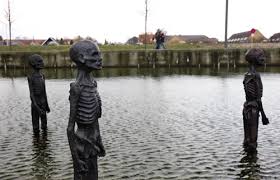
“No one leaves home unless home is the mouth of a shark” A poem by a refugee (via Radio Free Syria)

sculptures


“HOME”
(by Warsan Shire)

no one leaves home unless
home is the mouth of a shark
you only run for the border
when you see the whole city running as well
your neighbours running faster than you
breath bloody in their throats
the boy you went to school with
who kissed you dizzy behind the old tin factory
is holding a gun bigger than his body
you only leave home
when home won’t let you stay.
no one leaves home unless home chases you
fire under feet
hot blood in your belly
it’s not something you ever thought of doing
until the blade burnt threats into
your neck
and even then you carried the anthem under
your breath
only tearing up your passport in an airport toilets
sobbing as each mouthful of paper
made it clear that you wouldn’t be going back.
you have to understand,
that no one puts their children in a boat
unless the water is safer than the land
no one burns their palms
under trains
beneath carriages
no one spends days and nights in the stomach of a truck
feeding on newspaper unless the miles travelled
means something more than journey.
no one crawls under fences
no one wants to be beaten
pitied
no one chooses refugee camps
or strip searches where your
body is left aching
or prison,
because prison is safer
than a city of fire
and one prison guard
in the night
is better than a truckload
of men who look like your father
no one could take it
no one could stomach it
no one skin would be tough enough
the
go home blacks
refugees
dirty immigrants
asylum seekers
sucking our country dry
niggers with their hands out
they smell strange
savage
messed up their country and now they want
to mess ours up
how do the words
the dirty looks
roll off your backs
maybe because the blow is softer
than a limb torn off
or the words are more tender
than fourteen men between
your legs
or the insults are easier
to swallow
than rubble
than bone
than your child body
in pieces.
i want to go home,
but home is the mouth of a shark
home is the barrel of the gun
and no one would leave home
unless home chased you to the shore
unless home told you
to quicken your legs
leave your clothes behind
crawl through the desert
wade through the oceans
drown
save
be hunger
beg
forget pride
your survival is more important
no one leaves home until home is a sweaty voice in your ear
saying-
leave,
run away from me now
i dont know what i’ve become
but i know that anywhere
is safer than here.
by Somali poet Warsan Shire

Source: Radio Free Syria

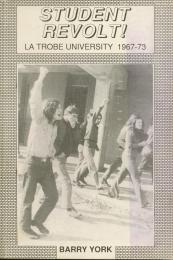
STUDENT REVOLT – La Trobe University 1967 to 1973

Student Revolt 001


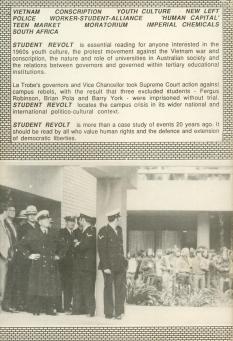
I’m pleased to make my book, Student Revolt: La Trobe University 1967-73 available on-line as a pdf. The book was published in 1989, with comrades helping finance it. It was based on my Master of Arts thesis, completed at the University of Sydney in 1984. The book was published in 1989, when La Trobe University was commemorating the 25th anniversary of the passage of the La Trobe University Act. The University declined my offer to contribute a chapter to their official history of the University and, as I expected, the official history trivialised and down-played what bourgeois academics and administrators still refer to as “the troubles” on the campus. It was actually a full-fledged student rebellion, questioning the nature and purpose of the universities under capitalism, and part of a global movement of young people questioning the inherited wisdom that held back progress by keeping the system in place.

Student Revolt blurb 001


I wish that rebellious questioning spirit would return to the campuses, which strike me as too bogged down by group-think and uncritical thinking in the Arts faculties. Yes, a generalisation but one borne out by what I read and experience – and confirmed by efforts to shut down research that does not fit the dominant paradigm and to censor ideas deemed offensive. I continue to embrace the motto “It is right to rebel!” – offensive though it may be to the professors, popes and princes.

Here it is: STUDENT REVOLT By Barry York


The fascists in Russia’s hybrid army

There’s an old saying about the thief who cries thief in order to distract attention from himself. The same applies to the supporters of Russian imperialism and the Putin regime. They have been quick to take on board Putin’s propaganda that paints the Ukraine independence struggle as a fascist one, yet far-right parties received a much smaller vote in the Ukrainian elections than do similar parties, some of which are neo-fascist, in western Europe and the UK. Also, a cursory survey of the websites of such far-right parties reveals sympathy for the “anti-fascist” Putin. Far right and fascist groups both in Russia and throughout Europe are backing the so-called Donetsk and Luhansk ‘People’s Republics’ (DPR/LPR) in word and deed.

– c21styork

* * *

The following is from Paul Canning and is reprinted for non-commercial reuse under aAttribution-Share Alike 3.0 Unported Creative Commons license.

Type ‘fascist Ukraine’ into Google and the first dozens of results all refer to the Ukrainian government and those forces fighting the Donbas separatists.

You will be hard pressed to find any references to the presence of fascists in Russia’s hybrid army in Ukraine. Ones like those pictured above in an astonishing piece of detective work by Dajey Petros.

Petros is a Dutch blogger who has been doing great work using similar tools to those employed by Eliot Higgins’ Bellingcat. Taking content from social media and using various tools to tell a story from it – like the story of the Russian missile which shot down the Malaysian Boeing.

Far right and fascist groups both in Russia and throughout Europe are backing the so-called Donetsk and Luhansk ‘People’s Republics’ (DPR/LPR) in word and deed. They are raising money for them, despite the sanctions. They hold mass rallies and other events. They send representatives to the Donbas to endorse the ‘Republics’. And they send Russians – and sometimes other Europeans – to join the fighting. All with the tacit approval of the Kremlin.

Gubarev

That approval was most sharply on display in March when Europe and Russia’s far right groups came together in a conference in St Petersberg. It was organised by the Rodina party whose leader is a Russian Deputy Prime Minister.

The event’s star was Alexei Milchakov, the leader of the ‘Rusich’ group of rebel fighters. Milchakov is infamous for photographs of him with a Nazi flag and a puppy he had allegedly killed. He has also posed in front of the dead bodies of Ukrainian soldiers.

Naming the separatist fascists

Many fascists were involved in setting up the DPR/LPR, such as Pavel Gubarev, the self-proclaimed first ‘People’s Governor of Donetsk’. His press secretary, Aleksander Kriakov, was described by Donetsk city Chief Rabbi Pinchas Vishedski as “the most famous anti-Semite in the region.”

When separatists took over TV broadcasting towers last year they boasted that:

Here, from Sloviansk, we are inflicting a powerful information conceptual blow to the biblical matrix … to Zionist zombie broadcasting.

They then presented a lecture by former Russian Conceptual Party Unity leader Konstantin Petrov, who the European Association for Jewish Culture (EAJC) describe as a “anti-Semitic neo-pagan national-Stalinist sect.”

In March last year Josip Zisels, Chair of the Association of Jewish Organizations and Communities in Ukraine, noted that pro-Russian organisations’ websites “have published many anti-Semitic materials which were meant to instigate hatred against the Maidan as being allegedly inspired by the Jews.”

Former DPR Prime Minister Aleksandr Borodai was a writer for the Russian fascist newspaper Zavtra. He opened the DPR’s first foreign ‘consulate’ on the premises of the Moscow branch of the Eurasian Youth Union (EYU), the youth wing of the Eurasia Party, headed by fascist ideologue Aleksandr Dugin. Dugin has openly called for genocide against Ukrainians.

Another prominent Russian fascist in the Donbas is Gennadiy Dubovoy, whose colleagues are shown in the top and left photos participating in some sort of bizarre Nazi ritual. (See lots more whacky photos.)

Yuli Kharlamova

Participating in the ritual are several women and one is Yuli Kharlamova, a presenter on the Russian TV channel ANNA- News and an FSB (Russian security services) agent.

There are many other individual as well as organised Russian fascists who have been documented from social media engaged in leading roles among the separatists. As Petros puts it “in Russia’s [hybrid] army the Nazis structurally and openly belong to the core and they train others.” Not only that but Russian soldiers who have been captured have been found to have Nazi tattoos.

Here are the patches for five fascist militias in that separatist hybrid army (there are others):

And according to the expert on the far-right in Europe Anton Shekhovtsov there is evidence that proves that “Russian fascist organisations have been heavily infiltrating and instigating pro-Russian separatist movements in South-Eastern Ukraine” before the Maidan.

The real politics of the DPR/LPR

The UK has an organisation supported by leading lights in the so-called and unfortunately influential ‘Stop The War Coalition’ which claims that the DPR/LPR are socialists fighting fascists, but when the DPR/LPR organised sham elections last November socialists and communists were excluded.

The DPR constitution has the Russian Orthodox Church of the Moscow Patriarchate as the official religion. The Ukrainian Orthodox Church of the Kyivan Patriarchate, Ukrainian Greek Catholic Church, Roman Catholics, and Protestants, are officially regarded as ‘anti-Russian’ and have been actively persecuted.

According to a separatist recruitment video:

This war is a religious war. For Banderist money, agents of the Vatican, splitters, heretics fight against us, all of them traitors to Christ. And that’s why this war is a religious one.

The constitution also says that “any forms of perverted unions between people of the same sex are not acknowledged and will be prosecuted.”

The separatists running DPR/LNR have the documented support of only 18% of locals.

A further sign of the real politics of the separatists is shown by how anti-semitism fuels their infighting.

And in February, at a press conference, the leaders of the DPR/LPR, Zakharchenko and
Plotnitsky, ended their interview with anti-Semitic remarks.

Zakharchenko said: “I can’t remember, that at any time in Ukrainian history, cossacks were ruled by, well, not exactly those people, who ever carried a sword. Jews…”
Plotnitsky, (interrupting, grinning): “There is a video on Youtube ‘When the Jewish Cossacks have risen’, let them watch it”. Zakharchenko: “It’s not Jewish Cossacks, it’s miserable representatives of a great people, but they never ruled over cossacks. Taras Bulba and Taras Shevchenko would be turning in their graves because of such rulers in Ukraine.”

Abraham H. Foxman, National Director of the Anti-Defamation League (ADL), said that “those watching understood very well that this was an anti-Semitic appeal.”

This climate is being encouraged by Russian television, the only TV available in the ‘People’s Republics’, who during last year’s Ukrainian elections, accused leading candidates of being Jews.

Antisemitic meme against Alexander Khodakovsky, DPR ‘Security Council’ secretary

The lies about fascism in Ukraine

Human rights and Jewish groups both say that Russian claims, including by Putin himself, of rampant antisemitism, even ‘pogroms’, in Ukraineare not correct. Some of the incidents they recorded may actually have been orchestrated by Russian secret services, such as one which took place in July in Lviv.

The reality is that Ukraine has one of the lowest levels of anti-Semitic incidents in all of Europe, according to Josef Zissels, General Council Chairman of the Euro-Asian Jewish Congress.

An antisemtic poster distributed in Luhansk during the initial unrest. It reads “Jew Shuster [Savik Shuster, Kyiv-based TV presenter] will explain why Ukrainians must defend the interests of Jew [Prime Minister Arseniy] Yatsenyuk and Jewish oligarchs. Why Slavs must kill each other.”

Researchers of Ukrainian nationalism issued a collective statement last March saying that the Maidan was a liberationist, and not extremist, mass action of civil protest. It condemned reporting which “misrepresents the role, salience and impact of Ukraine’s far right within the protest movement.”

Left forces in Ukraine have also consistently spoken out at the mischaracterisation of the Maidan revolution as a ‘fascist coup’, however their voices have been drowned by the Kremlin propaganda machine and its Western sympathisers – as well as by much of the mainstream reporting.

Dmitry Mrachnik (a member of the Ukrainian Autonomous Workers Union) is here extremely blunt!

The claim that fascists control Ukraine is propaganda by Putin. To those anarchists and left-wingers who believe Putin’s propaganda about a fascist regime in Ukraine and who support Russia I say:

Take a deep breath, gormless half-wits. For many years Russia has already had something like the kind of fascism which Ukraine is accused of. Anyone who supports fascists who save a neighbouring country from fascists must be either pretty stupid or completely devoid of any conscience.

The propaganda about Ukraine being ‘fascist’ directly fuels violence. It is consistently cited as a reason for those joining the DPR/LNR. This does not mean that the growth of nationalism in Ukraine should not be a concern.

Says Halya Coynash of Kharkiv Human Rights Protection Group:

Ukraine’s leaders have laid themselves open to criticism over the role of the Azov volunteer battalion, with its neo-Nazi leaders and probably members, as well as the more extreme elements in Right Sector and VO Svoboda. A few individuals such as Andriy Biletsky and Ihor Mosiychuk have won seats in Parliament, while others have received questionable appointments on the basis of their bravery in defending Ukraine. There are legitimate concerns about their role beyond the battlefield, as well as doubts about their motives as the recent conflict in Mukacheve has demonstrated.

All this is a gift for Kremlin propaganda, but it still does not justify broad claims about Ukrainian society. Ukraine’s two far-right parties did very badly in last year’s presidential and parliamentary elections, and no evidence exists that voters support anti-Semitic or xenophobic views. Now in Parliament, Biletsky reportedly claims that stories about his neo-Nazi and white supremacist views is all Russian slander. The denial is unconvincing, but it is telling that he sees the need to make it.

It is unlikely, she says that the Kremlin will “abandon its propaganda arsenal” and she warns about “fakes, manipulation, and total fabrication.”

Petros uncovered one such manipulation last year. A member of the now famous Ukrainian Azov battalion, whose members undoubtedly do include fascists, had posted a photo of his battalion posing with a Swastika flag. Petros proved it was a photoshopped fake, the original had no Nazi flag in it. Nevertheless here it was on Russian primetime TV news …

It is entirely right that Western media should report, as the BBC’s leading news show ‘Newsnight’ did recently, on the far right in Ukraine. What is wrong is that the presence of fascists in powerful positions among the separatists is being totally ignored.

Western journalists often say that they strive for ‘balance’. Well, where is it? On this issue they are doing what the Russians do – only report one part of one story.