The late John Herouvim wrote a Master of Arts thesis at La Trobe University in 1983, drawing on wide and meticulous research and interviews with Communist Party of Australia (ML) members and former members. The former members included veterans of the working class struggle such as Clarrie O’Shea, Bill Wilson and Marj Broadbent. Most of the interviewees were still members and requested anonymity but they wanted to speak because of their growing disillusionment with that party.
I only recently came upon a copy of the completed thesis. It hasn’t previously been scanned, to the best of my knowledge.
I am yet to read it properly but recall having a few differences with John, such as his use of the term ‘ultra left’ too loosely. At the time he was researching it, there were a few social-fascist types who tried to stop his progress. John purchased a large steel safe, like a fridge, in which he kept his notes and drafts. He told me once that the safe would even survive a bomb blast. Thank heavens, it was never put to that test.
Ted Hill, the party chairman, wasn’t happy about John’s research and declined to cooperate with him but I remember John telling me that Hill offered him unrestricted access to the archives of a small trade union should he drop the project and focus on a history of that union instead. Presumably, the party had strong influence in that union, whose name I forget.
The thesis is now an historical document about a party and period that, in my view today, represented the decline of the left. I didn’t articulate my frustrations in that way at the time but quit organisationally in late 1980 or early 1981 and had no problems with being interviewed by John for his thesis. I was in the esteemed company of Clarrie O’Shea, after all.
Nearly four decades on, I have scanned the thesis and share it here (in four parts).
In 1968, Paul Erlich’s book, ‘The Population Bomb’, revived Mathusian dystopianism and, surprisingly, was embraced by some people who regarded thermselves as on the Left. Yet in emphasizing population growth and limited resources as the source of problems, the neo-Malthusians overlooked the capitalist mode of production and the structures of class power.
In the C19th, in blaming ‘too many people’ as the source of poverty, Malthus was indeed committing “a libel on the human race” and offering “apologia for the poverty of the working classes”.
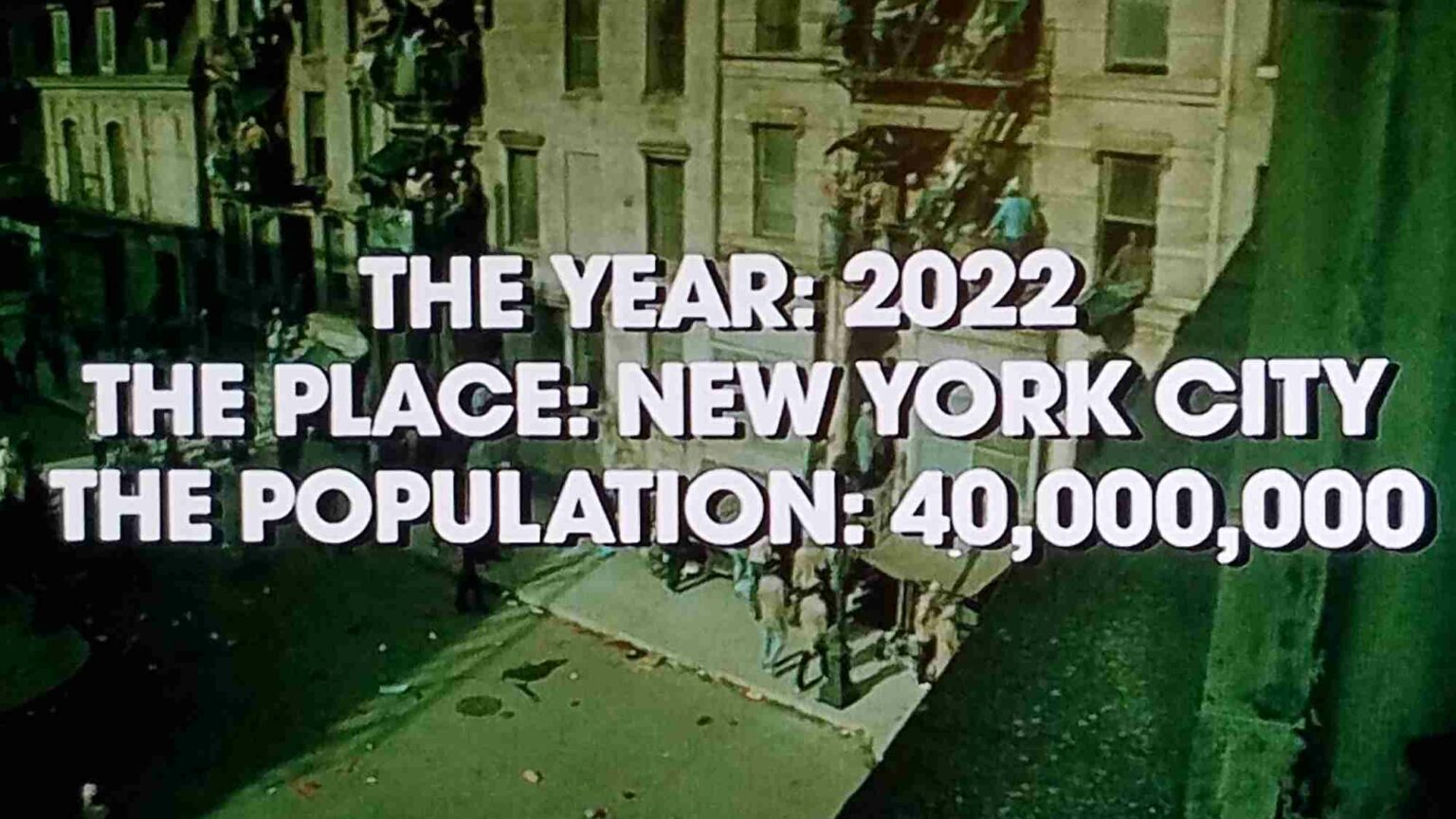
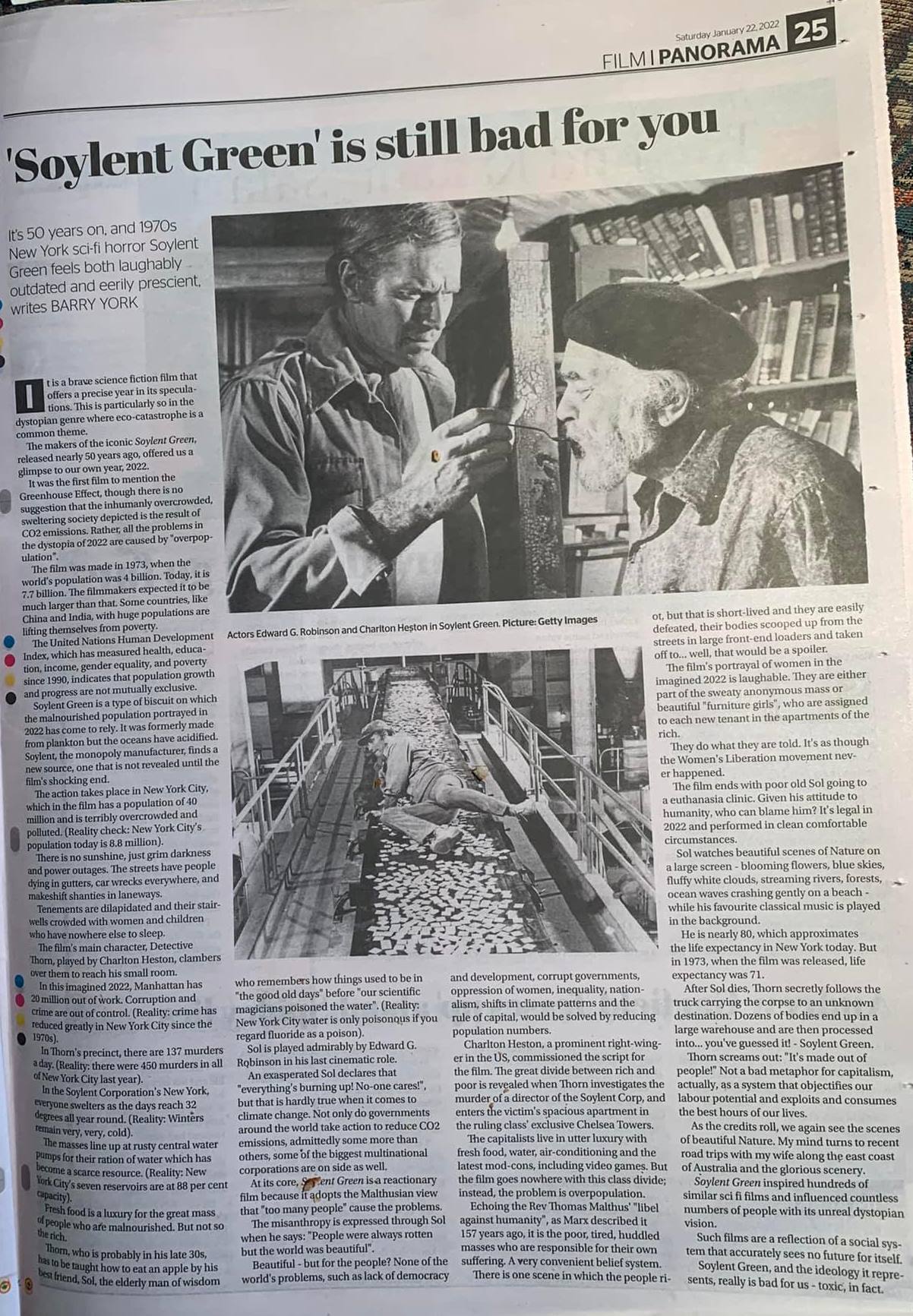
The Canberra Times recently published my article below. It had been gestating for a long time and the movie ‘Soylent Green‘ prompted me to write something, given that the dystopian sci-fi film is set in our year: 2022. The movie came out nearly 50 years ago.
My article in The Canberra Times took up a full page, so I definitely can’t complain about the generous word length. However, had I had more words, I would have included at least three more references
First, a personal memory: In the mid-1990s, I was at a party at a friend’s place overlooking the Georges River in Sylvania Heights, Sydney, and the eminent palaeontologist and climate alarmist, Tim Flannery, was among the guests. We had known each other, briefly, at La Trobe University around 1973 or 1974, and struck up a conversation. Tim was very much concerned about population growth, believing that Australia was already over-populated. He told me that the optimum population for Australia was seven million people. I pointed out that that figure approximated the population in 1947 and asked whether he really wanted an Australia of the 1947 type. He seemed not to have thought of it like that, in terms of society, before.
I would also have liked to add more examples of very popular dystopian sci-fi films that have helped create a disempowering doom-and-gloom ethos and that were proven completely wrong in how they saw the future. A powerful example is the original ‘Mad Max‘. The filmmakers in 1979 were so freaked out by the oil crisis of 1973 that they set Mad Max in the ‘wasteland’ of 1985!
Thirdly, it’s worth noting that the Internet Movie Data Base lists the top 500 dystopian sci-fi films – which means there are many more than that. They really are a cultural phenomenon.
****
Science fiction stories had a big impact on my early political development. I liked the ones that dealt with ‘the impossible’ that was nonetheless potentially possible. Unlike fantasy, which never interested me with its dragons and other mythical creatures and impossible scenarios, sci-fi had a basis in science and innovation. Stories and films about space travel, planetary exploration and colonisation of other planets thrilled me; they seemed beyond possibility back then but I loved to fantasize about a future in which they would be part of life. Later, I was influenced by ideas about how society itself could be reshaped into something much better and, through Marxism, came to a rudimentary understand about the forces that were retarding such progress and those that were pushing things forward.
It’s very rare to find progressive sci-fi in mainstream cinema today. An exception in the mainstream was the movie ‘The Martian‘ which came out in 2015. I really enjoyed the way it showed how humans can overcome obstacles imposed by Nature, in this case the apparently uninhabitable planet Mars. Human ingenuity, wit, courage, innovation and spirit combine to ‘conquer’ Nature. The stranded astronaut survives to tell the tale.
****
Anyway, here is my article…
‘SOYLENT GREEN’ IS STILL BAD FOR YOU – 50 YEARS ON
Barry York
It is a brave science fiction film that offers a precise year in its speculations. This is particularly so in the dystopian genre where eco-catastrophe is a common theme.
The makers of the iconic ‘Soylent Green’, which was released nearly 50 years ago, offered us a glimpse to our own year, 2022. It was the first film to mention the Greenhouse Effect, though there is no suggestion that the inhumanly overcrowded, sweltering, society depicted is the result of CO2 emissions. Rather, all the problems in the dystopia of 2022 are caused by ‘overpopulation’.
The film was made in 1973 when the world’s population was 4 billion. Today, it is 7.7 billion. The filmmakers’ expected it to be much larger than that. Some countries, like China and India, with huge populations are lifting themselves from poverty. The United Nations Human Development Index, which has measured health, education, income, gender equality, and poverty since 1990, indicates that population growth and progress are not mutually exclusive.
Soylent Green is a type of biscuit on which the malnourished population portrayed in 2022 has come to rely. It was formerly made from plankton but then the oceans acidified. Soylent, the monopoly manufacturer, finds a new source, one that is not revealed until the film’s shocking end.
The action takes place in New York City, which in the film has a population of 40 million and is terribly overcrowded and polluted. (Reality check: New York City’s population today is 8.8 million). There is no sunshine, just grim darkness and power outages. The streets have people dying in gutters, car wrecks everywhere, and makeshift shanties in laneways. Tenements are dilapidated and their stairwells crowded with women and children who have nowhere else to sleep. The film’s main character, Detective Thorn, played by Charlton Heston, clammers over them to reach his small room.
In this imagined 2022, Manhattan has two million out of work. Corruption and crime are out of control. (Reality: crime has reduced greatly in New York City since the 1970s). In Thorn’s precinct, there are 137 murders a day. (Reality: there were 450 murders in all of New York City last year).
In the Soylent Corporation’s New York, everyone swelters as the days reach 32 degrees all year round. (Reality: Winters remain very, very, cold). The masses line up at rusty central water pumps for their ration of water which has become a scarce resource. (Reality: New York City’s seven reservoirs are at 88% capacity).
Fresh food is a luxury for the great mass of people who are malnourished. But not so the rich. Thorn, who is probably in his late 30s, has to be taught how to eat an apple by his best friend, Sol, the elderly man of wisdom who remembers how things used to be in ‘the good old days’ before ‘our scientific magicians poisoned the water’. (Reality: New York City water is only poisonous if you regard fluoride as a poison). Sol is played admirably by Edward G. Robinson in his last cinematic role.
An exasperated Sol declares that ‘Everything’s burning up! No-one cares!’, but that is hardly true when it comes to climate change. Not only do governments around the world take action to reduce CO2 emissions, admittedly some more than others, but some of the biggest multinational corporations are on side as well.
At its core, Soylent Green is a reactionary film because it adopts the Malthusian view that ‘too many people’ cause the problems. The misanthropy is expressed through Sol when he says: ‘People were always rotten but the world was beautiful’. Beautiful – but for the people?! None of the world’s problems, such as lack of democracy and development, corrupt governments, oppression of women, inequality, nationalism, shifts in climate patterns and the rule of capital, would be solved by reducing population numbers.
Charlton Heston, a prominent right-winger in the US, commissioned the script for the film. The great divide between rich and poor is revealed when Thorn investigates the murder of a director of the Soylent Corp and enters the victim’s spacious apartment in the ruling class’ exclusive Chelsea Towers. The capitalists live in utter luxury with fresh food, water, air-conditioning and the latest mod-cons, including video games. But the film goes nowhere with this class divide; instead, the problem is overpopulation. Echoing the Rev Thomas Malthus’ ‘libel against humanity’, as Marx described it 157 years ago, it is the poor, tired, huddled masses who are responsible for their own suffering. A very convenient belief system.
There is one scene in which the people riot but that is short-lived and they are easily defeated, their bodies scooped up from the streets in large front-end loaders and taken off to… well, that would be a spoiler.
The film’s portrayal of women in the imagined 2022 is laughable. They are either part of the sweaty anonymous mass or beautiful ‘furniture girls’, who are assigned to each new tenant in the apartments of the rich. They do what they are told. It’s as though the Women’s Liberation movement never happened.
The film ends with poor old Sol going to a euthanasia clinic. Given his attitude to Humanity, who can blame him? It’s legal in 2022 and performed in clean comfortable circumstances. Sol watches beautiful scenes of Nature on a large screen – blooming flowers, blue skies, fluffy white clouds, streaming rivers, forests, ocean waves crashing gently on a beach – while his favourite classical music is played in the background.
He is nearly eighty, which approximates the life expectancy in New York today. But in 1973, when the film was released, life expectancy was seventy-one.
After Sol dies, Thorn secretly follows the truck carrying the corpse to an unknown destination. Dozens of bodies end up in a large warehouse and are then processed into… you’ve guessed it! – Soylent Green. Thorn screams out: ‘It’s made out of people!’ Not a bad metaphor for capitalism, actually, as a system that objectifies our labour potential and exploits and consumes the best hours of our lives.
As the end credits roll, we again see the scenes of beautiful Nature. My mind turns to recent road trips with my wife along the east coast of Australia and the glorious scenery.
Soylent Green inspired hundreds of similar sci fi films and influenced countless numbers of people with its unreal dystopian vision. Such films are a reflection of a social system that accurately sees no future for itself.
Soylent Green, and the ideology it represents, really are bad for us – toxic, in fact.
(The following article by Paul Komesaroff appeared in The Age on 15 January. I’m running it here without permission in order to promote further discussion. Please read it at the original AGE site and make comments there too)
January 15, 2022
Now that the disaster is upon us we can start to analyse how it happened.
I am a frontline health worker, lying listlessly in bed battling an infection with the Omicron variant. My illness has provided me with the opportunity to reflect on our current predicament and what lessons can be learnt from it.
Healthcare workers have been pushed to the limit by the crisis.
We do need to be clear, however: this is a true disaster. Unprecedented numbers of people have been admitted to our hospitals, which are now full. Deaths are mounting rapidly. Ambulances sit in line for hours waiting to discharge their sick patients to overrun emergency departments. Patients with serious non-COVID illnesses, like heart attacks and cancers, struggle to find doctors to treat them.
In the health services up to 10 per cent of workers are away sick, and many, unable to cope with the stress, have given up and resigned. Food and other essential services are failing. The frantic determination to avoid lockdowns has produced a de facto lockdown, more intense than the official ones because of its unplanned, chaotic nature and the absence of safety nets.
Admittedly, not all the news is bad. Even if the vaccines are imperfect at preventing infections and hospitalisations, they do greatly reduce the risk of death – and they may well have saved my life. Healthcare staff – doctors and nurses, young and old – are working tirelessly, often to the point of exhaustion, in heroic efforts to keep the system going.
But it is still a disaster. How did we get here? For nearly two years we had struggled to work together and protect each other. In Victoria, respected political and public health leadership provided reliable information and a determined and clearly argued plan. There were lapses – like hotel quarantine – that were subjected to ruthless public scrutiny, but overcoming the challenges and setbacks heightened the sense of solidarity and mutual caring.
But then it all unravelled. It seemed quick but in reality the forces had been in play all along. An unrelenting campaign to undermine the collective purpose, to oppose all restrictions, had worn away at confidence in public health measures. Campaigns of disinformation and conspiracy theories stimulated the rise of fringe Trump-like groups. The incessant talk about how injunctions to support the vulnerable were in reality a device to undermine prized individual “freedoms” hit home.
A concerted effort by the federal government, supported by the NSW government, attacked the few strategies that had been shown to work. Ballooning numbers in NSW quickly led to the spread of infections across the country.
Then, exactly as Omicron emerged, as health workers looked on with incredulity and horror, even the most minimal remaining restrictions were lifted.
It was widely acknowledged that this decision would produce disastrous consequences and would need quickly to be reversed. And it was true: the disaster happened and the restrictions were reversed. But the damage had been done and the effects were irreversible.
The policy that produced this decision was not the result of simple incompetence. It embodied a fully coherent, and carefully articulated, ethical world-view, on which we as a society now need to make a decision.
The “let it rip” strategy is a potent statement that health and human life should be held to be of little value; that individual “freedom” is directly opposed to collective action and mutual care; and that our society is richer and better if we and our governments repudiate responsibility to weaker members, to those fleeing persecution, and to future generations.
Through the clouds of my delirium I fancy that this understanding of society as a war of all against all had long been discredited. I imagine that most of us have become aware that freedom is enhanced when the structures of mutual support and opportunity remain intact. I muse that there is abundant evidence that the safety of our children and grandchildren can only be assured if we work collectively and co-operatively to protect and care for each other and for our planet.
The reality is that we are in the middle of a war – not just against the “invisible enemy” of the virus but also a new culture war, or more precisely, an ethics war. What is at stake is the vision we wish to have for our society: is it that of a collection of individuals opposed to each other, where security is limited to the powerful and the privileged?
Or is it of a world of shared values, where collective resources can be applied to those in most need, where each of us is prepared from time to time to defer our own comfort to assist and care for our fellow citizens?
In my fevered state, waiting for my clearance from infection control to return to the fray, I try to remind myself of the heroism of the young doctors, nurses and other essential workers. But I am not confident about the outcome.
Professor Paul Komesaroff is a Melbourne physician, ethicist and writer.
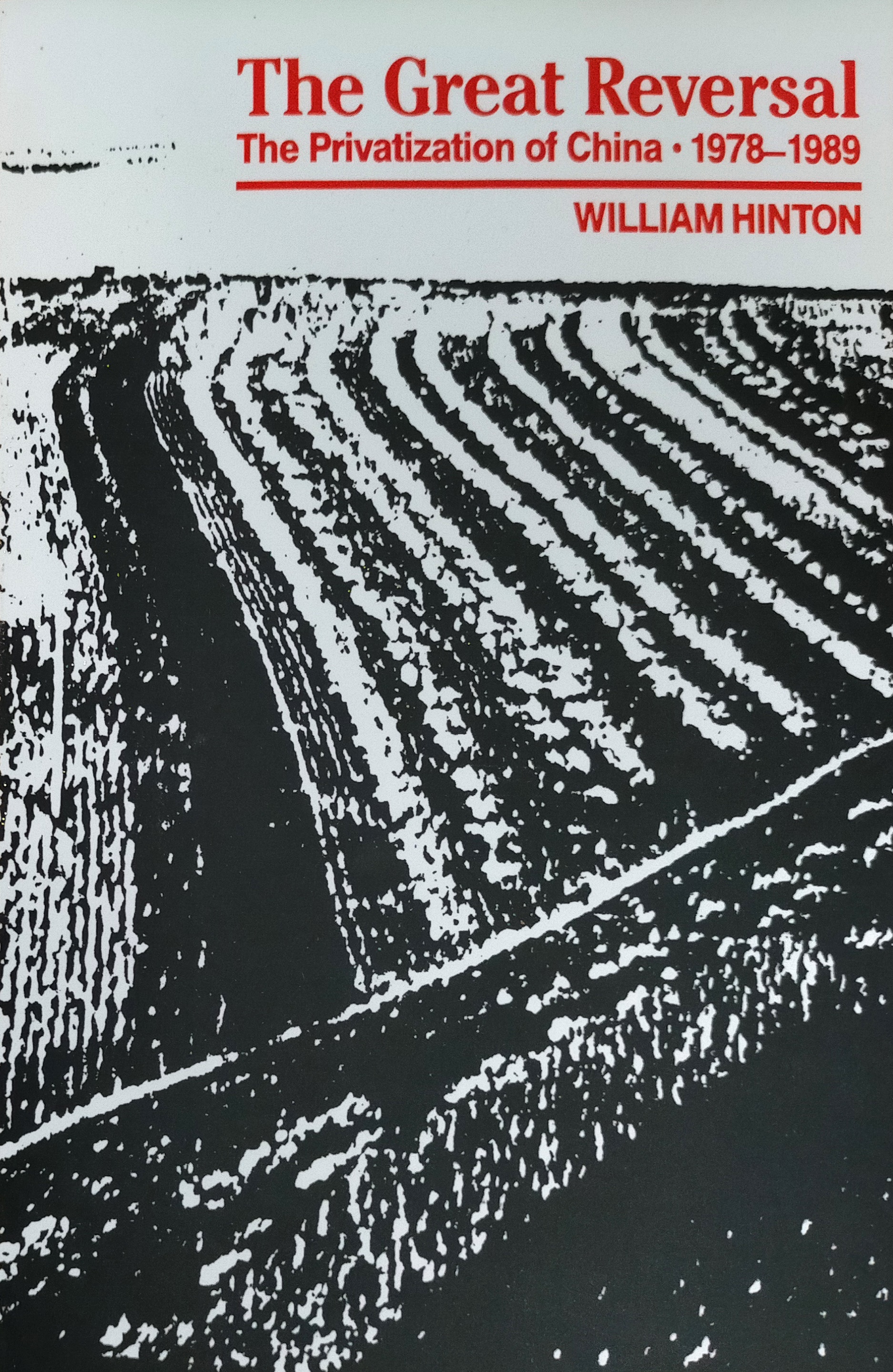
William Hinton (1919-2004) was an American Marxist who lived and worked in China before and after the revolution of 1949. In 1966, he wrote up his experiences and observations of daily life, class struggle, strategic planning and social transformation in Long Bow village. The book, ‘Fanshen‘, remains a classic. (‘Fanshen’ broadly means overturning something).
As a Marxist and ‘Maoist’, Hinton naturally rejected the ascendancy of the capitalist-roaders, such as Deng Xiaoping, and pulled no punches in his 1983 book, ‘Shenfan’ (meaning the opposite of Fanshen).
The account of what happened at Tiananmen Square in Hinton’s book is here.
I’m posting this because, incredibly, there are still people around who claim to be leftists but regard the rebellion as a foreign plot, its suppression as justified, and the massacre as fake news.
This rock song was written by my close friend, Peter Gelling (1960-2018) – and me – long ago. I’ve decided to ‘release’ it now to mark the 20th anniversary of the September 11 terrorist attack on the US.
‘Blame it on the USA’ was co-written by Peter Gelling (1960-2018) and yours truly in response to the knee-jerk anti-Americanism we experienced among our friends in the weeks after the September 11 terrorist attacks on the USA.
We found it strange that nearly all of our friends, including those who identified as being on the Left, were either gloating about what had happened or automatically blaming the US. They had not looked into the nature of Al Qaeda, the Islamo-fascist* outfit behind the attacks. It was as though all one needed to understand was that America was always wrong.
As one of many who had opposed the US war in Vietnam, I couldn’t see any similarity between the Vietnamese struggle for national liberation and the targetting of civilians by a reactionary religious fundamentalist terror group who hated modernity. One of the first things I did, at the time, was to google ‘Bin Laden’ to see what he believed in. What I found wasn’t pretty and essentially medievalist.
Fortunately, there were left-wing individuals who spoke up about all this while certainly recognizing that decades of US foreign policy – the backing and arming of hated dictators such as Saddam Hussein – had led to America being a dirty word among the masses in the Middle East and elsewhere.
But to blame the US for September 11, in an unqualified way, was to overlook the nature of those behind the attack.
Peter and I embraced the notion that there is a ‘pseudo-left’. Content is what matters and when ‘anti-imperialism’ serves fascism, it is not an anti-imperialism worth supporting. Especially when most people around the world who lived under tyranny were fighting for freedom. And still are.
I don’t remember when we wrote the song’s lyrics but I know the original idea was mine. I wanted the song to have a distinctively American rock sound and Peter, the master musician and multi-instrumentalist, laid down a great Chuck Berry riff. (It doesn’t get much more American than Chuck Berry).
The song has never been released to the public before, but I know Peter would be happy to have it shared on the occasion of the 20th anniversary of the September 11 attack.
The lyric “Maccas and Coke are just fine by me” will offend some people but none more than those who still want to turn the clock back to pre-modern times. The religious fascists rely on violence and terror because they know they will never win the consent of the majority in modern bourgeois-democracies. That is also why they hate things like free speech, women’s liberation, elections – and rock music.
*I rarely use this term as it can be misunderstood to mean that all Islamists are fascists but in the context of Al-Qaeda I regard it as fair usage. It was coined, I think, by the late great anti-fascist, Christopher Hitchens, whose absence is felt now more than ever.
With the Afghan government’s ignominious defeat on the tail of the US government’s humiliating withdrawal, a lot – and I mean a lot – of gloating has been in evidence on Farcebook by ostensible leftists, some of whom are former comrades, celebrating another defeat for good ole US imperialism.
Pointing out the defeat and the role of the US in effectively setting up this situation is not the problem. What the problem is is the total (this might be an exaggeration, but not by much) silence on the fate of the Afghan people, in particular Afghan women.
Nowhere amongst my former comrades do I see an ‘ok, now the Yanks and their lackeys have gone the main enemy of the people is the Taliban and the most likely means of defeating them will be through armed struggle.’ Instead, there is silence. If this continues for more than a nanosecond this silence transforms into collusion. Left in form, right in essence we could call it.
A year or so ago I wrote a poem celebrating the bravery and example of a 15 year old girl in regional Afghanistan who, in response to her parents being gunned down before her sought out her father’s machine gun and killed the murderers, at least one of whom was Taliban. I reprint it below:
Qamar Gul and a father’s teaching
As others forgot to question
And rushed to defend the
Old verities and
Inherited wisdom.
As others remained fast
Confusing darkness for light
The old spell began to break
And its truths began to decay
As others panicked
Shielding themselves
From the revealing light
Confusion spread and freedom beckoned.
From the depths ghouls and false healers emerged
Screaming and cajoling
Harnessing death and instilling fear
Settling old scores and new alike.
Such times are indeed dangerous.
How was this man to protect his family?
What if he should fall?
Can friend still be seen from foe?
What if he should fall?
Tradition dictates his daughter’s marriage
The past may still protect…
But what if these ways are not enough?
What if they should fail?
He placed his gun into her hands
He’ll teach her what to do
If fall he should and well he may
Let new ways show the way.
When death came bursting through the door
Stealing her parents from her
This father’s girl knew what to do
And didn’t fail to do it.
Conquering fear
Harnessing anger
She honored her father’s teachings
And moved into the light.
Postscript:
I wrote this poem a year ago when news of Qamar Gul’s actions made international news. I was very impressed by her bravery and the example she was setting – and worry about her safety now given that the Taliban are back in control. When I completed the poem I sent it to a young Afghani colleague and asked her to check the accuracy of its ‘line’ and suggest corrections if necessary. She gave it the thumbs up.
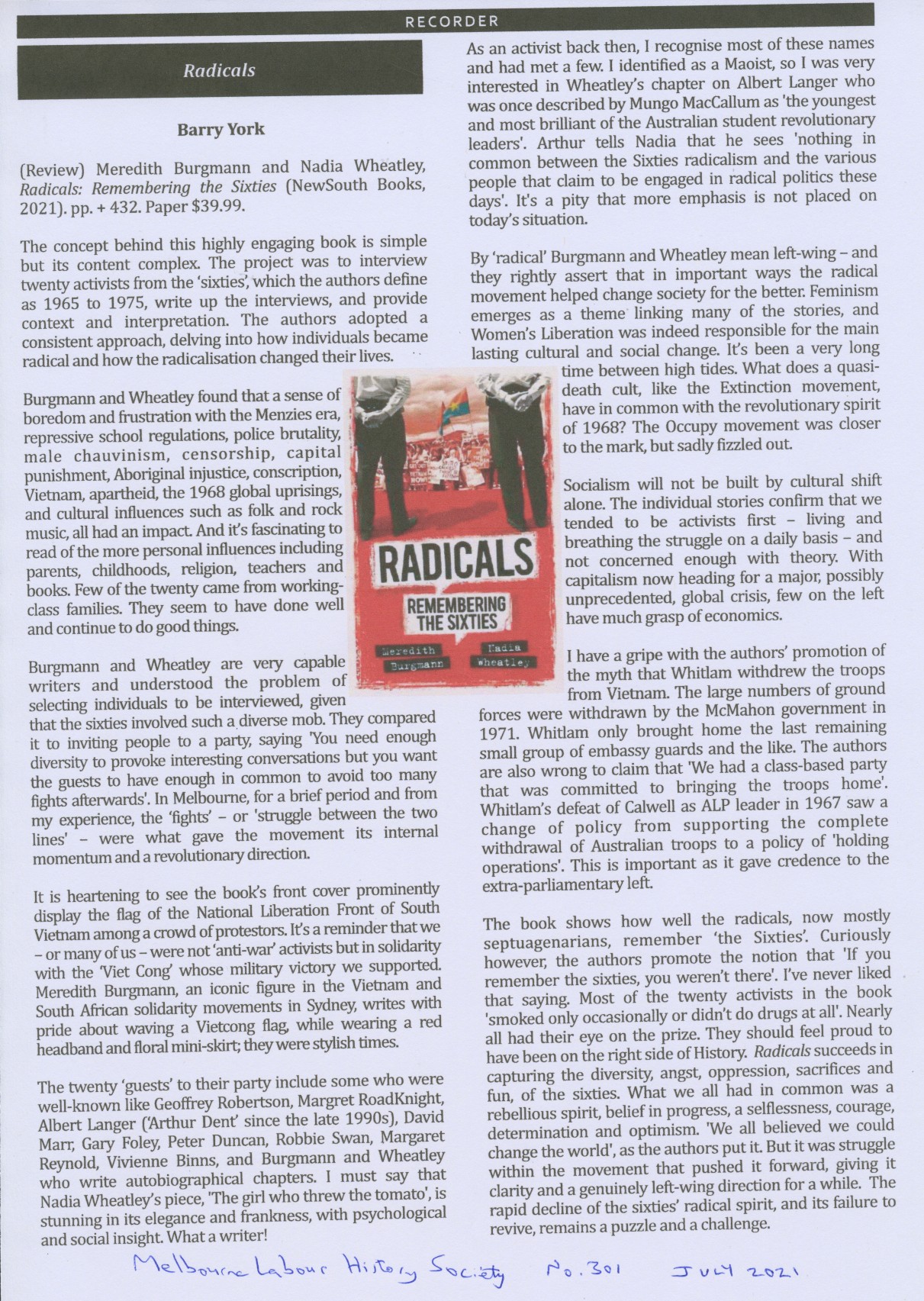
Here is my review of ‘Radicals’ by Meredith Burgmann and Nadia Wheatley, just published in the Melbourne Labour History Society’s newsletter ‘Recorder’ (July 2021, No 301).
My only disagreement with this article is the author’s use of the word ‘leftists’ to describe those in alliance with the Iranian clericalist regime. She should use the term ‘pseudo-leftists’, as that is accurate…. B York
Iran: A New Wave of Mass Protests and Strikes
(written by Frieda Afary, reprinted from her blog ‘Iranian progressives in translation’)
Iran is experiencing another wave of mass protests and strikes as economic, social, political, environmental and health problems make it impossible for the large majority of the population to have the bare minimums needed to live.
Petrochemical Strikes, Protests Against Water Shortage
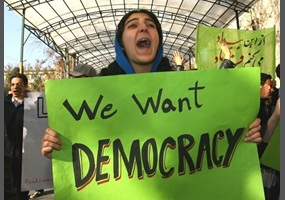
A new wave of mass protests over severe water shortage in the mainly ethnic Arab province of Khuseztan began on July 15. Protesters’ slogans have included: “Down with Dictatorship.”, “Down With Khamenei”, “We Don’t Want An Islamic Republic”, “The People Want the Regime to Fall.” Government security forces have shot and killed at least 8 protesters and injured and arrested many others. However, solidarity protests have started in Azarbaijan, Kurdistan, Isfahan, Sistan & Baluchistan and Tehran. Iranian filmmakers, teachers and writers’ groups have co-signed a joint statement in support of the protests. (https://iranwire.com/en/features/9985)
The latest protests have followed a series of nationwide strikes of temporary contract workers in Iran’s oil and gas industry which is also heavily based in Khuzestan. The strikes which began on June 19 and have spread to a hundred production sites, are demanding permanent employment status, a $500 monthly wage, safe working conditions and the right to organize and be free of police surveillance. Haft Tapeh sugar cane workers on strike in Khuzestan are also asking for COVID vaccination and expressing solidarity with protests against the lack of water.
Economic Crisis and COVID Pandemic
Iran continues to suffer from a massive economic crisis brought about by the costs of its regional imperialist interventions in Syria, Iraq, Lebanon, Yemen, its nuclear and missile programs and the effects of U.S. economic sanctions. The official minimum wage is approximately $120 per month in a country where the cost of bare necessities for a family of 4 is $500 per month. Electricity is shut off for several hours on a daily basis. Access to the internet is becoming more limited or impossible for many because of the cost and government repression.
COVID is spreading rapidly in Iran’s prisons, which have an official population of 190,000. Women prisoners are also suffering from and dying from COVID. They include journalists, teachers, feminist and labor activists, students, environmentalists, Kurdish and Arab civil right activists, as well as Baha’i and Sufi women.
Women Prisoners and Afghan Refugees
Nasrin Sotoudeh, imprisoned feminist human rights attorney and defender of the “Girls of Revolution Avenue” is suffering from a variety of health problems in addition to COVID. Narges Mohammadi, feminist activist against the death penalty who has been nominated for the Nobel Peace Prize, was released last year after a long prison sentence, only to receive another prison sentence which also includes 80 lashes for continuing to oppose the death penalty and “endangering national security.” She has been fighting this sentence, and has attended protests in solidarity with the people of Khuzestan, striking workers and the families of political prisoners. In a recent interview, she called Iranian women’s struggles “the Achilles heel of the Iranian regime”. (https://www.facebook.com/voicesofwomenforchange/videos/241864884051720) Sepideh Gholyan, feminist labor activist , imprisoned in Khuzestan, continues to write about the plight of ethnic Arab women prisoners. She has been savagely beaten in prison and is now on hunger strike.
Iran’s Continuing Regional Ambitions and U.S. Imperialism’s “Solutions”
In the midst of all these crises and protests, the Iranian government maintains its regional imperialist interventions in Syria, Iraq, and Lebanon. It promotes its plots to kidnap and assassinate opposition activists in exile. (https://iranhumanrights.org/2021/07/foiled-kidnapping-of-dissident-part-of-irans-ramped-up-campaign-to-crush-dissent/) It continues to develop its nuclear and missile programs and has stopped its negotiation with the U.S. Biden administration on returning to the JCPOA nuclear agreement.
U.S. New York Times columnist, Thomas Freedman reveals imperialist inhumanity in his recent column on Iran where he offers a “solution” that is “the best anyone can hope for with Iran.” (https://www.nytimes.com/2021/06/15/opinion/iran-biden-nuclear-deal.html?searchResultPosition=1) He argues that the U.S. with the help of Gulf states should give more financial aid to the Assad regime to kick Iran out of Syria, maintain Russia and Turkey as dominant powers and assure the continuation of the Assad regime. This he says would reduce Iran’s danger and satisfy the U.S. and Israel. To him, the people of the region, the Syrian Arabs and Kurds and the Iranian population, are mere pawns on the U.S. and global Imperialist chessboard.
Needed Progressive Solidarity with Struggles inside Iran
No less cynical are those leftists and so-called socialists around the world who support the Iranian regime as “anti-imperialist” or refuse to criticize it.
Those who limit their solidarity to calling for the removal of U.S. sanctions, refuse to recognize the complexity of the problems in Iran. They do not address the fact that these problems are rooted both in the external imperialism of the U.S., Russia. China and internal capitalist militarism and religious fundamentalism.
Any effort to engage in solidarity with the struggles inside Iran begins not only with calling for the removal of U.S. sanctions and an end to Israel’s attacks, but also simultaneously holding the Iranian regime accountable for its repression and exploitation of the people and environment of the region. That recognition demands calling for the immediate release of political prisoners, expressing solidarity with striking workers, feminist and environmental struggles, oppressed ethnic, sexual and religious minorities, and demanding Iran’s withdrawal from Syria, Iraq and an end to its interventions in Afghanistan, Lebanon and Yemen.
On Saturday, May 22nd, 2021, the Melbourne chapter of the Platypus Affiliated Society hosted an in-person panel discussion at the Clyde Hotel in Carlton, Australia on the question: “What is Capitalism, and why should we be against it?”
The present is characterized not only by a political crisis of the global neoliberal order but also by differing interpretations of the cause of this crisis:
Capitalism. If we are to interpret capitalism, we must also know how to change it.
– What is capitalism? – Is capitalism contradictory? If so, what is this contradiction and how does it relate to Left politics?
– How has capitalism changed over time, and what have these changes meant politically for the Left?
– Does class struggle take place today? If so, how, and what role should it play for the Left?
– Is capitalism in crisis? If so, how? And how should the Left respond?
– If a new era of global capitalism is emerging, how do we envision the future of capitalism and what are the implications of this for the Left?
Panelists: – Rory Dufficy (Scholar of Avante-Garde politics and teaches Marx’s Capital at the Melbourne School Of Continental Philosophy) – Rjurik Davidson (Marxist writer, editor & speaker. Former Associate Editor of Overland magazine) – Arthur Dent (Unreconstructed Maoist and contributor at c21stleft.com)
[ Unfortunately 20 seconds of Dufficy’s opening remarks were lost due to an internet drop-out. However, his remarks are complete in the transcript expected to be published in an upcoming issue of The Platypus Review ]
Posted on by c21styork (Reprinted from a couple of years ago)
The first world war resulted in 40 million casualties: 15 to 19 million deaths and 23 million wounded. (Population of the world was less than two billion – so, in today’s terms, think 150 million casualties).
It’s one of the major things on which it can be said ‘the Bolsheviks got it right’. They opposed the war as an imperialist one.
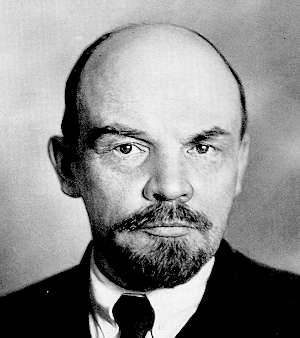
Here’s (excerpts from) what Lenin had to say in a lecture ‘War and Revolution’, May 1917:
From the point of view of Marxism, that is, of modern scientific socialism, the main issue in any discussion by socialists on how to assess the war and what attitude to adopt towards it is this: what is the war being waged for, and what classes staged and directed it. We Marxists do not belong to that category of people who are unqualified opponents of all war. We say: our aim is to achieve a socialist system of society, which, by eliminating the division of mankind into classes, by eliminating all exploitation of man by man and nation by nation, will inevitably eliminate the very possibility of war. But in the war to win that socialist system of society we are bound to encounter conditions under which the class struggle within each given nation may come up against a war between the different nations, a war conditioned by this very class struggle. Therefore, we cannot rule out the possibility of revolutionary wars, i.e., wars arising from the class struggle, wars waged by revolutionary classes, wars which are of direct and immediate revolutionary significance. Still less can we rule this out when we remember that though the history of European revolutions during the last century, in the course of 125–135 years, say, gave us wars which were mostly reactionary, it also gave us revolutionary wars, such as the war of the French revolutionary masses against a united monarchist, backward, feudal and semi-feudal Europe. No deception of the masses is more widespread today in Western Europe, and latterly here in Russia, too, than that which is practised by citing the example of revolutionary wars. There are wars and wars. We must be clear as to what historical conditions have given rise to the war, what classes are waging it, and for what ends. Unless we grasp this, all our talk about the war will necessarily be utterly futile, engendering more heat than light.
****
We say: if you have not studied the policies of both belligerent groups over a period of decades so as to avoid accidental factors and the quoting of random examples if you have not shown what bearing this war has on preceding policies, then you don’t understand what this war is all about.
These policies show us just one thing continuous economic rivalry between the world’s two greatest giants, capitalist economies. On the one hand we have Britain, a country which owns the greater part of the globe, a country which ranks first in wealth, which has created this wealth not so much by the labour of its workers as by the exploitation of innumerable colonies, by the vast power of its banks which have developed at the head of all the others into an insignificantly small group of some four or five super-banks handling billions of rubles, and handling them in such a way that it can he said without exaggeration that there is not a patch of land in the world today on which this capital has not laid its heavy hand, not a patch of land which British capital has not enmeshed by a thousand threads. This capital grew to such dimensions by the turn of the century that its activities extended far beyond the borders of individual states and formed a group of giant banks possessed of fabulous wealth. Having begotten this tiny group of banks, it has caught the whole world in the net of its billions. This is the sum and substance of Britain’s economic policy and of the economic policy of France, of which even French writers, some of them contributors to L’Humanité,[5] a paper now controlled by ex-socialists (in fact, no less a man than Lysis, the well-known financial writer), stated several years before the war: “France is a financial monarchy, France is a financial oligarchy, France is the world’s money-lender.”
On the other hand, opposed to this, mainly Anglo-French group, we have another group of capitalists, an even more rapacious, even more predatory one, a group who came to the capitalist banqueting table when all the seats were occupied, but who introduced into the struggle new methods for developing capitalist production, improved techniques, and superior organisation, which turned the old capitalism, the capitalism of the free-competition age, into the capitalism of giant trusts, syndicates, and cartels. This group introduced the beginnings of state-controlled capitalist production, combining the colossal power of capitalism with the colossal power of the state into a single mechanism and bringing tens of millions of people within the single organisation of state capitalism. Here is economic history, here is diplomatic history, covering several decades, from which no one can get away. It is the one and only guide-post to a proper solution of the problem of war; it leads you to the conclusion that the present war, too, is the outcome of the policies of the classes who have come to grips in it, of the two supreme giants, who, long before the war, had caught the whole world, all countries, in the net of financial exploitation and economically divided the globe up among themselves. They were bound to clash, because a redivision of this supremacy, from the point of view of capitalism, had become inevitable.
****
The present war is a continuation of the policy of conquest, of the shooting down of whole nationalities, of unbelievable atrocities committed by the Germans and the British in Africa, and by the British and the Russians in Persia which of them committed most it is difficult to say. It was for this reason that the German capitalists looked upon them as their enemies. Ah, they said, you are strong because you are rich? But we are stronger, therefore we have the same “sacred” right to plunder. That is what the real history of British and German finance capital in the course of several decades preceding the war amounts to. That is what the history of Russo-German, Russo-British, and German-British relations amounts to. There you have the clue to an understanding of what the war is about. That is why the story that is current about the cause of the war is sheer duplicity and humbug. Forgetting the history of finance capital, the history of how this war had been brewing over the issue of redivision, they present the matter like this: two nations were living at peace, then one attacked the other, and the other fought back. All science, all banks are forgotten, and the peoples are told to take up arms, and so are the peasants, who know nothing about politics. All they have to do is to fight back! The logical thing, following this line of argument, would be to close down all newspapers, burn all books and ban all mention of annexations in the newspapers. In this way such a view of annexations could be justified. They can’t tell the truth about annexations because the whole history of Russia, Britain, and Germany has been one of continuous, ruthless and sanguinary war over annexations. Ruthless wars were waged in Persia and Africa by the Liberals, who flogged political offenders in India for daring to put forward demands which were being fought for here in Russia. The French colonial troops oppressed peoples too. There you have the pre-history, the real history of unprecedented plunder! Such is the policy of these classes, of which the present war is a continuation. That is why, on the question of annexations, they cannot give the reply that we give, when we say that any nation joined to another one, not by the voluntary choice of its majority but by a decision of a king or government, is an annexed nation. To renounce annexation is to give each nation the right to form a separate state or to live in union with whomsoever it chooses. An answer like that is perfectly clear to every worker who is at all class-conscious.
****
On the question of America entering the war I shall say this. People argue that America is a democracy, America has the White House. I say: slavery was abolished there half a century ago. The anti-slave war ended in 1865. Since then multimillionaires have mushroomed. They have the whole of America in their financial grip. They are making ready to subdue Mexico and will inevitably come to war with Japan over a carve-up of the Pacific. This war has been brewing for several decades. All literature speaks about it. America’s real aim in entering the war is to prepare for this future war with Japan. The American people do enjoy considerable freedom and it is difficult to conceive them standing for compulsory military service, for the setting up of an army pursuing any aims of conquest a struggle with Japan, for instance. The Americans have the example of Europe to show them what this leads to. The American capitalists have stepped into this war in order to have an excuse, behind a smoke-screen of lofty ideals championing the rights of small nations, for building up a strong standing army
****
Those interested in the socialist movement should read the Basle Manifesto of 1912 adopted unanimously by all the socialist parties of the world, a manifesto that was published in our newspaper Pravda, a manifesto that can be published now in none of the belligerent countries, neither in “free” Britain nor in republican France, because it said the truth about war before the war. It said that there would be war between Britain and Germany as a result of capitalist competition. It said that so much powder had accumulated that the guns would start shooting of their own accord. It told us what the war would be fought for, and said that the war would lead to a proletarian revolution. Therefore, we tell those socialists who signed this Manifesto and then went over to the side of their capitalist governments that they have betrayed socialism. There has been a split among the socialists all over the world. Some are in ministerial cabinets, others in prison. All over the world some socialists are preaching a war build-up, while others, like Eugene Debs, the American Bebel, who enjoys immense popularity among the American workers, say: “I’d rather be shot than give a cent towards the war. I’m willing to fight only the proletariat’s war against the capitalists all over the world.” That is how the socialists have split throughout the world. The world’s social-patriots think they are defending their country. They are mistaken they are defending the interests of one band of capitalists against another. We preach proletarian revolution the only true cause, for which scores of people have gone to the scaffold, and hundreds and thousands have been thrown into prison. These imprisoned socialists are a minority, but the working class is for them, the whole course of economic development is for them. All this tells us that there is no other way out. The only way to end this war is by a workers’ revolution in several countries. In the meantime we should make preparations for that revolution, we should assist it. For all its hatred of war and desire for peace, the Russian people could do nothing against the war, so long as it was being waged by the tsar, except work for a revolution against the tsar and for the tsar’s overthrow. And that is what happened. History proved this to you yesterday and will prove it to you tomorrow. We said long ago that the mounting Russian revolution must be assisted. We said that at the end of 1914. Our Duma deputies were deported to Siberia for this, and we were told: “You are giving no answer. You talk about revolution when the strikes are off, when the deputies are doing hard labour, and when you haven’t a single newspaper!” And we were accused of evading an answer. We heard those accusations for a number of years. We answered: You can be indignant about it, but so long as the tsar has not been overthrown we can do nothing against the war. And our prediction was justified. It is not fully justified yet, but it has already begun to receive justification. The revolution is beginning to change the war on Russia’s part. The capitalists are still continuing the war, and we say: Until there is a workers’ revolution in several countries the war cannot be stopped, because the people who want that war are still in power. We are told: “In a number of countries everything seems to be asleep. In Germany all the socialists to a man are for the war, and Liebknecht is the only one against it.” To this I say: This only one, Liebknecht, represents the working class. The hopes of all are in him alone, in his supporters, in the German proletariat. You don’t believe this? Carry on with the war then! There is no other way. If you don’t believe in Liebknecht, if you don’t believe in the workers’ revolution, a revolution that is coming to a head if you don’t believe this then believe the capitalists!